
Humanoid robots 'the future' of car making, says BMW
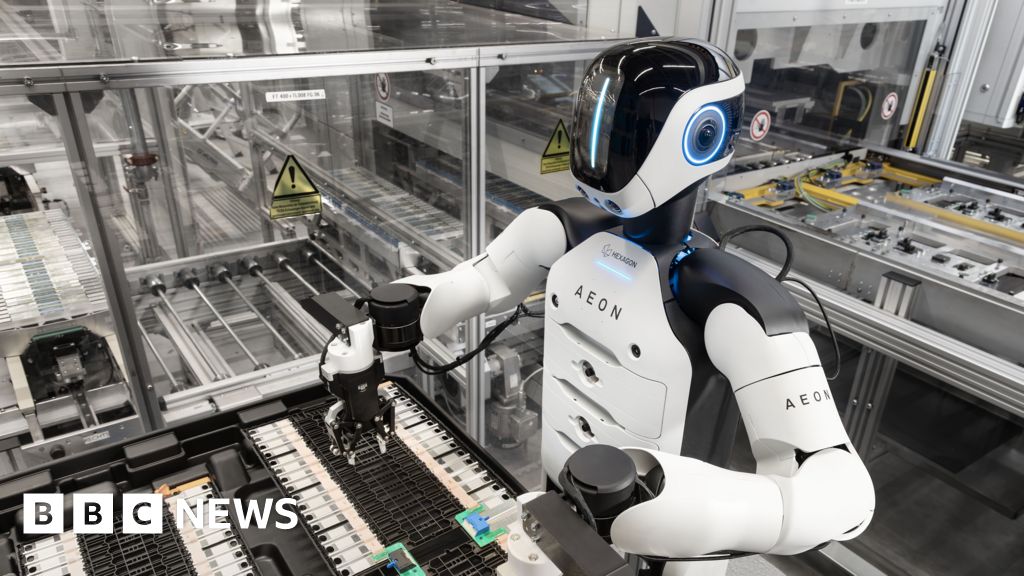
BMW tests a new shape of factory automation
BMW is preparing to put humanoid robots into production work at its Leipzig plant, marking a notable step beyond the fixed robotic arms that have dominated car factories for decades. The company told the BBC that two machines from Hexagon Robotics are being trialled before a planned summer deployment, building on similar experiments in the United States. The goal is not to replace the whole assembly line overnight, but to test whether person-shaped robots can fit into jobs originally designed around human reach, posture and movement. If that works, automakers could automate more small-batch or awkward tasks without pausing lines for major redesigns.
That distinction matters for manufacturers under pressure to build more models, change production schedules quickly and contain labour-intensive tasks while protecting quality. Traditional industrial robots are powerful and precise, but they usually demand carefully fenced-off workcells and workflows designed around their limits. BMW’s digitalisation executive Michael Nikolaides argued that a humanoid form can be placed at workstations where people already operate, because it roughly matches human size and capability. In a factory that must shift between engines, electric drivetrains, interiors and optional equipment, flexibility can be as valuable as raw speed.
Why the business case is changing
The robots, called Aeon, stand about 1.65 metres tall and weigh around 60kg, according to the BBC. Their size makes them easier to imagine in ordinary production areas than large, bolted-down automation. Analysts say falling robot costs are changing the calculation: when machines were extremely expensive, factories were reorganised around them; now manufacturers increasingly want flexible robots that can slot into established processes and be moved as model lines evolve. That economic shift explains why humanoids are attracting attention from carmakers even before the technology has proved itself at large scale.
The early BMW deployment will be watched closely because humanoids still have to demonstrate reliability, safety and speed in real industrial conditions. The strongest initial use cases may be repetitive handling, awkward ergonomic jobs and tasks that vary too much for classic automation but not enough to require skilled judgement. Human workers will still be needed for supervision, exception handling, maintenance and quality decisions. Plant managers will also have to measure cycle times, injury reduction, downtime and training needs before declaring the economics convincing. For carmakers balancing electric-vehicle transitions, labour shortages and cost discipline, humanoid robots are becoming less a science-fiction concept and more a practical operations bet with measurable productivity stakes. Successful pilots could influence how other European plants schedule mixed production and decide which human tasks are ready for automation. They could also shape procurement talks with robotics suppliers as automakers compare humanoids with cheaper fixtures, cobots and conventional arms.

Source: BBC Business.
Related articles

Harry's and Coterie owner Mammoth Brands has ambitions to be the next CPG giant
Mammoth's direct-to-consumer brands have helped upend the razor, diaper and deodorant categories.

Create AI images with your own API key
aixipi runs on desktop/web, uses your own model API balance, and avoids subscription lock-in.
Try aixipi →
Don’t rule out a ‘June swoon’ — the S&P 500 is pushing its limits
Even upbeat Oracle earnings next week might not be enough to rally the market.

Wall Street hated these 15 stocks. Then their earnings proved the analysts wrong.
Earnings beats mean a lot more when it happens to stocks the market gave up on.