
Mosquitoes can become attracted to insect repellant, study suggests
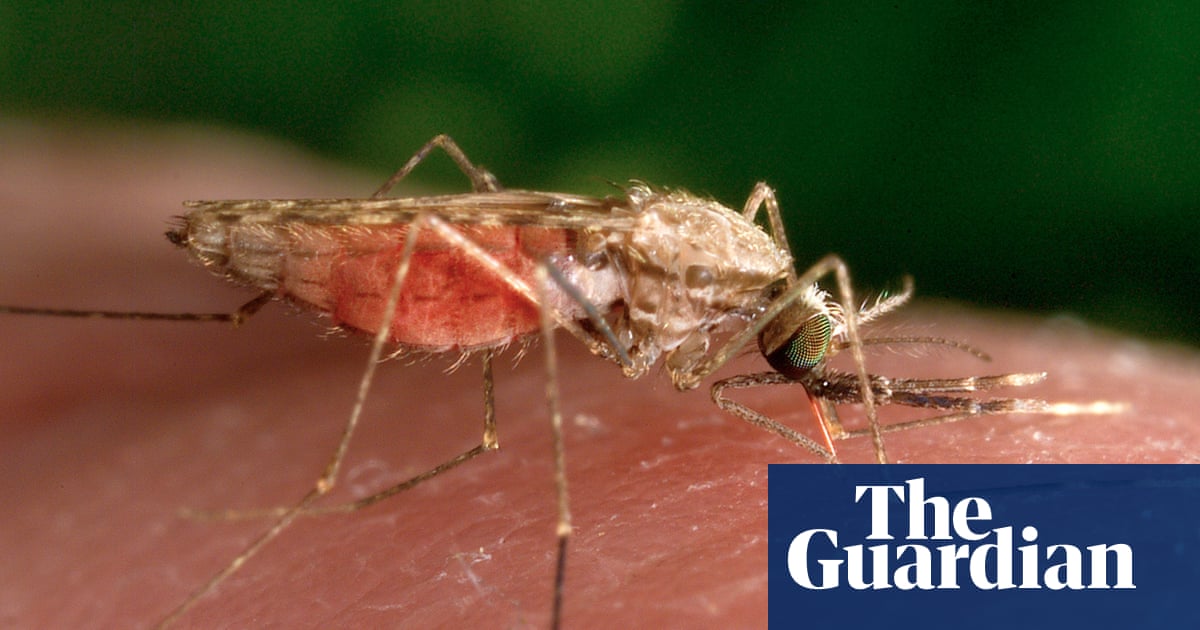
DEET remains one of the world's most important defences against mosquito bites, but a new laboratory study suggests the insects' response to the chemical can be shaped by experience. Researchers reported that mosquitoes exposed to DEET while feeding could later treat the scent as a cue linked to a blood meal. The finding does not mean repellent sprays have stopped working; it points instead to how adaptable mosquitoes can be when smell, warmth and feeding rewards occur together.
What the experiment found
DEET, short for N,N-diethyl-meta-toluamide, is widely recommended for protection in places where mosquito-borne diseases such as malaria, dengue, Japanese encephalitis and Zika are a risk. The new work, described in the Journal of Experimental Biology, tested whether mosquitoes could learn an association similar in principle to a conditioned response. In one setup, insects were presented with warm blood while also encountering DEET, creating a pairing between the normally repellent odour and a feeding opportunity. That pairing is crucial: the study was designed to reveal learning, not to mimic every messy detail of outdoor exposure, sweat, clothing and changing repellent levels.

The trained mosquitoes behaved differently afterwards. The Guardian reported that about 60% of insects that had fed in the presence of DEET later attempted to bite when exposed to DEET alone. That compared with much lower responses among mosquitoes with no training or those given DEET without a simultaneous blood meal. In another test, mosquitoes that had experienced the paired cue were far more likely than untrained insects to move toward a researcher's DEET-treated hand.
Prof Claudio Lazzari of the University of Tours said the results challenge the idea that repellents work only through fixed chemical effects, such as being unpleasant or blocking host detection. Other experts welcomed the study as evidence of mosquitoes' impressive learning ability, while also urging caution about applying tightly controlled laboratory findings to real-world travel. A mosquito may meet different products, people and conditions between blood meals, and the durability of the learned association remains an open question. The work nevertheless helps explain why vector control cannot depend on a single chemical tool forever, particularly as mosquito behaviour and habitats shift with climate and urban growth.

The practical message is not to abandon repellent. Experts quoted in the report said DEET does not lose effectiveness through normal use, and that the highest risk of association may arise when protection is wearing off. For people in malaria or Zika regions, the safest response is familiar but important: use proven repellents, apply enough, and reapply according to the label alongside nets and clothing where appropriate. The study adds a useful reminder for public-health advice: consistency matters, because gaps in protection are when insects get the best chance to bite and potentially learn. Source: The Guardian Science.
Related articles

Medieval pandemic left a hidden legacy in Europe's oldest trees
A new study published in the Proceedings of the National Academy of Sciences demonstrates how radiocarbon dating can reveal the maximum lifespan of Mediterranean hardwoods, uncovering hidden links between human history and long-term ecosystem dynamics. By analyzing mature and ancient oak trees across Italy, researchers found that a millennium of age is attainable from the Mediterranean coast to mountain environments.

Create AI images with your own API key
aixipi runs on desktop/web, uses your own model API balance, and avoids subscription lock-in.
Try aixipi →
Black teachers improve outcomes for all students, but the profession remains largely white
Having Black teachers and other educators of color improves students' classroom experiences, research shows. They often serve as role models, set high academic expectations and teach material that connects to students' lives outside of schools.

Machine learning uncovers 1,750 quakes tracing 250-kilometer edge of Alaska microplate
Thousands of small earthquakes, detected for the first time by a machine-learning process, reveal the distinct, razor-sharp edge of the Yakutat microplate as it subducts beneath the North American plate.