
The world's carmakers are struggling to compete with China
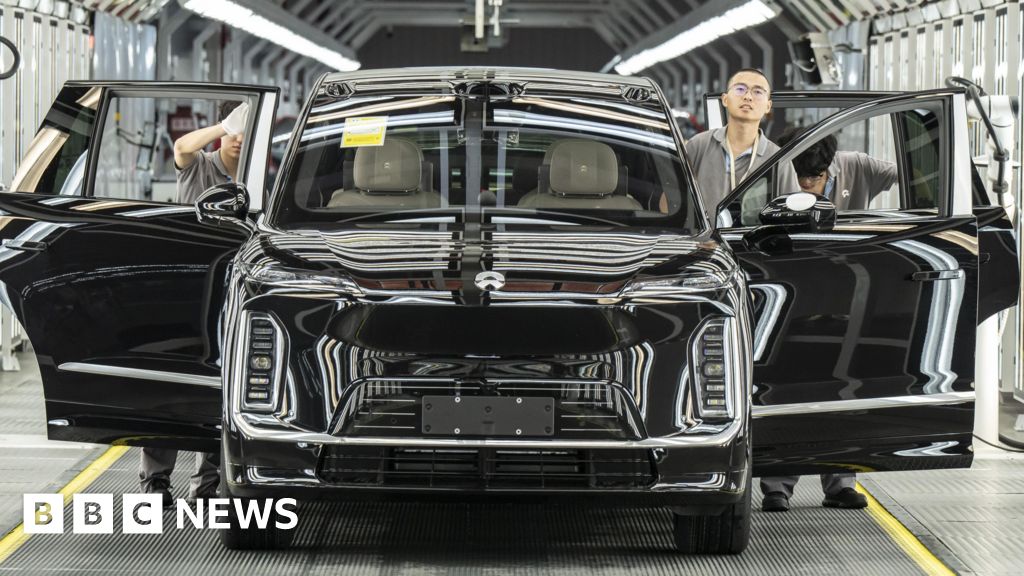
Inside China's EV factory floor
A visit to China's sprawling electric vehicle factories reveals an industry operating at a tempo that Western automakers struggle to match. On the assembly lines of Shenzhen and Shanghai, robots and workers build cars in roughly half the time it takes in traditional European plants. The BBC's investigation found that Chinese EV manufacturers are not just making vehicles faster — they are doing so at a fraction of the cost, thanks to vertically integrated supply chains that span everything from battery cell production to in-house software development.
The scale is staggering. China now produces more electric cars than the rest of the world combined, and its domestic brands — BYD, NIO, XPeng and others — have overtaken legacy automakers in both domestic sales and export volumes. This dominance did not happen by accident; it is the result of decades of deliberate industrial policy, generous state subsidies and a laser focus on dominating the battery supply chain, where China controls over 70% of global lithium-ion battery manufacturing capacity.
The innovation gap
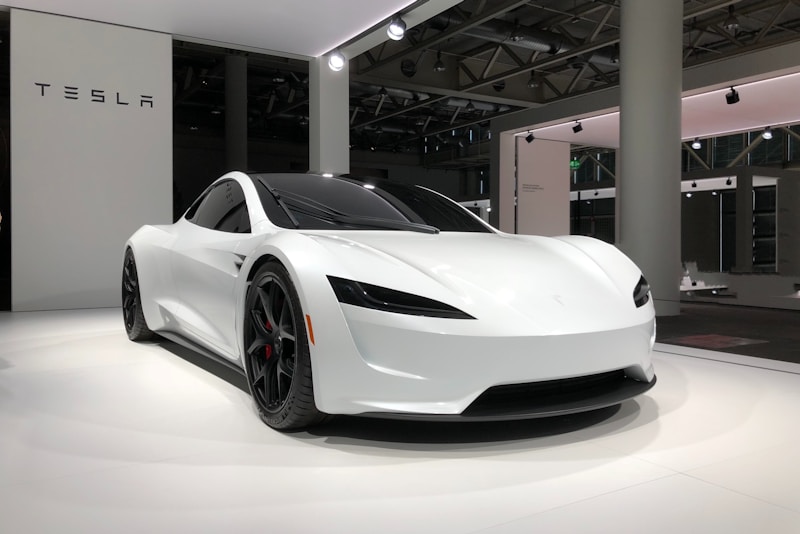
Beyond manufacturing speed, Chinese automakers are also pulling ahead on technology. Features that Western carmakers charge a premium for — such as ultra-fast charging, advanced driver-assistance systems and panoramic智能 cockpit displays — are increasingly standard on mass-market Chinese models. The latest EVs from BYD and NIO offer charging speeds that can add 400 kilometres of range in under 15 minutes, a performance threshold that most European rivals have not yet reached.
French, German and Japanese automakers have responded with emergency cost-cutting measures and joint ventures designed to gain access to Chinese technology. But analysts say the gap is widening. European carmakers are burdened by higher labour costs, fragmented supply chains and a slower regulatory environment. Meanwhile, Chinese manufacturers are expanding aggressively into Europe, opening factories in Hungary, Spain and Poland to bypass tariff barriers and build brand presence among European consumers.

What this means for global consumers
The good news for car buyers is that Chinese competition is forcing prices down across the industry. A new electric car that would have cost €40,000 two years ago can now be had for closer to €25,000 from a Chinese brand — and European and American manufacturers are being forced to match those price points. The long-term outlook suggests that affordable electric mobility will arrive sooner than previously forecast, driven largely by China's production prowess.
However, the rapid ascent of Chinese automakers has also sparked geopolitical tensions. The European Union has imposed additional tariffs on Chinese EV imports, citing unfair state subsidies, while the United States has effectively locked Chinese cars out of its market with 100% tariffs. The outcome of this trade friction will shape the global automotive landscape for decades.
Source: BBC News
Related articles

Harry's and Coterie owner Mammoth Brands has ambitions to be the next CPG giant
Mammoth's direct-to-consumer brands have helped upend the razor, diaper and deodorant categories.

Create AI images with your own API key
aixipi runs on desktop/web, uses your own model API balance, and avoids subscription lock-in.
Try aixipi →
Don’t rule out a ‘June swoon’ — the S&P 500 is pushing its limits
Even upbeat Oracle earnings next week might not be enough to rally the market.

Wall Street hated these 15 stocks. Then their earnings proved the analysts wrong.
Earnings beats mean a lot more when it happens to stocks the market gave up on.