
This Pacific Island Disappeared Under Rising Seas. A New Sculpture Marking the Spot Will Morph Into a Home for Seabirds, Coral and Marine Life
/https://tf-cmsv2-smithsonianmag-media.s3.amazonaws.com/filer_public/23/1f/231f084b-5f01-4ff1-bd35-e430fcf3c20c/22soloman_siren_by_jason_decaires_taylor_sculpture.jpg)
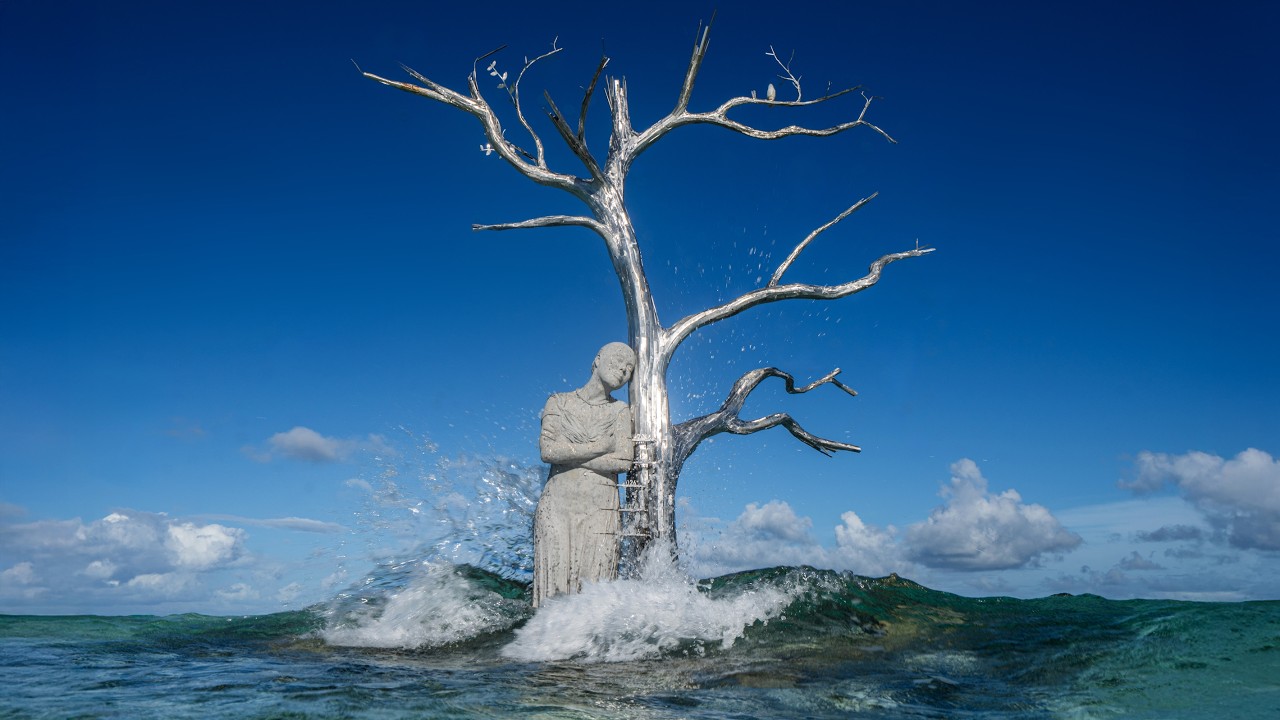
A new artwork is set to mark the former location of Kale, a small island in the Solomon Islands that vanished beneath the Pacific roughly ten years ago. Called The Solomon Siren, the project by sculptor Jason deCaires Taylor is conceived as more than a memorial. Over time, it is intended to become a living structure that can support seabirds, coral and other marine organisms at a place where land once stood.
Kale covered about 50,000 square meters before the sea overtook it. It lay within the Solomon Islands archipelago, and its disappearance has given the wider climate threat a precise geographical reference point. Rather than treating the loss as an abstract measure of rising water, the sculpture will identify the site itself, linking a changed seascape to the island’s history.
/https://tf-cmsv2-smithsonianmag-media.s3.amazonaws.com/filer_public/b6/38/b638787e-609c-4bab-a054-51ac9edaf77c/34soloman_siren_by_jason_decaires_taylor_sculpture.jpg)
The island had been occupied by a small population. Its submergence placed it among the first islands anywhere to be formally recorded as lost to higher sea levels. That distinction is significant because an island’s disappearance does not only alter a map: it can sever daily ties to homes, livelihoods, gathering places and inherited cultural knowledge.
For Solomon Islands communities, the risk is not confined to a single former island. Higher seas continue to pressure low-lying areas across the country, while severe weather compounds the strain. Reporting published in 2023 said that, from 2008 onward, more than 26,000 people in the island chain had moved away from their homes as advancing water and extreme weather disrupted where they could live.
Climate activist Gladys Habu Bartlett, who was raised in the Solomon Islands, described Kale in a 2020 guest post for the International Institute for Environment and Development as a place remembered for pale sand, clear water and dense greenery. She also emphasized that the island mattered deeply to residents in the northwest of Isabel Province, not simply as a scenic destination but as part of their cultural inheritance.
That memory is central to the planned work’s meaning. A sculpture can preserve the location and story of an island after the land has gone, but it cannot restore the community’s former physical place. The proposal therefore carries two perspectives at once: it is an artistic act of remembrance, while also pointing to an ongoing loss that remains difficult to measure through imagery alone. Seen this way, the work is neither a substitute for protection from rising water nor a solution to displacement. Its role is narrower: to retain a public marker for an erased island while seeking to create new ecological value in the waters above it. The distinction matters because a habitat that develops around a sculpture, even if successful, cannot erase the human and cultural consequences of losing land.
/https://tf-cmsv2-smithsonianmag-media.s3.amazonaws.com/filer_public/de/3a/de3a7b22-e715-47f8-9e08-684025dddeb8/62soloman_siren_by_jason_decaires_taylor_sculpture.jpg)
Its ecological ambition adds another dimension. Instead of remaining a fixed monument, The Solomon Siren is designed to change into habitat, with the possibility of offering a foothold for birdlife above and coral and other sea life below. The outcome will depend on how marine species interact with the work over time, rather than on the sculpture’s appearance at installation.
The project arrives as evidence of climate pressure in the Solomon Islands is increasingly tied to questions of displacement and adaptation. Moving households away from threatened coasts can address immediate danger, yet relocation also raises longer-term questions about land, belonging and continuity. Kale’s fate is a reminder that when a place is lost to the sea, the consequences extend well beyond its former shoreline.
What happens next at the site will be watched on two levels: whether the artwork develops into the refuge envisioned for wildlife, and whether it helps keep Kale’s history visible as sea-level rise continues to affect the archipelago. Its proposed transformation makes the memorial unusual, but the underlying message is direct: the Pacific landscape is already changing, and communities are living with those changes now.
Source: Smithsonian Magazine
Related articles
/https://tf-cmsv2-smithsonianmag-media.s3.amazonaws.com/filer_public/b5/74/b5746017-a1a8-454f-b695-aeeb6ca92354/mosaic.jpg)
A Metal Detectorist Discovered Tiny Tiles in a Farmer's Field. A Spectacular Ancient Roman Mosaic Was Buried Beneath the Surface
The polychrome mosaic once decorated a small room in a lavish villa complex. Researchers, students and volunteers have been working together to excavate the rare site in southwestern England

Create AI images with your own API key
aixipi runs on desktop/web, uses your own model API balance, and avoids subscription lock-in.
Try aixipi →/https://tf-cmsv2-smithsonianmag-media.s3.amazonaws.com/filer_public/74/58/745852f4-577e-4cec-8c83-8fcf64551d0a/baby-giraffe.png)
A Premature Baby Giraffe Born Via C-Section Is Fighting for Her Life at a Zoo in Kansas
According to officials with the Tanganyika Wildlife Park, no known giraffe calf has ever survived the procedure. The youngster, who was recently named Milani, was born on July 11, likely three to seven weeks early
/https://tf-cmsv2-smithsonianmag-media.s3.amazonaws.com/filer_public/18/2a/182ab01e-864b-429e-a53a-0a1b41ecc75d/pompeii.png)
We All Know the Story of the Pompeii Victims Who Died When Mount Vesuvius Erupted 2,000 Years Ago. Archaeologists Are Still Learning About Those Who Made It Out Alive
A semi-fictionalized documentary series hosted by actor Tom Hiddleston follows three people in the ancient towns of Pompeii and Herculaneum who experienced the disaster in 79 C.E.