
Waymo pauses robotaxis in five US cities after cars drive into flooded roads
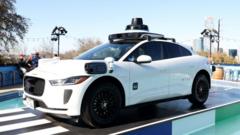
Waymo has suspended its driverless taxi service in five US cities after a software flaw caused some of its vehicles to drive into flooded roads and become stranded. The pause — covering four cities in Texas plus Atlanta, Georgia — is a notable setback for the Alphabet-owned company as it tries to prove that fully autonomous ride-hailing is ready to scale.
The problem surfaced dramatically on 20 April, when an empty Waymo vehicle in San Antonio, Texas, drove onto a flooded road and was swept into a creek. After a similar incident in Atlanta — where an unoccupied robotaxi was reported trapped in flood water — the company told reporters it was widening the "temporary pause" across the five cities "out of an abundance of caution."
At the heart of the recall is a specific failure mode regulators flagged: software that could allow the cars "to slow and then drive into standing water on higher-speed roadways." That warning, posted on the National Highway Traffic Safety Administration's website, prompted Waymo to issue a voluntary recall of nearly 3,800 robotaxis running its fifth- and sixth-generation automated driving systems, alongside a promise of "additional software safeguards."
The company is also pulling back in less dramatic ways. Waymo told Reuters it had temporarily suspended service on freeways in San Francisco, Los Angeles, Phoenix and Miami while it evaluates how its cars handle construction zones. It expects to restore those routes soon, and insists the disruption is precautionary rather than a sign of a deeper problem. "Safety is our highest priority," it told the BBC. "We continue to closely monitor forecasts, alerts, and live weather conditions, and we will resume serving riders soon."
The stakes are considerable. Waymo says it now delivers more than 500,000 trips a week across US cities including San Francisco, Austin and Miami, and it is preparing to launch in London later this year. Each weather-related stumble tests public trust in a service whose entire premise is that removing the human driver makes roads safer, not less predictable.
It also arrives against a run of unsettling incidents for autonomous fleets. In December 2025, a major San Francisco power outage left Waymo taxis stalled around the city, snarling traffic; in April, a mass outage of Apollo Go robotaxis in the Chinese city of Wuhan stopped at least a hundred self-driving cars mid-traffic. Individually these are edge cases — flooding, blackouts, construction detours — but collectively they underline how much of autonomy's hardest work lies in the rare, messy situations human drivers navigate by instinct. How quickly Waymo closes this particular gap, and how transparently, will shape whether regulators and riders treat the pause as responsible caution or a warning sign.
Source: BBC Technology
Related articles

Fidji Simo steps down from OpenAI’s no. 2 role
OpenAI's No. 2 executive, Fidji Simo, is stepping down from her full-time role after her medical leave proved longer than expected — a leadership vacuum that comes at a tricky time as the company eyes a possible IPO and races to catch Anthropic in the enterprise market.

Create AI images with your own API key
aixipi runs on desktop/web, uses your own model API balance, and avoids subscription lock-in.
Try aixipi →
Microsoft’s carbon emissions went up 25 percent last year
Microsoft says data centers were “primarily” responsible for higher emissions.

Don’t want to invest in Elon Musk? Two new ETFs explicitly exclude him
The new exchanged-traded funds exclude companies that are founded, controlled, or led by Elon Musk. That means no SpaceX or Tesla.