
Maps show wildfire smoke forecast, air quality alerts in swath of U.S.
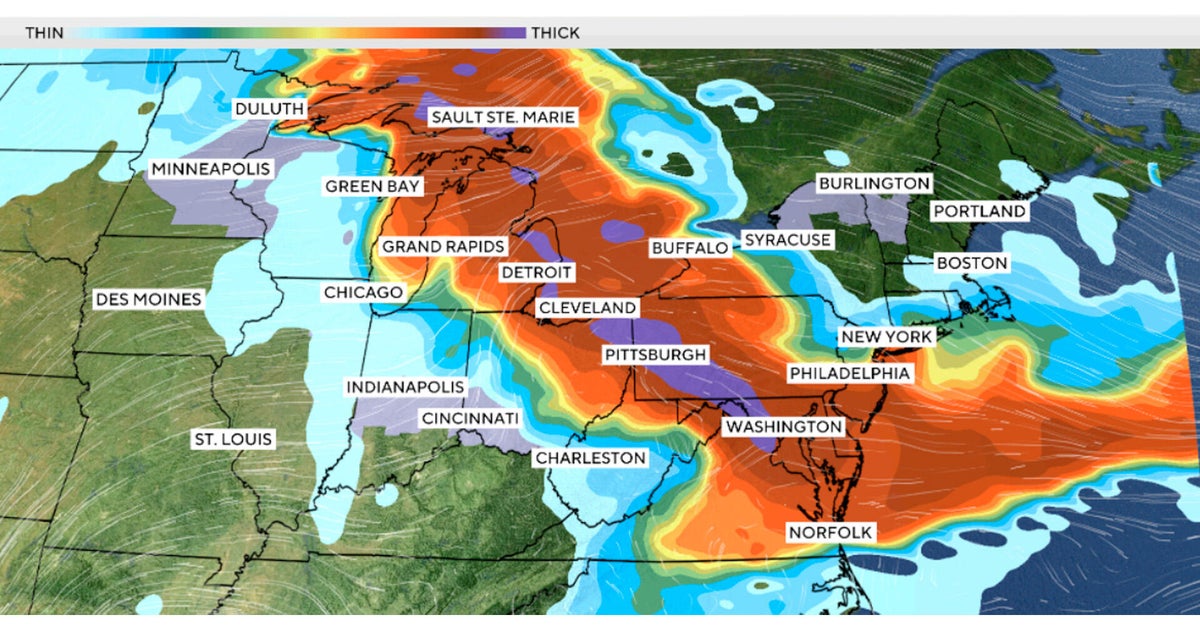
Fresh smoke maps are flashing warnings across a wide stretch of the United States this week, as plumes from wildfires burning north of the border and in northern Minnesota drift over the Midwest and push toward the East Coast. Air quality alerts have been posted in numerous areas as the haze settles in, and forecasters say millions of residents are now breathing air rated unhealthy in at least some pockets of the affected zone.
The smoke's origin traces back to Canada, where hundreds of separate wildfires are currently active. Prevailing winds are steering that smoke on a southeasterly track, funneling it down into the American Midwest before it continues toward the Northeast. Compounding the problem, several wildfires are simultaneously burning in the northern part of Minnesota, adding a second, closer source of smoke to the mix that is feeding into the same haze blanketing the region.
Meteorologists tracking the event have produced forecast maps charting where the thickest smoke is expected to sit on any given day, since plume density and ground-level visibility can shift considerably depending on wind direction and altitude. Those maps are being used to time and target air quality alerts, which spell out which counties or metro corridors are likely to see the worst conditions as the smoke moves through.
At the center of the health concern is fine particulate matter, the microscopic pollution particles carried in wildfire smoke that can penetrate deep into the lungs and bloodstream. Health officials note that exposure to elevated concentrations of this particulate pollution can pose a genuine risk, and the danger is not evenly distributed: children, older adults, and anyone with an existing heart or respiratory condition face a higher chance of adverse effects than the general population.
Typically, when readings climb into unhealthy territory, public health guidance calls for limiting time spent outdoors, especially strenuous activity, and for at-risk groups to consider staying indoors altogether or using indoor air filtration where it's available. Because the smoke plume is not static, conditions in any single city can swing from moderate to hazardous within a matter of hours as fresh smoke arrives or clears out.
This episode fits a pattern that has become increasingly familiar in recent summers, as large-scale wildfire activity in Canada has repeatedly sent smoke drifting deep into U.S. population centers hundreds or even thousands of miles from the actual flames. That cross-border reach means communities far removed from any active fire can still end up under an air quality advisory simply because of where the wind happens to be blowing.
Not every location within the broader smoke footprint will experience the same severity, and officials caution that forecasts can change quickly as fire behavior and wind patterns evolve day to day. Meteorologists and air quality agencies say they will continue updating their maps and advisories as the Canadian and Minnesota fires progress, giving residents in the path of the smoke a clearer picture of when conditions are likely to worsen or improve.
Source: CBS World
Related articles
Alvarez's 112th-minute goal helps lift Argentina past Switzerland 3-1 and into World Cup semifinals
Julian Alvarez sent defending champion Argentina into the World Cup semifinals with a long-range strike in the 112th minute against Switzerland.

Create AI images with your own API key
aixipi runs on desktop/web, uses your own model API balance, and avoids subscription lock-in.
Try aixipi →
U.S. conducts another round of retaliatory strikes on Iran, Pentagon says
U.S. forces conducted their third round of strikes on Iran this week, this time in retaliation for an attack on a commercial ship in the Strait of Hormuz, the Pentagon said.
One of Spain's deadliest wildfires has killed at least 11 people
A wildfire in southern Spain has killed at least 11 people, making it one of the country's deadliest on record, as soaring temperatures grip much of the country.