
U.S. wraps up 3rd night of Iran strikes as Trump vows to "keep" Strait of Hormuz
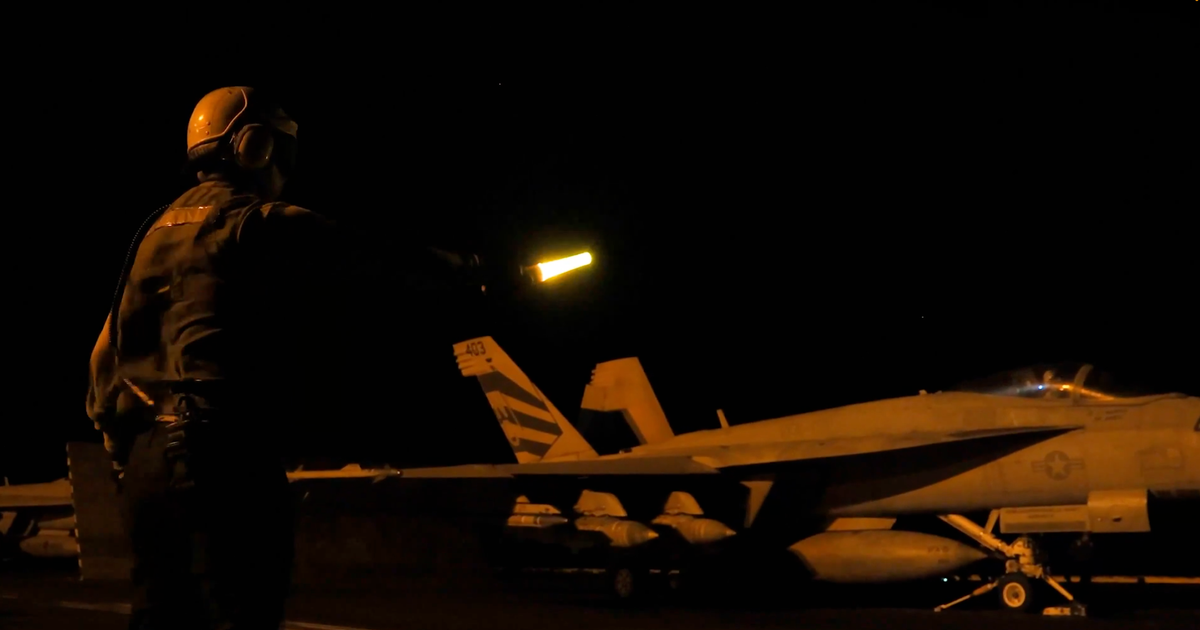
Explosions and air raid sirens punctuated a third consecutive night of American military action against Iran, even as President Trump insisted Washington intends to maintain open passage through the Strait of Hormuz, one of the world's most critical oil shipping corridors. The overnight operations mark an escalation that shows no sign of a quick resolution, with both sides continuing to trade blows across the region.
Early Tuesday, air raid warnings blared across Bahrain for the third time that morning, a signal that Tehran was striking back after the U.S. military campaign against Iranian targets. The tiny Gulf archipelago, positioned just off Saudi Arabia's eastern coast, found itself squarely in the path of the widening confrontation.
Bahrain's significance extends well beyond its size: the kingdom serves as home base for the U.S. Navy's 5th Fleet, the force responsible for American naval operations across the Persian Gulf, Red Sea and surrounding waterways. That positioning makes it a natural flashpoint whenever tensions between Washington and Tehran boil over, since Iranian retaliatory fire aimed at U.S. military assets in the region risks landing near or on Bahraini soil.
Authorities in Manama responded by directing residents to move indoors and seek shelter as the alerts sounded, a precaution reflecting how quickly the standoff has begun affecting civilian populations well away from the primary battle lines in Iran. As of the latest reports, officials had not confirmed whether the strikes tied to the sirens caused any destruction or hurt anyone on the ground.
The stakes extend far beyond Bahrain's borders. The Strait of Hormuz, the narrow chokepoint separating the Gulf from the Arabian Sea, carries a substantial share of the globe's seaborne crude oil and natural gas exports. Any disruption there tends to ripple immediately through energy markets, and Iranian officials have periodically floated the possibility of closing or restricting traffic through the waterway as leverage against Western pressure.
Against that backdrop, Trump's pledge to keep the strait open reads as both a strategic assurance to global markets and a warning to Tehran against attempting to choke off the passage. His comments suggest the administration views maintaining freedom of navigation there as a core objective of the broader military campaign, not merely a side effect of striking Iranian facilities.
Not everyone shares Washington's framing of the conflict's trajectory. Gulf neighbors and international shipping interests have voiced concern that continued exchanges raise the odds of a miscalculation dragging in additional countries or disrupting commerce for an extended stretch, even if Iran has not yet moved to actually block the strait. Analysts have also cautioned that repeated Iranian retaliatory strikes toward Bahrain and other host nations for U.S. forces could broaden the conflict's footprint well beyond the two principal combatants.
With the situation still unfolding and casualty figures unconfirmed, attention now turns to whether Iran escalates further, whether the ceasefire efforts referenced in diplomatic circles gain traction, and how long Gulf states can absorb the disruption before broader economic or humanitarian consequences set in.
Source: CBS World
Related articles
Alvarez's 112th-minute goal helps lift Argentina past Switzerland 3-1 and into World Cup semifinals
Julian Alvarez sent defending champion Argentina into the World Cup semifinals with a long-range strike in the 112th minute against Switzerland.

Create AI images with your own API key
aixipi runs on desktop/web, uses your own model API balance, and avoids subscription lock-in.
Try aixipi →
U.S. conducts another round of retaliatory strikes on Iran, Pentagon says
U.S. forces conducted their third round of strikes on Iran this week, this time in retaliation for an attack on a commercial ship in the Strait of Hormuz, the Pentagon said.
One of Spain's deadliest wildfires has killed at least 11 people
A wildfire in southern Spain has killed at least 11 people, making it one of the country's deadliest on record, as soaring temperatures grip much of the country.