
Scientists just discovered a lost branch of Australia’s marsupials
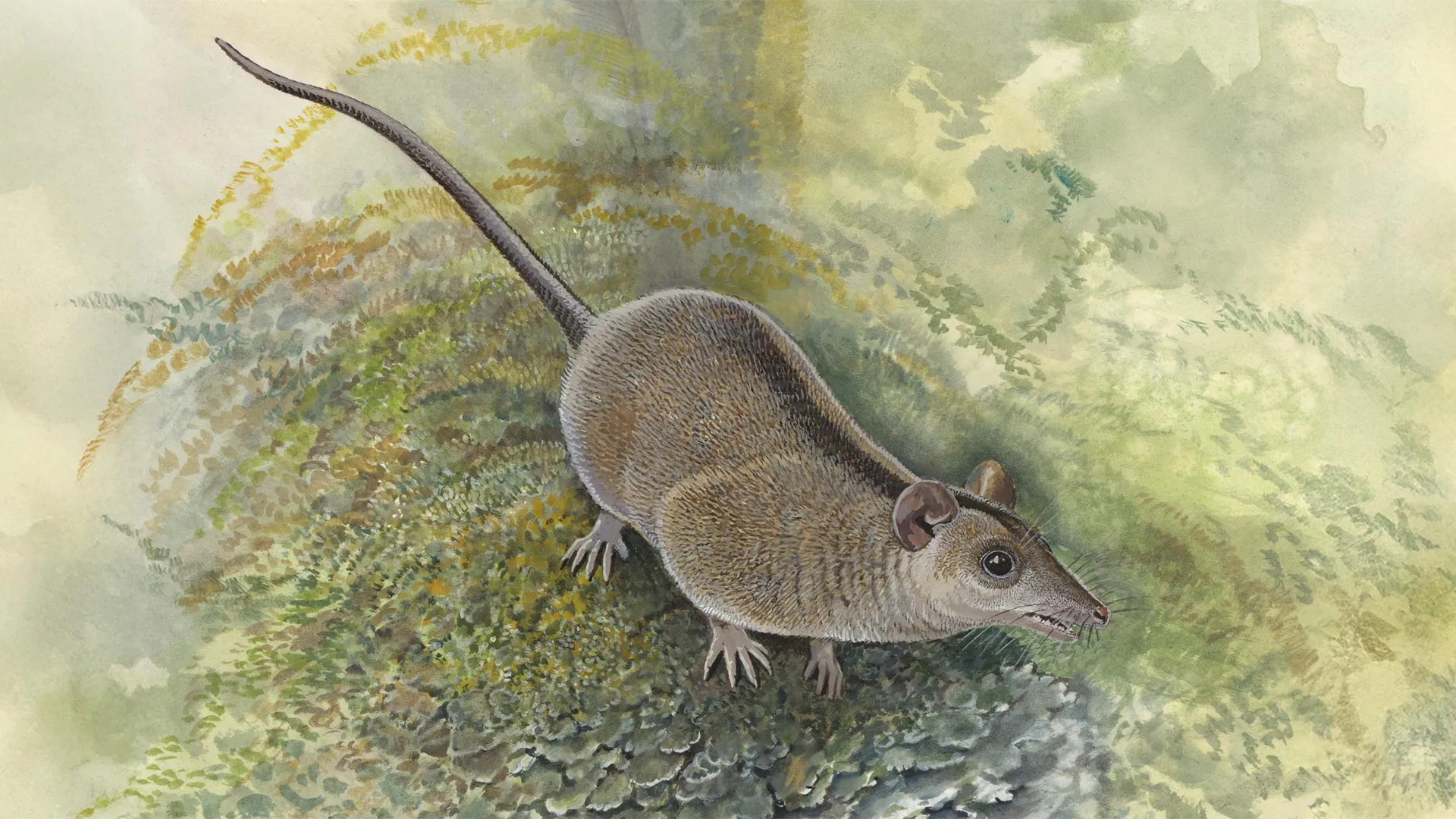
Paleontologists working in Queensland have identified fossil evidence of a previously unrecognized order within the marsupial family tree, one that appears to have persisted on the Australian continent for roughly 35 million years before vanishing. The find forces a rethink of how the continent's signature mammals came to be, suggesting their family history is far more tangled than textbooks have assumed.
For decades, the working assumption was that Australia's marsupials descended in a relatively tidy fashion from one ancestral stock that arrived and then branched outward over time. The newly described lineage undercuts that tidy narrative, pointing instead to a family tree with an extra, long-hidden limb that evolved on its own trajectory for tens of millions of years.
Marsupials are not native to Australia in the sense of having originated there; they arrived on the continent more than 55 million years ago, likely via ancient land connections through Antarctica and South America during a warmer geological era. Once established, they diversified explosively, filling ecological niches that placental mammals occupy elsewhere in the world.
That diversification produced the roughly 160 marsupial species alive in Australia today, an assortment that ranges from the barely believable to the deeply strange. In the alpine High Country, tiny possums no bigger than a thumb pack on fat reserves and hibernate through the harsh winter months. Out in the arid Red Centre, meanwhile, a small burrowing marsupial mole has evolved without functional eyes and sports a distinctive pink coat, spending virtually its entire existence beneath the desert sand.
Despite that remarkable spread of adaptations, researchers have long acknowledged how little is actually known about the mechanics of marsupial diversification in Australia. The fossil record has enormous holes in it, particularly for the early stretches of the group's history, leaving scientists to infer evolutionary relationships from fragmentary and widely scattered remains rather than a continuous chain of evidence.
The Queensland fossils help fill in one of those blank stretches, but they also complicate the picture by introducing an entire branch of animals that does not fit neatly into the existing evolutionary scheme. Because this lineage apparently thrived for so long before disappearing, its discovery raises fresh questions about why it died out while other marsupial groups went on to flourish and diversify into the species seen today.
Researchers note that a single fossil discovery, however significant, rarely settles debates over deep evolutionary history on its own; confirming a genuinely new order typically requires additional specimens, comparative anatomical study, and likely molecular or morphological analysis to firmly place the animals relative to known marsupial groups. Further fieldwork in the fossil-rich deposits of Queensland is expected to test whether this lost branch was an isolated curiosity or a sign that Australia's marsupial family tree has other hidden limbs still waiting to be found.
Source: ScienceDaily
Related articles

Physicists created a tiny universe where time emerged without a clock
What if time doesn't actually exist until something changes? Scientists at the University of Birmingham created a tiny "mini universe" using 24,000 ultracold atoms and showed that the flow of time can emerge naturally from changes inside a quantum system, without r

Create AI images with your own API key
aixipi runs on desktop/web, uses your own model API balance, and avoids subscription lock-in.
Try aixipi →
Scientists just debunked a dangerous baby rattlesnake myth
A new study debunks the long-standing claim that baby rattlesnakes are more dangerous than adults. Researchers found that young rattlesnakes can control their venom just like adults, while adult snakes usually inject much more venom and cause more serious bites. The team also unc
Ebola death toll reaches 600, as new cases suspected in other parts of Congo
New suspected cases of Ebola have been reported in parts of Congo that were previously unaffected, the government said, signaling the continued spread of the disease beyond the epicenter in Ituri.