
Strong 7.1 magnitude earthquake strikes southern Japan
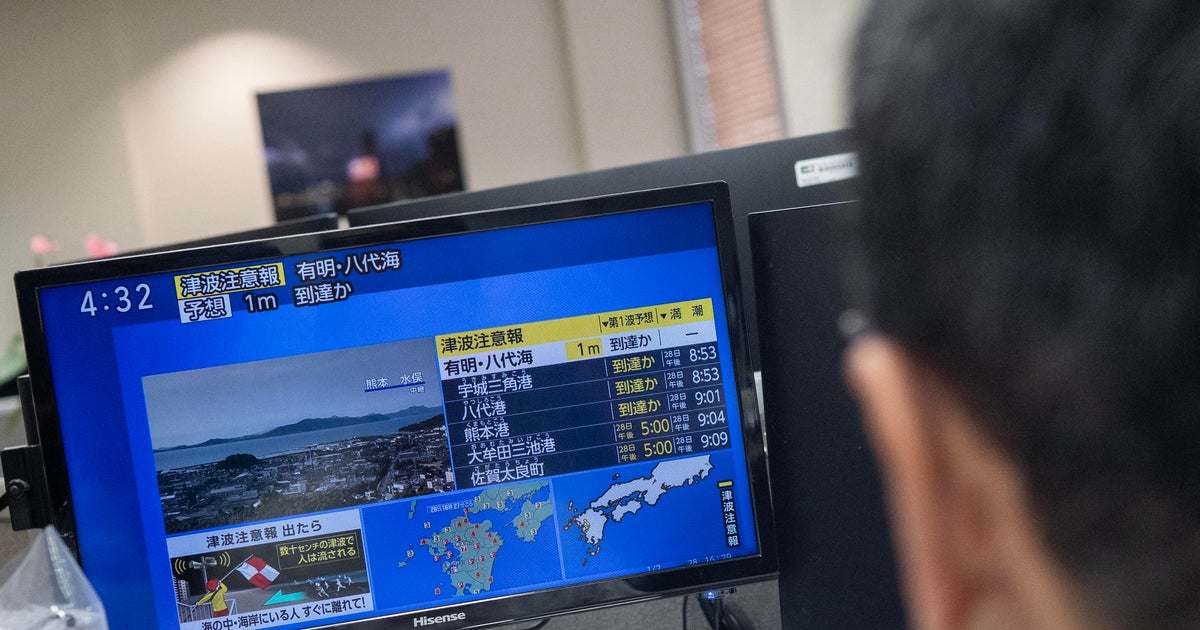
A powerful earthquake struck southern Japan on Tuesday, prompting a short-lived tsunami warning and interrupting transportation in the affected area. Japan’s Meteorological Agency put the event at magnitude 7.1, while the U.S. Geological Survey assessed it at 6.8. Despite the force of the shaking and the initial emergency response, authorities reported no major damage, deaths or serious injuries. The early picture was therefore one of a severe seismic event with limited known physical consequences.
The epicenter was close to Kumamoto, a city in southern Japan roughly 600 miles from Tokyo. That location placed the quake in a region where a strong jolt can quickly affect roads, rail services and other everyday travel. The reported transport disruption was the clearest immediate consequence described after the quake, while the initial damage picture remained limited. No information in the initial accounts suggested that the capital itself was at the center of the event.
Japan issued a tsunami alert after the earthquake, warning that waves of about one yard could reach the coast. Such alerts are intended to give people near shorelines time to move away from potentially hazardous areas while officials assess the event. They can be issued before the full effects of an undersea or near-coastal earthquake are known. The warning was subsequently cancelled, easing the immediate concern that the quake would produce a damaging coastal surge.
Early checks also found no reported irregularities at nuclear power plants in the surrounding region. That assessment was an important part of the first official response because Japan closely monitors nuclear facilities after significant seismic events. The absence of an identified problem did not change the scale of the earthquake, but it meant there was no known plant-related emergency in the initial aftermath.
The Japan Meteorological Agency said the shaking reached level seven on the country’s Shindo intensity scale, its highest rating. Magnitude describes the energy released by an earthquake, whereas an intensity scale reflects how strongly it is felt at a particular place. A level-seven reading signals exceptionally severe local shaking, even when broader reports do not show widespread catastrophic damage. The distinction helps explain how an event can be intensely felt near its center without producing reports of major destruction across a wider area.
The differing magnitude figures from Japan’s weather agency and the U.S. Geological Survey do not alter the central account: the quake was a major event. Seismological agencies can reach different early estimates as they analyze recordings from separate networks and apply their own methods. For residents and emergency planners, the immediate practical questions were the severity of ground motion, the tsunami risk and whether vital infrastructure had been affected.
Japan’s response to such events is shaped by its exposure to frequent earthquakes and by procedures that prioritize fast public warnings. Tuesday’s sequence illustrated that approach: a coastal alert followed the strong tremor, checks were made for damage and nuclear-facility issues, and the alert was withdrawn when the expected threat no longer required it. The available information pointed to disruption rather than a large-scale disaster. It also showed why officials must respond to the possibility of secondary hazards even when the first reports do not indicate extensive losses.
Even so, the initial absence of grave damage or casualties is not the same as a final accounting. After a major earthquake, officials typically continue inspections of buildings, transport links and other infrastructure as information arrives from across the affected area. These follow-up checks matter because some impacts can be identified only after services resume and local assessments are completed. The reports available after this quake indicated no serious problems, but the assessment remained focused on confirming conditions following the powerful shaking.
Attention will remain on any updated official findings from southern Japan, including whether transport services return to normal and whether later inspections identify damage not apparent in the first reports. The cancelled tsunami alert and the lack of reported nuclear abnormalities narrowed the immediate emergency. But the highest Shindo reading underscored how intense the earthquake was for communities nearest Kumamoto. For now, the available facts describe a significant earthquake that triggered precautionary measures but no reported major disaster.
Source: CBS World
Related articles

Netanyahu to meet Trump in a first encounter since the Iran war began
The meeting comes as both face pressures at home. Netanyahu is up for reelection, embattled in part due to his deteriorating relationship with Trump. Trump is under pressure to end an unpopular war.

Create AI images with your own API key
aixipi runs on desktop/web, uses your own model API balance, and avoids subscription lock-in.
Try aixipi →
With wildfires raging in France and Spain, fire crews race against next heat wave
French authorities ordered nearly 4,000 people evacuated Tuesday from tourist sites on the Atlantic coast as returning heat threatened firefighters' fragile hold on a vast wildfire west of Bordeaux.

Knife attack in Paris thwarted by quick-thinking bystander, witness says
Officials say the motive behind a violent attack on three women in Paris is unclear, but the suspect shouted incoherently after being tackled by bystanders.