
Two Thousand Years Ago, a New Ice Age Began—but Human-Caused Climate Change Recently Reversed It, According to New Research

A small remnant of an ice system that once reshaped much of North America may preserve evidence of an interrupted climatic turn. New research says Canada’s Barnes Ice Cap began gaining ice roughly 2,000 years ago, behavior the scientists interpret as the opening phase of a new ice age. That growth did not last: the record points to a reversal during the 1960s, as industrial-era warming intensified.
The study, published October 22 in Science, traces the advance and retreat of the Barnes Ice Cap on Baffin Island in Nunavut. Researchers reconstructed its history to examine a landscape that is now dramatically reduced from its ancient scale. Their conclusion is that human-produced greenhouse gases may have raised global temperatures enough to halt a long-term natural cooling trajectory that had already begun to emerge.
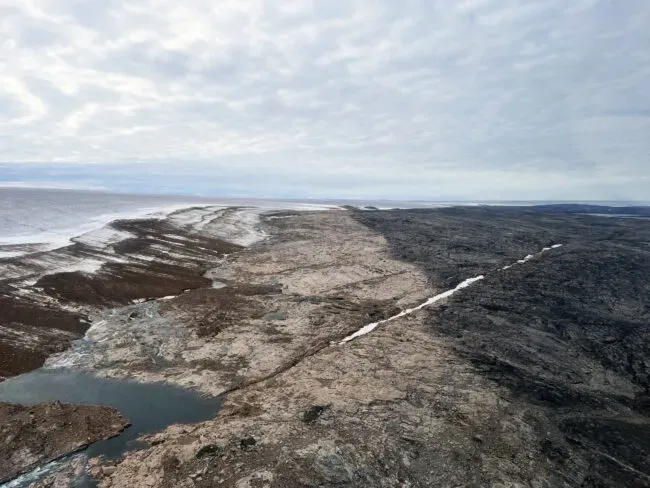
Barnes is not a vast continental wall of ice today. It is an isolated Canadian ice cap, about the size of Delaware, and one of the last surviving pieces associated with the Laurentide Ice Sheet. That earlier ice mass occupied an extraordinary share of North America during the distant past, making the modern remnant a valuable, if limited, archive of how the wider system changed.
At its maximum, about 20,000 years ago, the Laurentide Ice Sheet spread across nearly three-tenths of the continent. It covered much of what is now Canada and reached south from areas beyond the Arctic Circle to present-day Illinois. In some places its depth exceeded two miles, illustrating the scale of an ice body that governed the appearance of northern landscapes for a long period.
The researchers’ timeline places a renewed expansion of the Barnes Ice Cap around the beginning of the first millennium. Ice accumulation by itself does not offer a simple forecast for the entire planet, but in this reconstruction it is treated as a sign that conditions favorable to glaciation were returning. The central finding is not that a full ice age was imminent on a human timetable; it is that a natural trend toward greater ice was underway at this surviving site.
That trend changed in the twentieth century. The analysis identifies the 1960s as the point at which Barnes began to retreat rather than continue expanding. The timing links the shift to warming from industrial development and the greenhouse-gas emissions associated with it. In that reading, modern climate change did more than reduce ice in the present: it counteracted a much older cooling pattern.
The result gives the Barnes Ice Cap a dual role in the climate story. It is both a fragment of the Laurentide system and a record of recent change. Its small present footprint should not obscure the scale of what it represents: a remnant landscape can show how shifts in temperature alter ice over very different timescales, from centuries of slow growth to relatively rapid modern retreat.
There is also an important limit to what the finding establishes. The research concerns the reconstructed history of one ice cap, even if that cap is connected to a continental-scale predecessor. It does not mean that every element of Earth’s climate system would have followed the same path or that the details of a future ice age can be read directly from Barnes. Instead, the study offers evidence that a detectable cooling tendency was reversed.
What happens next for the ice cap will depend on the climate conditions it encounters after its twentieth-century change in direction. The study’s broader implication is that industrial warming has become powerful enough to alter processes that began long before modern societies. For observers of the far north, the next question is how long the remaining ice can continue to preserve that record as the forces identified in the research keep reshaping it.
Source: Smithsonian Magazine
Related articles

An Italian Farmer Found Some Unknown Seeds in His Attic and, With Nothing to Lose, Planted Them. The Result Was Almost Biblical
When a seven-eared stem emerged from the ground, it seemed like a miracle. What Claudio Grossi had unearthed was an ancient grain that proved to be an answer to some modern problems

Play Tractor online with friends — free
Real-time Sheng Ji / Tractor for 3–5 players, with complete bidding and trump rules across web, iOS and Android.
Play bidfive →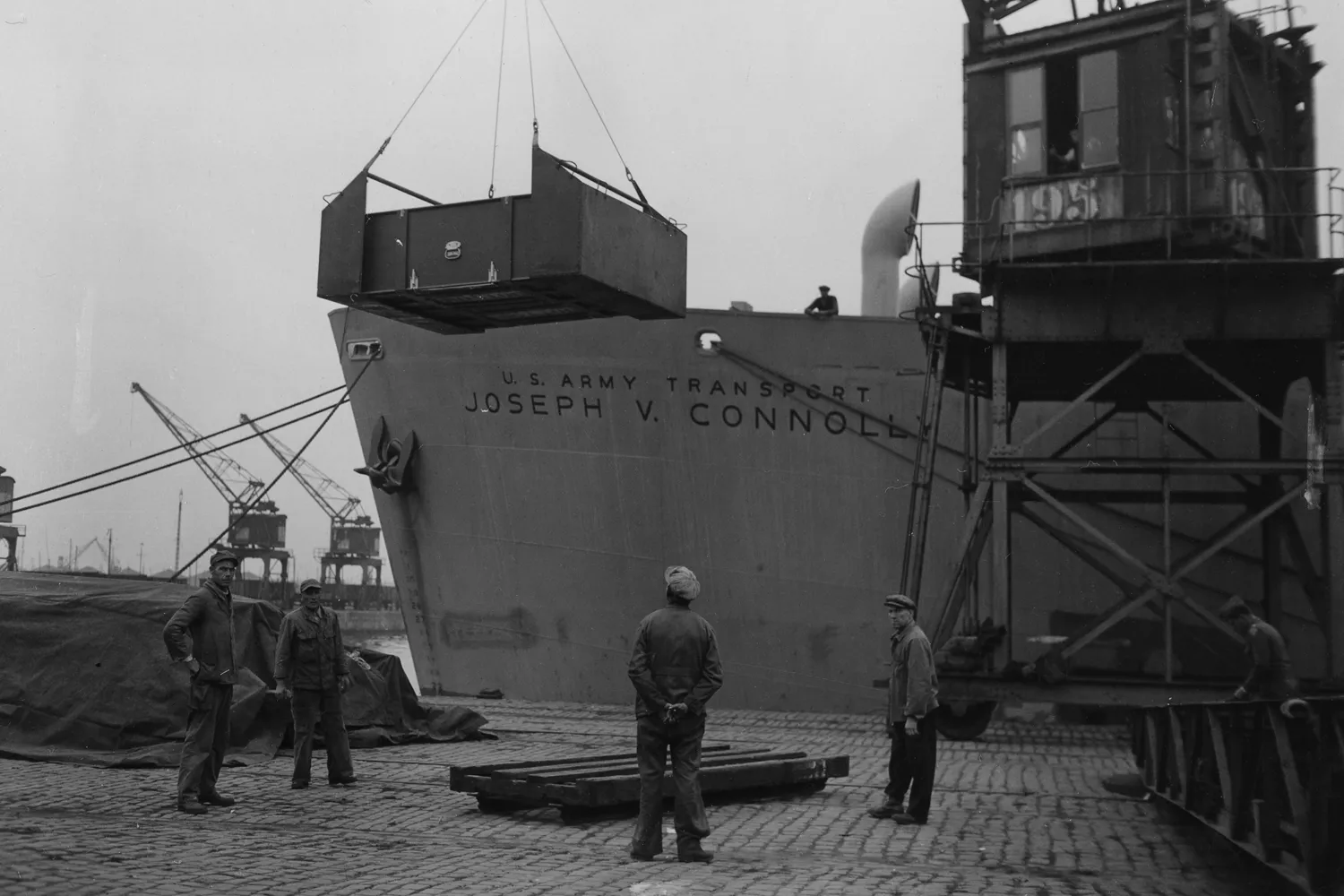
Two Years After World War II Ended, This Ship Brought the Bodies of 6,251 Fallen Service Members Back Home to America
The S.S. "Joseph V. Connolly" arrived in New York City on October 26, 1947. The caskets stored in its holds contained the remains of privates and three-star generals alike
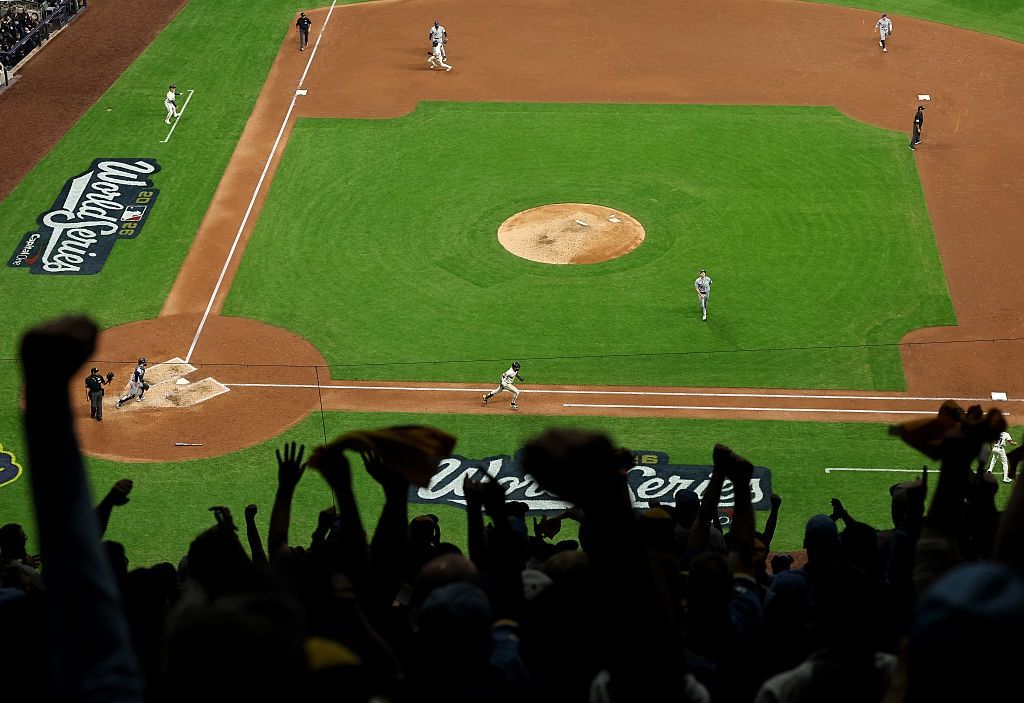
Art Museums in Milwaukee and Tampa Bay Are Betting That Their Hometown Baseball Teams Will Win the World Series. The Wager? Monet Paintings
As the Brewers take on the Rays in the Fall Classic, two art museums are engaged in a friendly bit of sports betting: The winning city (temporarily) gets a Monet from the other city's collection

GTA 6 guides, updates and practical reference
Explore a Chinese GTA 6 guide library covering the release, map, characters, missions, vehicles and weapons.
Browse guides →
Create AI images with your own API key
aixipi runs on desktop/web, uses your own model API balance, and avoids subscription lock-in.
Try aixipi →