
A Century Ago, an Extinct Crocodilian's Skull Was Found in the Rocks That Built the Sphinx. Turns Out, It Belonged to a New Species
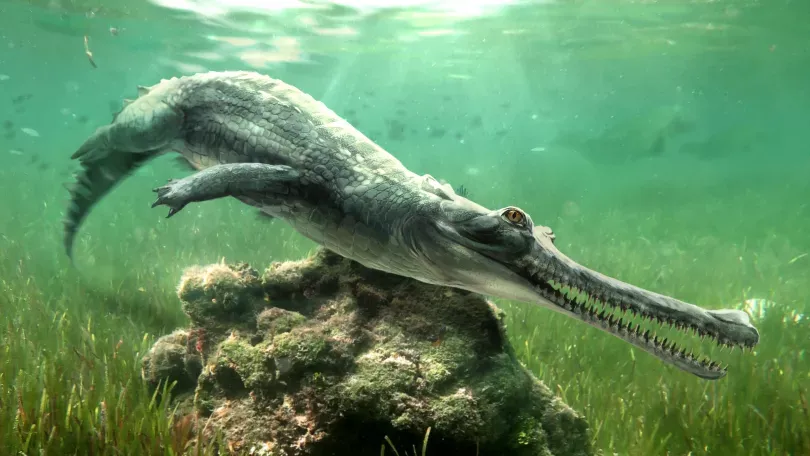
A crocodilian skull recovered near Cairo roughly a century ago has been reclassified as the defining specimen of an entirely new extinct gavial lineage. A recent study concludes that the fossil was not a member of the genus to which it had long been assigned, but represents both a previously unrecognized genus and a new species. The researchers chose a name that invokes Horus, the ancient Egyptian deity, linking the animal’s scientific identity to the landscape from which it emerged.
The finding revises the history of a specimen that had appeared settled for decades. Gavials are relatives of crocodiles and alligators, though their evolutionary branches are distinct. The skull’s reassessment shows how an old museum fossil can yield a different conclusion when it is examined with tools and comparisons unavailable to the scientists who first described it.
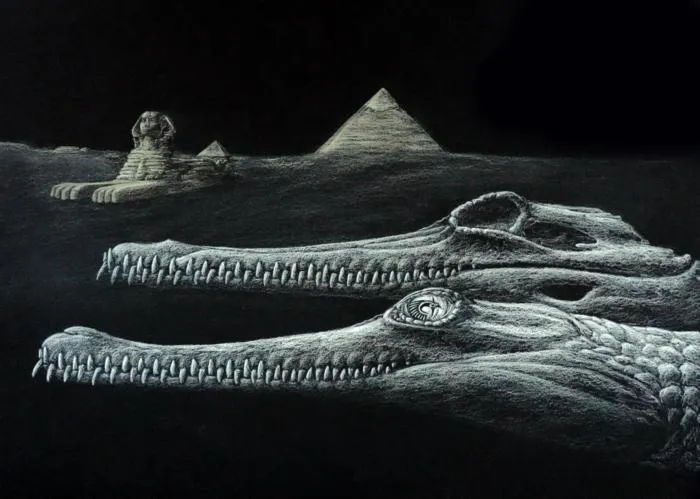
Its setting gives the discovery an additional Egyptian connection. About 4,500 years ago, builders fashioned the Great Sphinx at Giza from limestone belonging to the Mokattam Formation. That same rock sequence held remains from a vastly earlier world, including evidence of extinct crocodilian life. The Sphinx and the fossil therefore come from related geological material, even though their histories are separated by many millions of years.
Fossil material began turning up in the Mokattam Formation near Cairo during the 1920s. Among the recovered pieces was a notably complete skull from an animal with a crocodile-like form. The deposits that produced it are approximately 45 million years old, placing the animal far before the period in which humans transformed nearby stone into monuments.
Early specialists saw similarities between the skull and Tomistoma schlegelii, a living gavial found in Indonesia and Malaysia. On that basis, the Egyptian remains were placed within the genus Tomistoma. The largely preserved skull subsequently served as the holotype for the extinct species T. cairense, meaning that it was the reference fossil tied to that scientific name.
The new analysis reopened that classification through micro-computed tomography, or micro-CT. The method lets researchers inspect a fossil’s internal features without cutting it apart. By looking beneath the skull’s surface, the team identified multiple anatomical distinctions between the Mokattam animal and members of Tomistoma, differences that earlier work could not examine in the same way.
Those observations were tested against a broader set of measurements. The team compared the Egyptian skull with both living and fossil gavials, rather than relying only on an overall visual resemblance to a modern species. The skull, about 18 inches in length, fell outside the pattern expected for Tomistoma. In the researchers’ view, the evidence is strong enough to require a new genus as well as a new species.
The revision also illustrates a caution in paleontology: an influential fossil label can endure because a specimen resembles a familiar animal, even when that resemblance does not capture all of its anatomy. The earlier identification was based on the knowledge and material then available. The current study does not change the fossil’s age or location, but it changes how the animal is placed within the wider gavial family tree.
Further work will depend on how the revised classification is assessed alongside other gavial fossils and on whether additional remains from the Mokattam Formation can be studied. The existing skull is unusually important because of its preservation and its former role as a name-bearing specimen. For now, the case adds a new extinct branch to the record of crocodilian relatives and highlights a hidden prehistoric layer in stone associated with one of Egypt’s best-known monuments.
Source: Smithsonian Magazine
Related articles

Immerse Yourself in the Cosmos at Frank Lloyd Wright's Only Planetarium, Recently Restored to Its Former Glory in Florida
Completed in 1958, the domed building is located on the campus of Florida Southern College, home to 13 Wright-designed buildings, the world's largest single-site collection of the architect's work

Play Tractor online with friends — free
Real-time Sheng Ji / Tractor for 3–5 players, with complete bidding and trump rules across web, iOS and Android.
Play bidfive →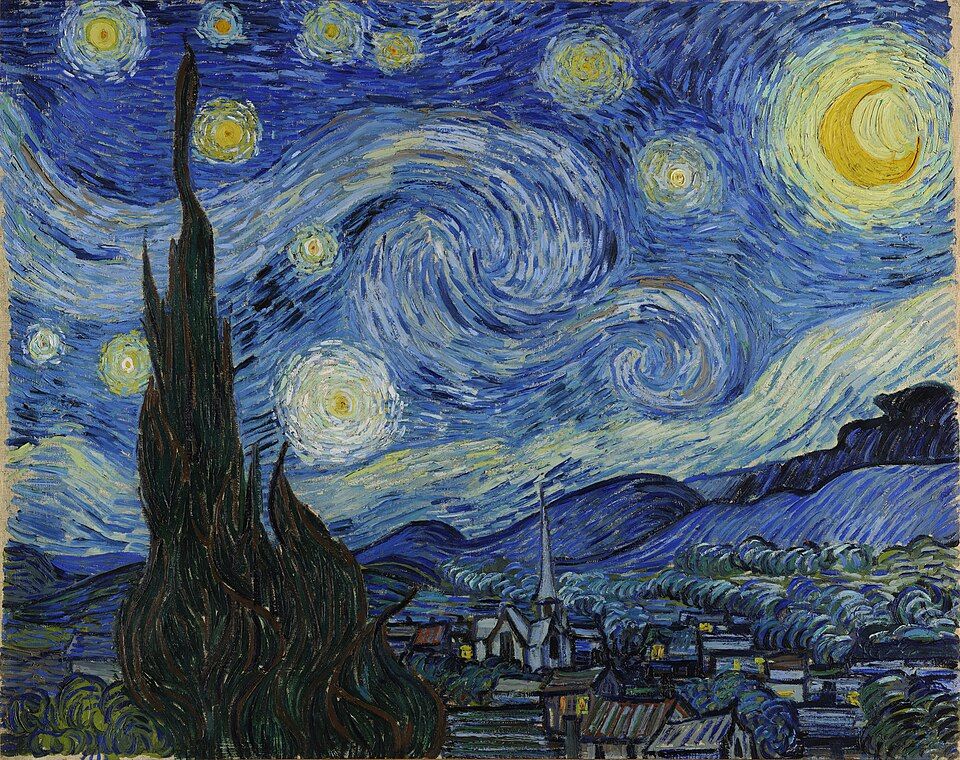
A Team of Astronomers Thinks They Have Identified the Exact Night Sky That Inspired Vincent van Gogh's 'Starry Night.' Not Everyone Is Convinced
Very few night skies seen from the south of France during the summer of 1889 would match the scene on van Gogh's canvas. A new study argues that it could have been July 22

'Pretty Boy' Floyd, One of the Most Notorious Outlaws of the Great Depression, Was Shot and Killed in an FBI Raid 92 Years Ago
Some Americans lauded the 30-year-old bank robber as a Robin Hood-esque folk hero. Others castigated him as a violent criminal whose misdeeds were emblematic of the troubled era

GTA 6 guides, updates and practical reference
Explore a Chinese GTA 6 guide library covering the release, map, characters, missions, vehicles and weapons.
Browse guides →
Create AI images with your own API key
aixipi runs on desktop/web, uses your own model API balance, and avoids subscription lock-in.
Try aixipi →