
Immerse Yourself in the Cosmos at Frank Lloyd Wright's Only Planetarium, Recently Restored to Its Former Glory in Florida

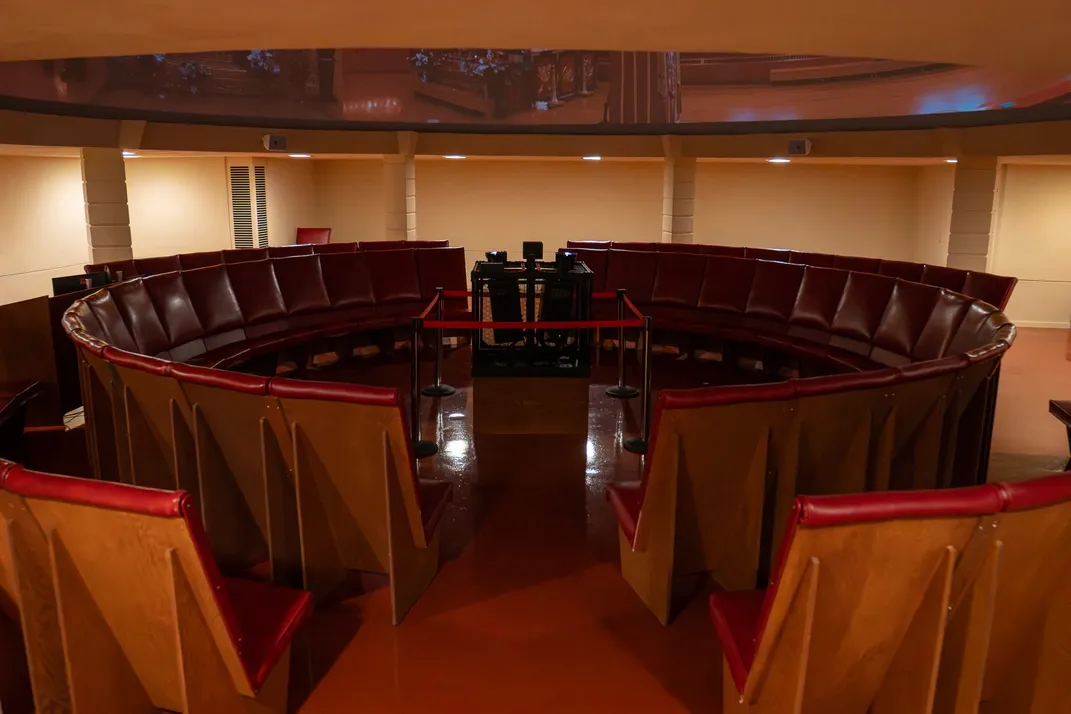
Florida Southern College has reopened the planetarium inside its Polk County Science Building after a lengthy restoration that returns a singular Frank Lloyd Wright design to public use. The domed venue, designed by Wright and finished in 1958, had been inactive for years after its old projection equipment stopped working. Its revival follows almost six years of repair work and a modernization of its technical systems.
The reopening matters beyond a routine campus upgrade. Wright produced more than 1,000 architectural designs during his career, but only a little over 500 were built. His completed work ranges from homes and churches to theaters. The Florida Southern installation is the only planetarium among those realized projects, giving the restored room an unusually distinct place in the architect’s legacy.
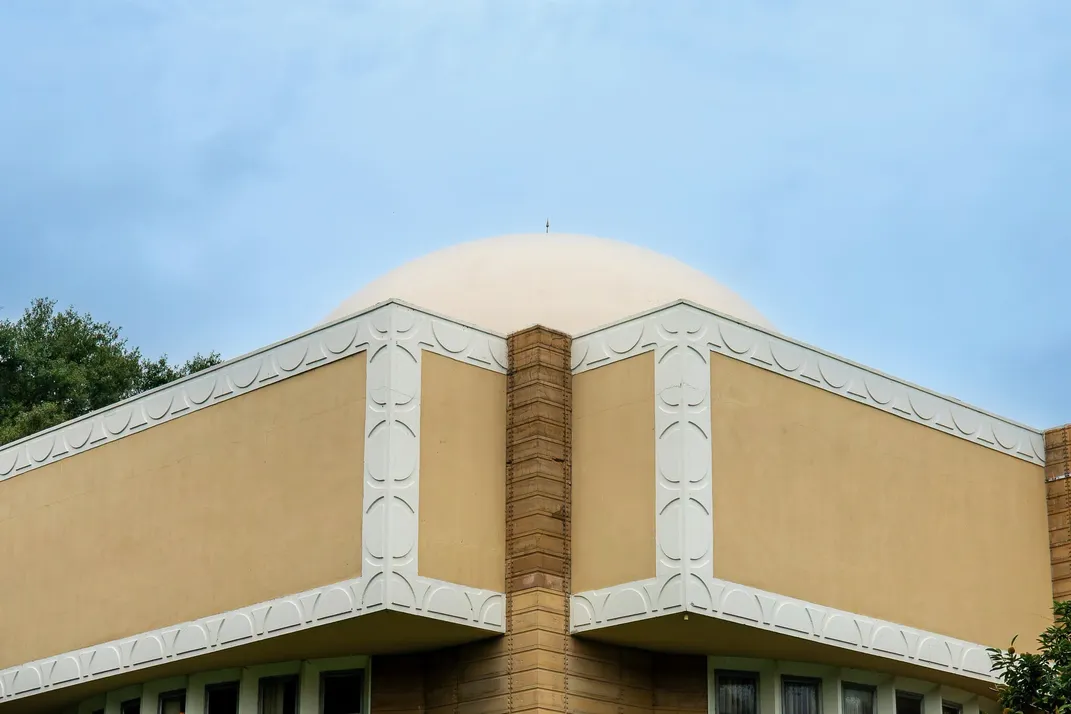
Visitors will find it within a much larger Wright landscape. Florida Southern’s campus contains 13 buildings he designed, making it the largest collection of his architecture gathered at one location anywhere in the world. The science building and its dome are therefore part of a campus-wide ensemble rather than an isolated landmark. Restoring the planetarium brings an operational cultural and educational destination back into that setting.
The facility began welcoming audiences in 1960, shortly after the science building was completed. For decades, it offered a way to encounter astronomy beneath Wright’s dome. That role ended in 2004, when the projector failed. Without equipment capable of creating the night-sky experience, the planetarium went dark and remained unavailable for more than 20 years.
That long closure reflects a wider problem faced by historic places whose original purpose depends on aging machinery. Preserving a distinctive structure is not always sufficient when the experience inside it also relies on technology that becomes obsolete, breaks down or cannot easily be replaced. At the planetarium, the response was not merely cosmetic work: the college combined restoration with a technological overhaul intended to make presentations possible again.
The project was carried out alongside a broader effort to care for Wright’s buildings at the college. Architect Jeff Baker, who is leading campus-wide work on those structures, said the institution had continued searching for an opportunity to return the planetarium to service. He pointed to its potential to engage audiences of many ages through both the view of the heavens and Wright’s architectural vision.
For the college, that dual identity creates both an opportunity and a responsibility. The dome is an architectural artifact, but it was also made as a place where audiences could learn and look outward. Its reopening reconnects those roles: visitors can enter a surviving Wright interior while using it for the kind of astronomical presentation that had been impossible during the long closure.
The renewed venue also broadens the way Wright’s work can be understood. His reputation is often associated with residential architecture, yet Florida Southern demonstrates the scale and variety of his institutional commissions. The planetarium adds another dimension, placing a celebrated architect’s work in a specialized scientific setting. Its importance lies not only in its age, but in that uncommon meeting of design, education and astronomy.
What follows will be measured by use rather than by the restoration announcement alone. The new systems have restored public access, but the planetarium’s future will depend on remaining an active part of campus and community life. For now, the work has ended a two-decade interruption and reopened a rare space where architectural history and an encounter with the cosmos share the same room.
Source: Smithsonian Magazine
Related articles
A Team of Astronomers Thinks They Have Identified the Exact Night Sky That Inspired Vincent van Gogh's 'Starry Night.' Not Everyone Is Convinced
Very few night skies seen from the south of France during the summer of 1889 would match the scene on van Gogh's canvas. A new study argues that it could have been July 22

Play Tractor online with friends — free
Real-time Sheng Ji / Tractor for 3–5 players, with complete bidding and trump rules across web, iOS and Android.
Play bidfive →
'Pretty Boy' Floyd, One of the Most Notorious Outlaws of the Great Depression, Was Shot and Killed in an FBI Raid 92 Years Ago
Some Americans lauded the 30-year-old bank robber as a Robin Hood-esque folk hero. Others castigated him as a violent criminal whose misdeeds were emblematic of the troubled era
The Canadian Artist Jean Paul Riopelle Was 'Completely Absorbed by the Act of Painting.' His Abstract Works Finally Have Their Own Home in a Quebec Museum
Home to the world’s largest public collection of his artworks, a new pavilion at Quebec's Musée National des Beaux-Arts showcases the more than 50-year career of Riopelle, who was a key member of the avant-garde Automatistes movement

GTA 6 guides, updates and practical reference
Explore a Chinese GTA 6 guide library covering the release, map, characters, missions, vehicles and weapons.
Browse guides →
Create AI images with your own API key
aixipi runs on desktop/web, uses your own model API balance, and avoids subscription lock-in.
Try aixipi →