
The Canadian Artist Jean Paul Riopelle Was 'Completely Absorbed by the Act of Painting.' His Abstract Works Finally Have Their Own Home in a Quebec Museum
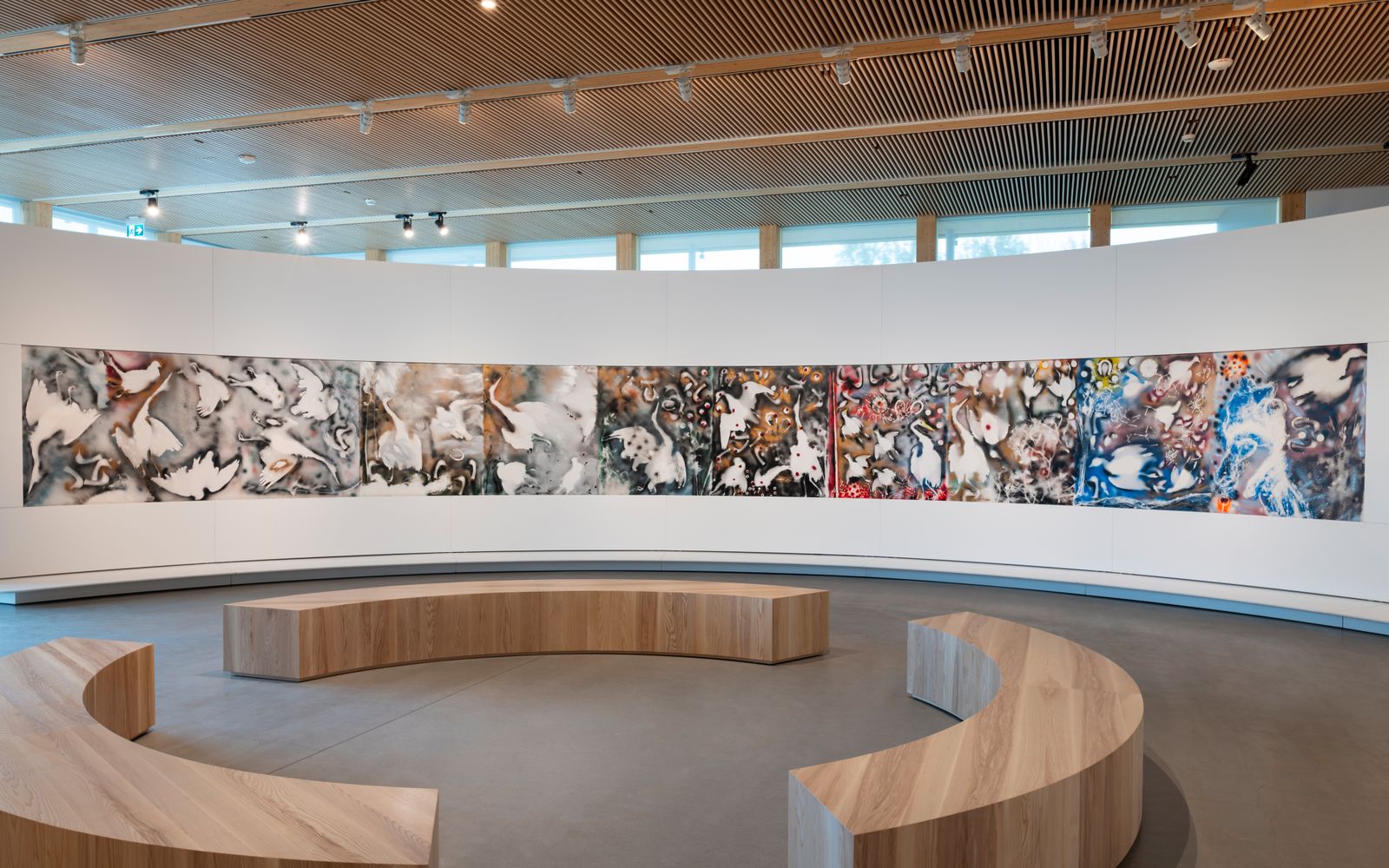
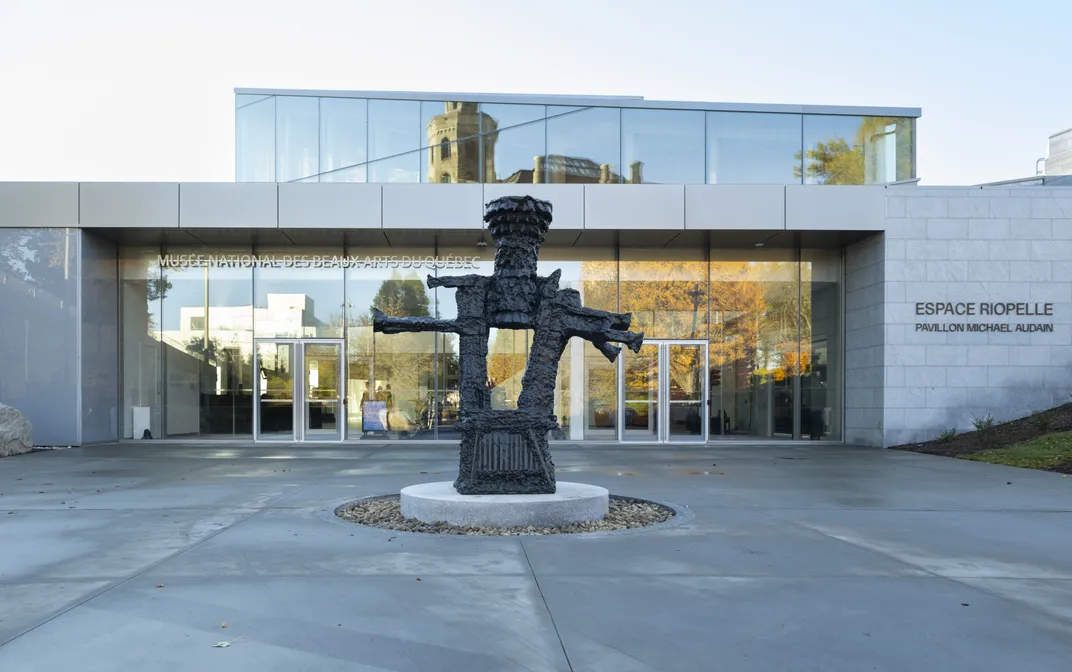
A new pavilion at Quebec City’s Musée national des beaux-arts du Québec is set to open in tribute to Jean Paul Riopelle, placing the work of one of Canada’s best-known modern artists in a dedicated permanent setting. The Espace Riopelle–Michael Audain Pavilion arrives nearly a quarter-century after Riopelle’s death and will hold the largest publicly accessible collection of his art anywhere in the world. Its launch gives visitors a broad view of an artist whose career extended for more than five decades.
The museum’s new space is named for both Riopelle and Michael Audain, the philanthropist who helped establish the Jean Paul Riopelle Foundation. The pairing reflects an effort to connect the artist’s legacy with the institutions and supporters working to preserve it. Rather than presenting Riopelle as a single-period figure, the pavilion is intended to trace the range of his long practice across painting, sculpture and changing artistic interests.
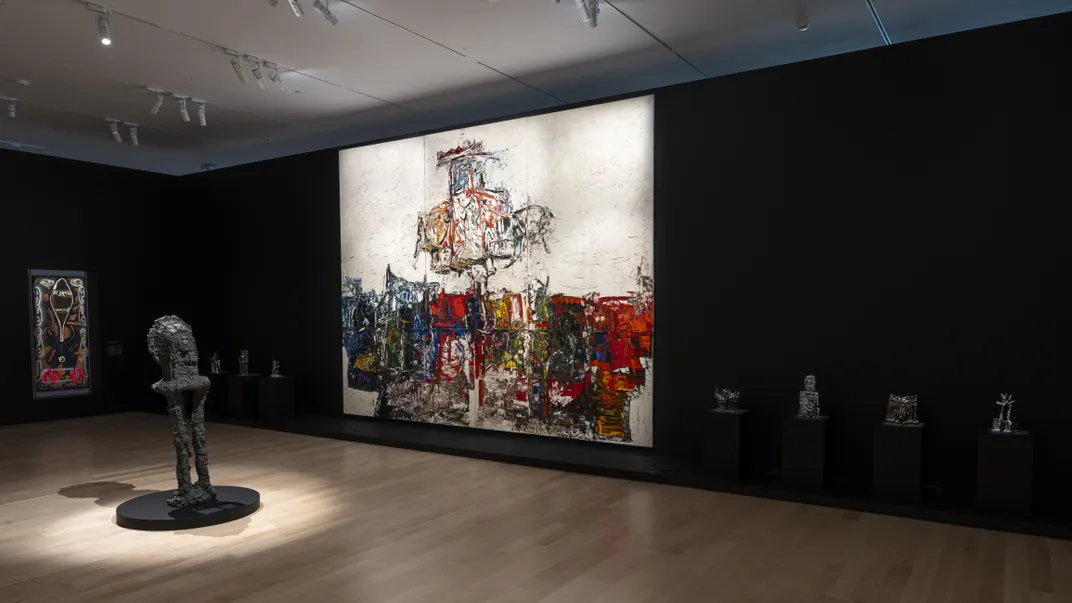
Riopelle was born in Montreal in 1923 and became an internationally recognized force in 20th-century abstract art. He was closely associated with the Automatistes, an avant-garde Quebec movement that emphasized spontaneity and freedom from conventional artistic controls. That affiliation placed him within a wider cultural break from established expectations, while his later career helped carry his work well beyond the local scene in which he first developed.
His best-known canvases are often described as mosaics because of their dense, interlocking fields of color and texture. Riopelle did not rely on a smooth, carefully blended painted surface. Instead, he pressed oil paint from tubes and worked it across the canvas with a palette knife, building images from clustered marks. The resulting surfaces can suggest fragments, landscapes or shifting natural forms without settling into a conventional representational scene.
The method also helps explain why Riopelle’s work has remained difficult to reduce to a single reading. From a distance, the paintings can appear to form expansive visual patterns; at closer range, their thick paint and individual gestures become more apparent. The new presentation gives the museum an opportunity to show how the physical act of applying paint was central to his output, rather than treating abstraction as simply an absence of recognizable subjects.
One of the pavilion’s most prominent works will be Tribute to Rosa Luxemburg, a 1992 piece installed on the top floor. Riopelle made the work after the death of Joan Mitchell, his longtime companion. Its placement gives the building a major late-career focal point and links the museum’s account of the artist to a personal loss that shaped one of his final large-scale projects.
The opening is significant not only because it expands public access to Riopelle’s art, but because it concentrates a major collection in Quebec, the province that shaped his early artistic identity. A dedicated home can make it easier for viewers to follow continuities between his early avant-garde connections and later achievements. It also creates a setting in which paintings and sculptures can be considered together, rather than encountered as isolated examples in broader modern-art displays.
Still, a permanent pavilion does not provide a final answer to how Riopelle’s art should be understood. His work belongs to the history of abstract expressionism, yet his materials, technique and Quebec roots give it a distinct place within that story. What visitors will be able to watch as the museum opens the space is how the collection balances those overlapping perspectives: Riopelle as an international modernist, an Automatiste and an artist deeply committed to the process of making.
Source: Smithsonian Magazine
Related articles

Immerse Yourself in the Cosmos at Frank Lloyd Wright's Only Planetarium, Recently Restored to Its Former Glory in Florida
Completed in 1958, the domed building is located on the campus of Florida Southern College, home to 13 Wright-designed buildings, the world's largest single-site collection of the architect's work

Play Tractor online with friends — free
Real-time Sheng Ji / Tractor for 3–5 players, with complete bidding and trump rules across web, iOS and Android.
Play bidfive →
A Team of Astronomers Thinks They Have Identified the Exact Night Sky That Inspired Vincent van Gogh's 'Starry Night.' Not Everyone Is Convinced
Very few night skies seen from the south of France during the summer of 1889 would match the scene on van Gogh's canvas. A new study argues that it could have been July 22

'Pretty Boy' Floyd, One of the Most Notorious Outlaws of the Great Depression, Was Shot and Killed in an FBI Raid 92 Years Ago
Some Americans lauded the 30-year-old bank robber as a Robin Hood-esque folk hero. Others castigated him as a violent criminal whose misdeeds were emblematic of the troubled era

GTA 6 guides, updates and practical reference
Explore a Chinese GTA 6 guide library covering the release, map, characters, missions, vehicles and weapons.
Browse guides →
Create AI images with your own API key
aixipi runs on desktop/web, uses your own model API balance, and avoids subscription lock-in.
Try aixipi →