
A Geologist in California Found Something Strange Sticking Out of a Creek. A Reverse Image Search Told Her It Was an Ancient Mastodon Tooth
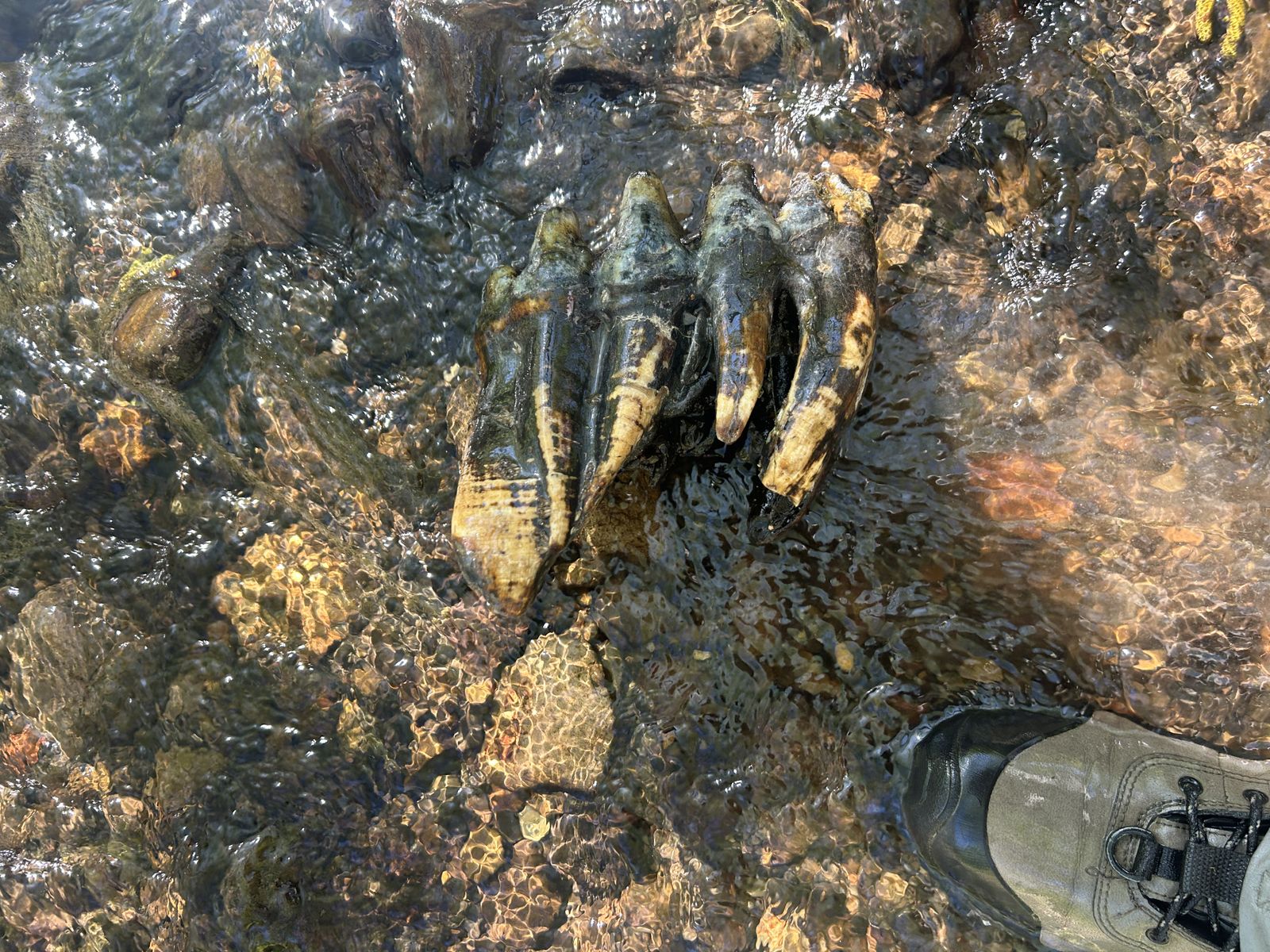
A California creek survey produced an unexpected glimpse of the Ice Age when Brigid Lynch, a geomorphologist with Balance Hydrologics, noticed an unusual object emerging from the watercourse in San Mateo County. Its identity was not apparent in the field. After Lynch photographed it and later used a reverse Google image search, the find appeared to be a molar from a mastodon, an animal that disappeared from North America roughly 11,700 years ago along with other large Ice Age species.
Lynch was not looking for prehistoric remains. She and a colleague were carrying out field work connected to a conservation effort for the California red-legged frog, a species listed as threatened under federal protections. The project placed them in a creek environment, where the object caught Lynch’s attention during the survey. What began as work focused on habitat and conservation therefore led to the recognition of evidence from a far older landscape.
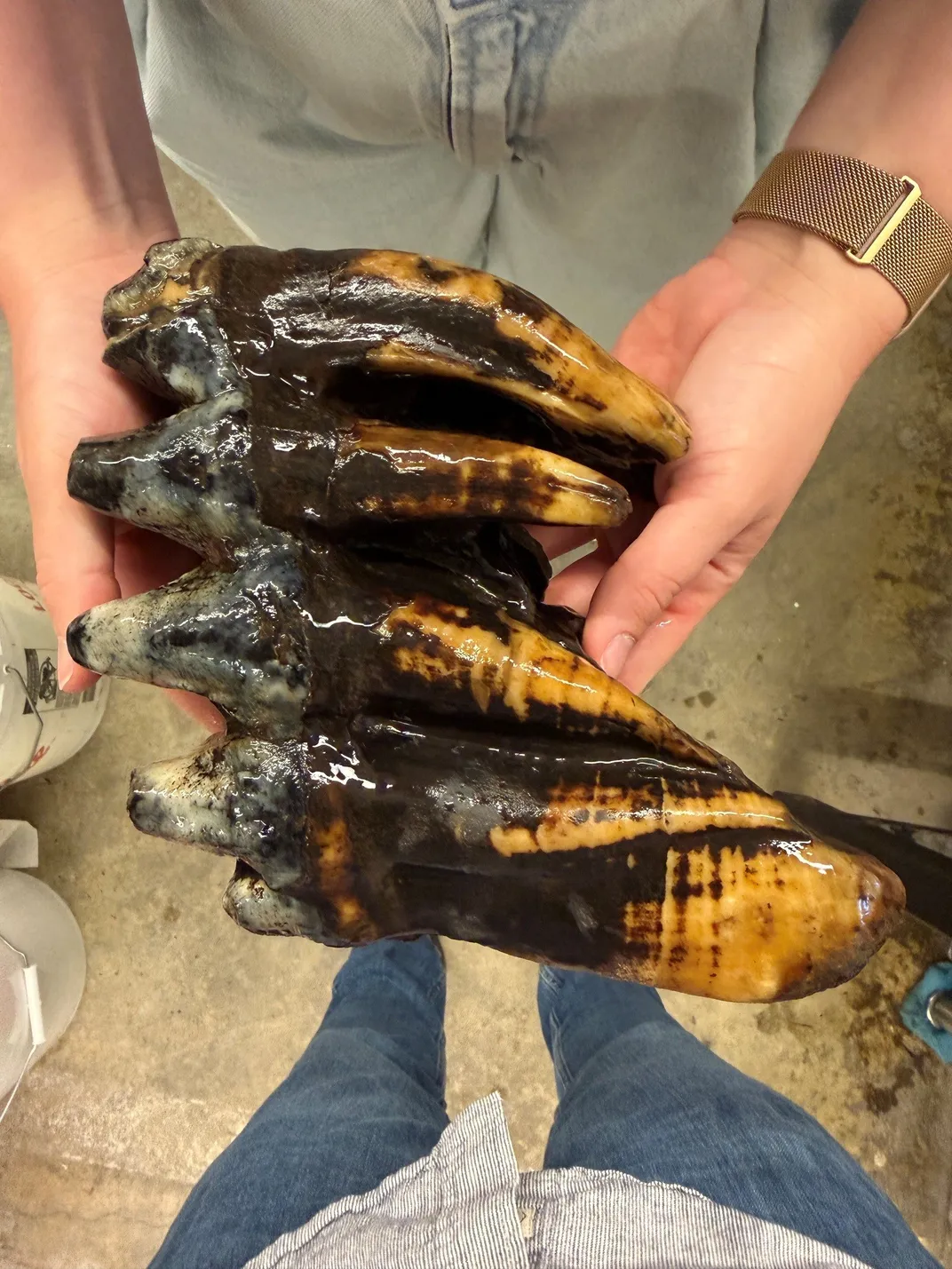
The item’s form made it difficult to dismiss as an ordinary stone or piece of debris. It was large and had several faces, with prominent projections extending from its main mass. Lynch suspected it could have come from an animal, but uncertainty shaped the immediate reaction. She recalled asking whether it should be touched, a small moment that reflects how little was known about the object before its image was examined away from the creek.
The photographs were important because Lynch did not initially realize how unusual the discovery might be. Her online image search connected the object’s distinctive shape to mastodon teeth, turning a field observation into a possible paleontological find. Wayne Thompson, a paleontologist and chief executive of the fossil-mitigation firm Pacific Paleontology, told CBS News Bay Area that the search suggested an Ice Age mastodon molar. The result gave the creek find a likely place in the region’s deep past.
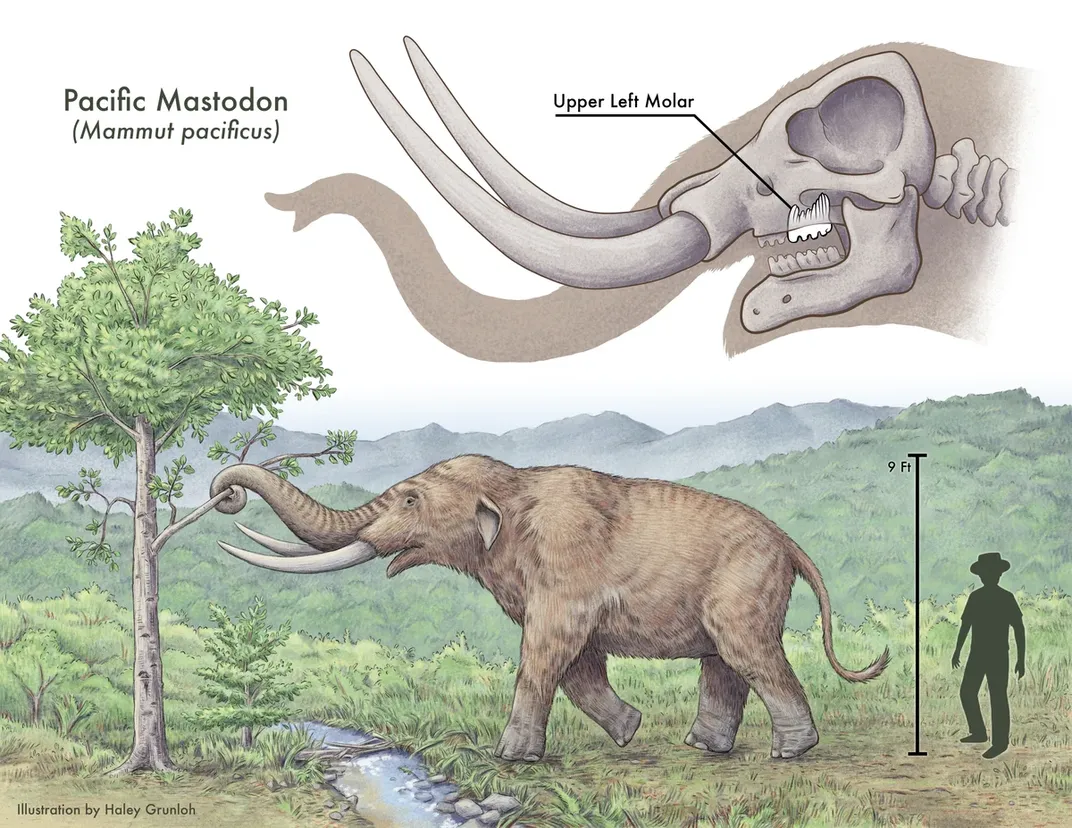
By that account, the tooth is exceptionally well preserved. It is also a reminder that mastodons once moved through parts of North America, including the broader area represented by the discovery. The animal is identified as a Pacific mastodon in accounts of the find. Its survival in such recognizable condition gives the object significance beyond its striking appearance: it links a modern creek survey with animals that belonged to a vanished Ice Age world.
The episode brings together two very different kinds of environmental record. The red-legged frog survey concerned a living animal whose conservation status is governed by present-day federal protection. The possible mastodon molar pointed instead to a species no longer present, one of the large animals lost near the end of the Ice Age. In the same creek setting, the work therefore touched both an active conservation question and a physical trace of a much earlier ecosystem.
There is an important limit to what the initial identification establishes. A reverse-image result supplied the first lead, rather than a detailed account of a laboratory assessment, excavation, or formal museum determination. Thompson’s description supports the interpretation that the object may be a mastodon molar, while the available account does not set out further testing, ownership arrangements, or plans for the specimen. Those unanswered details will matter in determining how the find is documented and cared for.
For now, the discovery’s clearest lesson is one of context. A conservation team working in a San Mateo County creek encountered a multi-pronged object, recorded it in photographs, and found a plausible explanation through an image search. The apparent tooth has since become evidence of mastodons’ former presence in North America and of their disappearance about 11,700 years ago. Whether that initial online match leads to formal study is not yet described, but it has changed the meaning of the survey photographs.
Source: Smithsonian Magazine
Related articles
Immerse Yourself in the Cosmos at Frank Lloyd Wright's Only Planetarium, Recently Restored to Its Former Glory in Florida
Completed in 1958, the domed building is located on the campus of Florida Southern College, home to 13 Wright-designed buildings, the world's largest single-site collection of the architect's work

Play Tractor online with friends — free
Real-time Sheng Ji / Tractor for 3–5 players, with complete bidding and trump rules across web, iOS and Android.
Play bidfive →
A Team of Astronomers Thinks They Have Identified the Exact Night Sky That Inspired Vincent van Gogh's 'Starry Night.' Not Everyone Is Convinced
Very few night skies seen from the south of France during the summer of 1889 would match the scene on van Gogh's canvas. A new study argues that it could have been July 22

'Pretty Boy' Floyd, One of the Most Notorious Outlaws of the Great Depression, Was Shot and Killed in an FBI Raid 92 Years Ago
Some Americans lauded the 30-year-old bank robber as a Robin Hood-esque folk hero. Others castigated him as a violent criminal whose misdeeds were emblematic of the troubled era

GTA 6 guides, updates and practical reference
Explore a Chinese GTA 6 guide library covering the release, map, characters, missions, vehicles and weapons.
Browse guides →
Create AI images with your own API key
aixipi runs on desktop/web, uses your own model API balance, and avoids subscription lock-in.
Try aixipi →