
A Metal Detectorist Exploring a Field in Germany Was Stunned to Discover a Massive Hoard of Roman Coins
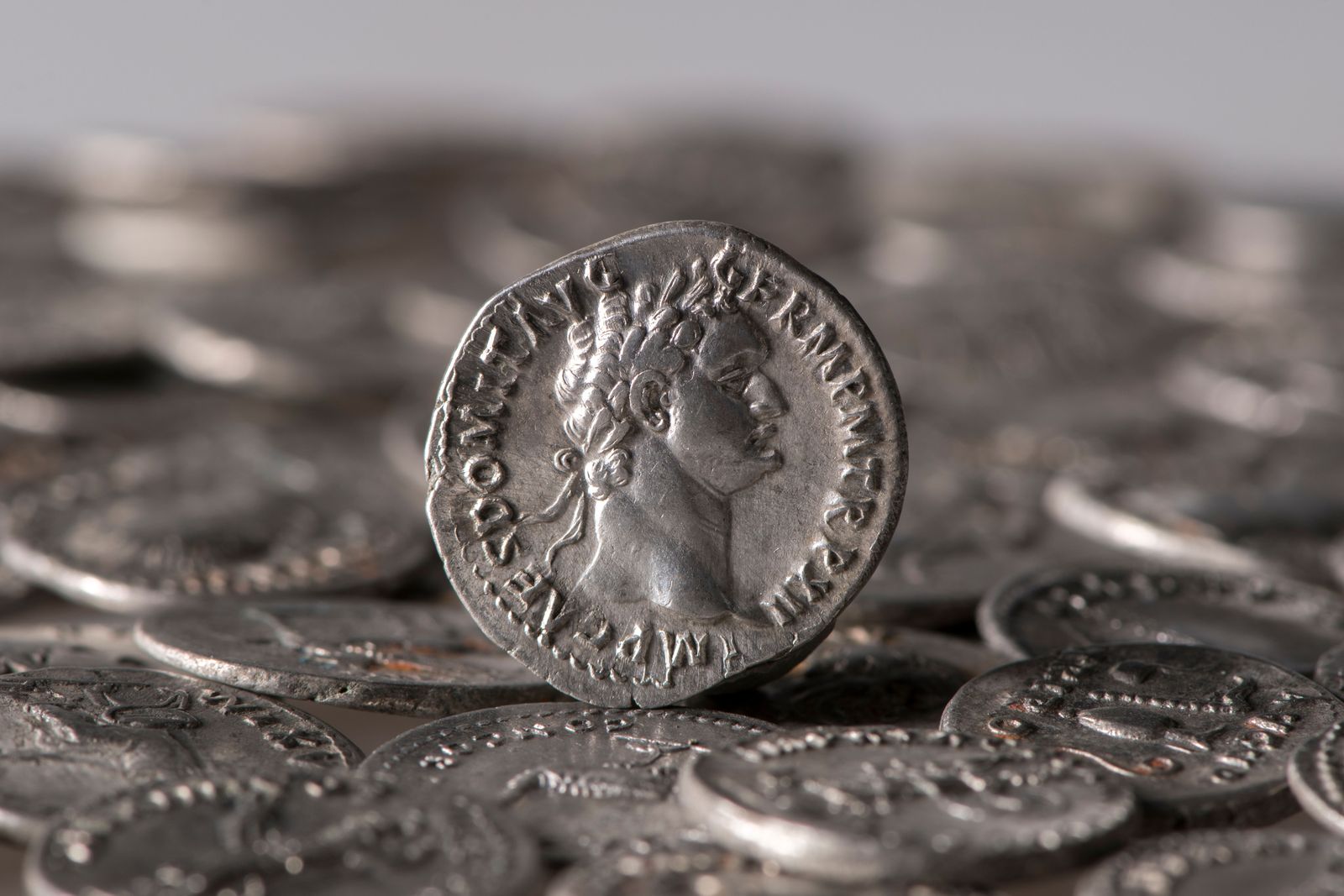
An amateur archaeologist using a metal detector in Germany has uncovered an unusually large collection of Roman silver coins, a find that brings nearly three centuries of history together in a single buried deposit. The discovery ranks among Germany’s biggest recorded hoards of Roman silver, according to accounts of the excavation. Its scale is striking not only for the number of coins involved, but also for the long stretch of Roman political history represented in the collection.
The group is described as weighing almost seven pounds, making it a substantial deposit even before its historical value is considered. The coins are silver denarii, a denomination closely associated with Roman public life, military pay and commercial exchange. Rather than representing a short-lived moment, the hoard preserves currency issued under both the Roman Republic and the later imperial system.
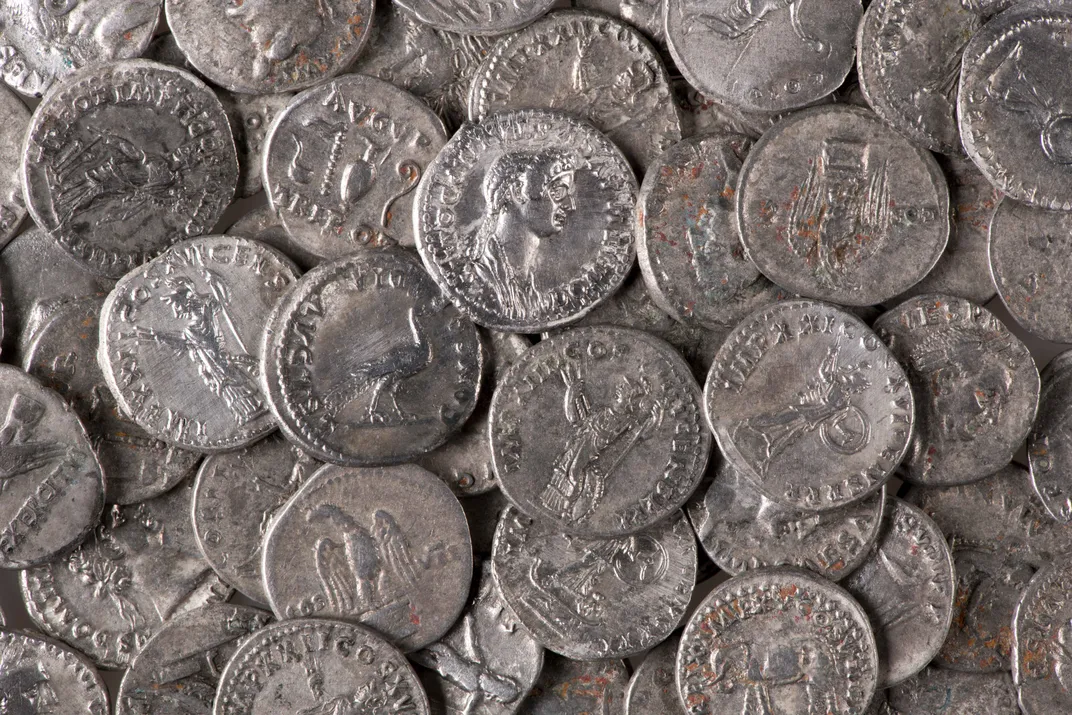
Published descriptions contain two different totals for the discovery. One summary gives the hoard as 943 denarii, while another account identifies the cache as containing 934 silver pieces. Either figure would place it among the country’s major Roman coin finds. A complete catalog and examination of the individual coins may clarify the final count, as well as whether fragments, duplicates or later-recorded items account for the difference.
The latest known coin in the collection was struck in either 124 or 125 C.E. That date falls during the reign of Emperor Hadrian, who ruled from 117 to 138 C.E. Because a buried coin collection cannot be older than its newest item, the date provides an important clue about when the deposit may have been concealed. The available evidence suggests that burial probably occurred during Hadrian’s time on the imperial throne.
Yet the hoard was not assembled only from currency circulating under Hadrian. Its oldest identified coin dates to 148 B.C.E., when Rome was still governed as a republic rather than by emperors. That early issue predates the end of the Republic by more than a century and shows how older money could remain in circulation, be retained as savings, or pass through generations before eventually entering the same cache.
Other pieces belong to the Flavian period, spanning 69 to 96 C.E. Those years cover the successive rules of Vespasian, Titus and Domitian. Their inclusion creates a monetary sequence that crosses major changes in Roman leadership: republican government, the early empire, the Flavian dynasty and the reign of Hadrian. In total, the dated coins extend across almost 300 years of Roman history.
Large coin deposits can offer evidence that individual finds cannot. A single denarius may help date a site, but hundreds of coins can raise broader questions about saving, trade, local circulation and uncertainty. The collection does not, by itself, reveal why it was buried or whether its owner intended to retrieve it. Still, its mixture of old and relatively recent issues makes it a valuable record of how Roman money accumulated over time.
The discovery also underscores the role that trained reporting and archaeological oversight can play when metal detectorists encounter material of historical importance. Finds of this kind can lose much of their value if their location, depth and surrounding context are not recorded. Careful study may help establish whether the coins were stored in a container, deposited deliberately, or connected to other traces of Roman activity in the area.
For now, the most significant feature of the German hoard is its breadth. The deposit links a coin minted in the middle of the second century B.C.E. with currency issued during Hadrian’s reign nearly three hundred years later. Future research will likely focus on refining the inventory, studying wear and metal composition, and determining what the collection can reveal about the people who gathered, used and ultimately hid such a large reserve of silver.
Source: Smithsonian Magazine
Related articles
Immerse Yourself in the Cosmos at Frank Lloyd Wright's Only Planetarium, Recently Restored to Its Former Glory in Florida
Completed in 1958, the domed building is located on the campus of Florida Southern College, home to 13 Wright-designed buildings, the world's largest single-site collection of the architect's work

Play Tractor online with friends — free
Real-time Sheng Ji / Tractor for 3–5 players, with complete bidding and trump rules across web, iOS and Android.
Play bidfive →
A Team of Astronomers Thinks They Have Identified the Exact Night Sky That Inspired Vincent van Gogh's 'Starry Night.' Not Everyone Is Convinced
Very few night skies seen from the south of France during the summer of 1889 would match the scene on van Gogh's canvas. A new study argues that it could have been July 22

'Pretty Boy' Floyd, One of the Most Notorious Outlaws of the Great Depression, Was Shot and Killed in an FBI Raid 92 Years Ago
Some Americans lauded the 30-year-old bank robber as a Robin Hood-esque folk hero. Others castigated him as a violent criminal whose misdeeds were emblematic of the troubled era

GTA 6 guides, updates and practical reference
Explore a Chinese GTA 6 guide library covering the release, map, characters, missions, vehicles and weapons.
Browse guides →
Create AI images with your own API key
aixipi runs on desktop/web, uses your own model API balance, and avoids subscription lock-in.
Try aixipi →