
African Elephants Shape the Savanna Ecosystem—and Continue Doing So Long After They've Died, Study Suggests
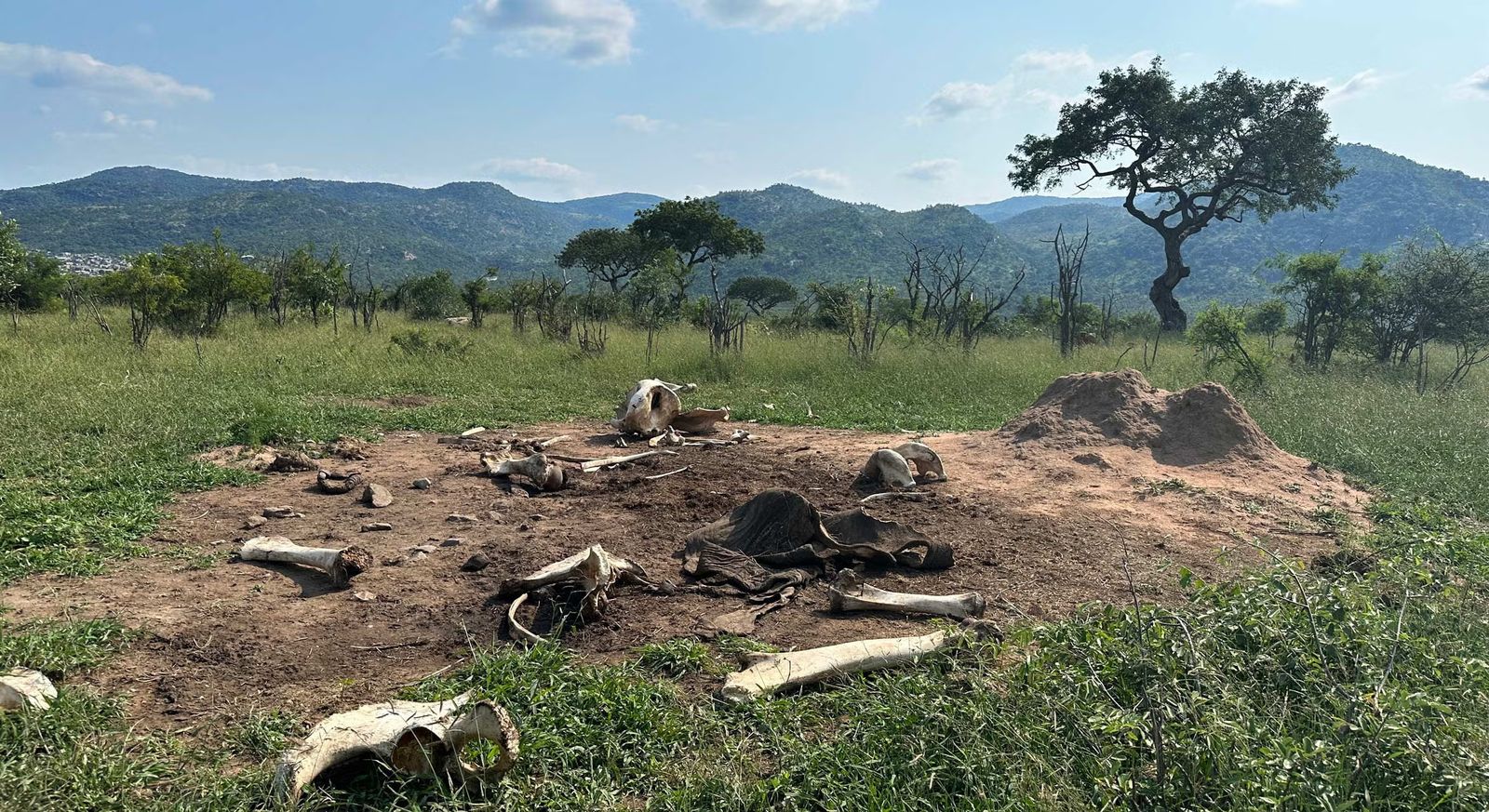
African savanna elephants may remain a force in their habitats long after death, according to research that traces the ecological changes surrounding their carcasses. A study published October 12 in Proceedings of the National Academy of Sciences found that the effects of an elephant’s remains can be detected locally for at least eight years. The work follows a changing patch of savanna through a sequence involving soil organisms, vegetation and plant-eating animals.
The first stage is not a simple burst of new growth. Plants directly beneath an elephant’s body initially die. The carcass therefore begins as a striking disruption to the ground cover, rather than an immediate green oasis. That early loss is part of a longer transformation: microbes in the soil recover, plants return, and the area gradually becomes a distinct ecological site shaped by the animal’s remains.
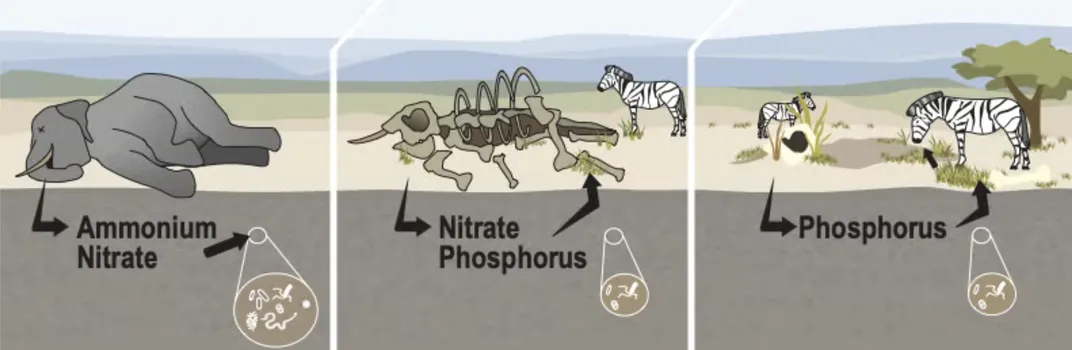
When vegetation reappears, it does not recreate the earlier plant community in full. The study found that only a limited set of species becomes established after the disturbance. Later, herbivores arrive to feed on the nutrient-enriched plant growth. In that progression, a single dead elephant links decomposition below ground with a changed menu above it, drawing animals back to a location altered by the nutrients left behind.
The finding extends a well-known view of living elephants. African savanna elephants are often described as ecosystem engineers because their everyday behavior physically remakes the landscape. Over lives that can span about seven decades, they break through woody vegetation, excavate water holes and move seeds across the landscape in their dung. Those actions can affect vegetation, water access and the distribution of plant life far beyond the animals themselves.
The new research suggests that this landscape-shaping role does not end when an elephant dies. Instead, the body becomes the starting point for another, slower form of environmental influence. Rather than treating a carcass only as a temporary food source or the conclusion of an animal’s ecological role, the study places it within a years-long chain of changes in soil life, plant communities and grazing activity.
That perspective is part of an emerging effort to understand the consequences of mega-carcasses: the remains of exceptionally large animals. Such research asks how the death of a large-bodied species can alter a place, not just in the first days of decomposition but over much longer periods. The elephant study offers a detailed timeline for that question, showing that the consequences can persist well beyond the visible disappearance of the carcass.
Amanda Subalusky, a University of Florida ecologist who was not involved in the work, said scientists are still building a fuller picture of how big animals shape ecosystems while alive and after death. Her observation points to a gap in ecological research: the effects of large wildlife may be easier to notice in dramatic moments, such as uprooted brush or newly dug water holes, than in gradual changes unfolding in the soil over years.
The eight-year result should be read as a documented minimum at the locations examined, not as a final boundary for every elephant carcass or every savanna setting. Even so, it gives researchers a reason to follow these sites for longer and to examine which microbial communities, plant species and herbivores drive each phase. As scientists study more mega-carcasses, they may better define how the loss of large animals changes the ecosystems they once helped construct.
Source: Smithsonian Magazine
Related articles
Immerse Yourself in the Cosmos at Frank Lloyd Wright's Only Planetarium, Recently Restored to Its Former Glory in Florida
Completed in 1958, the domed building is located on the campus of Florida Southern College, home to 13 Wright-designed buildings, the world's largest single-site collection of the architect's work

Play Tractor online with friends — free
Real-time Sheng Ji / Tractor for 3–5 players, with complete bidding and trump rules across web, iOS and Android.
Play bidfive →
A Team of Astronomers Thinks They Have Identified the Exact Night Sky That Inspired Vincent van Gogh's 'Starry Night.' Not Everyone Is Convinced
Very few night skies seen from the south of France during the summer of 1889 would match the scene on van Gogh's canvas. A new study argues that it could have been July 22

'Pretty Boy' Floyd, One of the Most Notorious Outlaws of the Great Depression, Was Shot and Killed in an FBI Raid 92 Years Ago
Some Americans lauded the 30-year-old bank robber as a Robin Hood-esque folk hero. Others castigated him as a violent criminal whose misdeeds were emblematic of the troubled era

GTA 6 guides, updates and practical reference
Explore a Chinese GTA 6 guide library covering the release, map, characters, missions, vehicles and weapons.
Browse guides →
Create AI images with your own API key
aixipi runs on desktop/web, uses your own model API balance, and avoids subscription lock-in.
Try aixipi →