
An Enigmatic Chalk Drawing, Rediscovered in a Private Italian Collection, Has Been Identified as the Long-Lost Work of Édouard Manet
A red-chalk image of a young girl, recently brought back into view from a private collection in Italy, has been identified as a missing work by Édouard Manet. Specialists link the sheet to the artist’s figure studies of the 1860s, a period in which he used red chalk for closely observed human subjects. The attribution gives renewed attention to a modest work on paper whose subject may connect it to some of Manet’s better-known paintings.
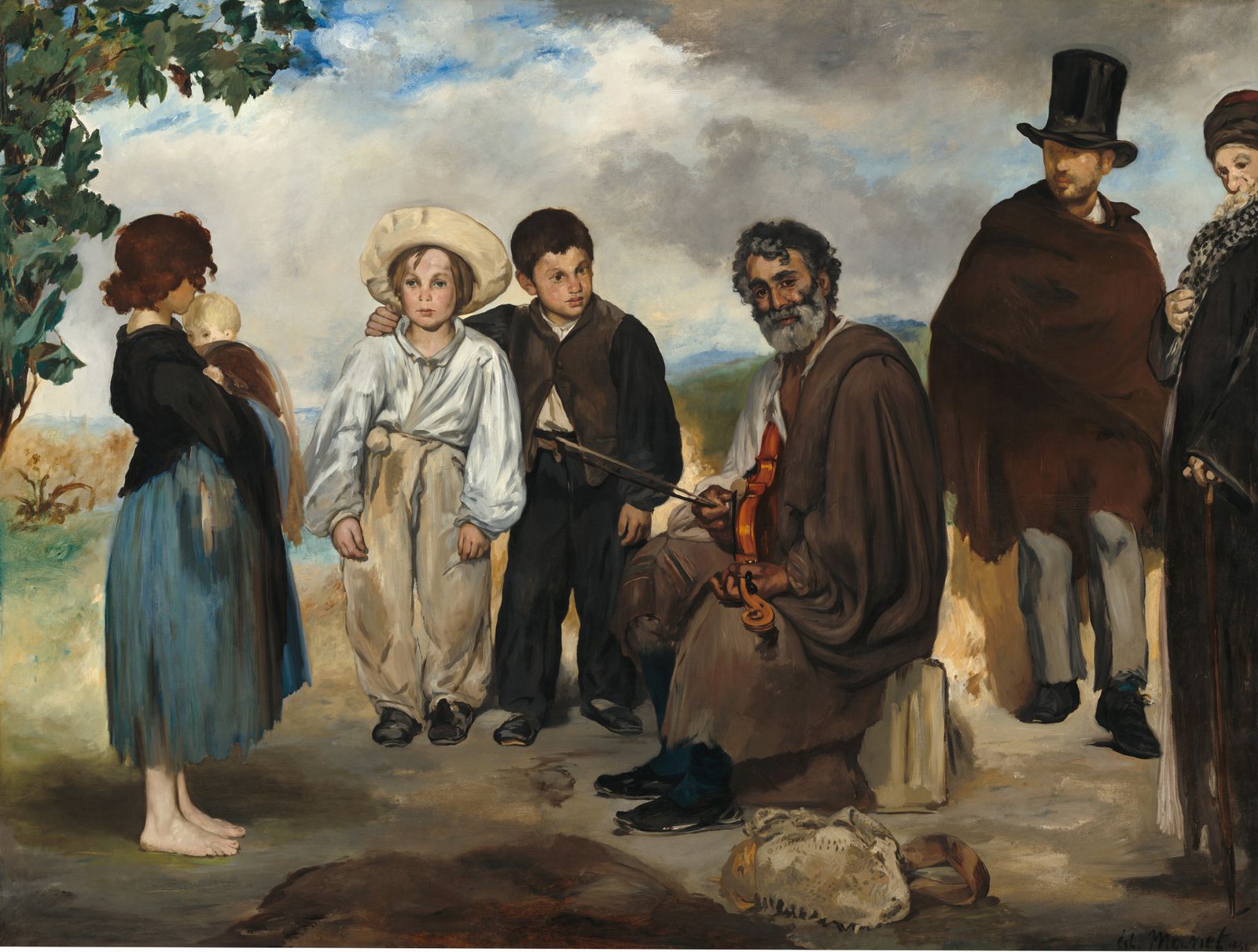
Art historians have proposed that the drawing was made as a study for the barefoot girl holding a baby in The Old Musician, Manet’s 1862 painting. That connection remains an interpretation: the sketch is understood as a possible preparatory character study, rather than a final portrait with a separately documented identity. Even so, the visual relationship offers a new route into how an individual figure may have moved from a quick study into a large, public-facing composition.
The proposed link matters because The Old Musician is among Manet’s largest canvases. Measuring roughly eight feet across, it gives an expansive format to people who would not ordinarily have been placed at the center of a painting on that scale. Instead of mythological protagonists, celebrated rulers or scenes from history, the work assembles figures drawn from the social world around the artist.
At its center is an elderly violin player. Around him stand or sit a group that includes the barefoot child with an infant, two boys, a scavenger dressed with a top hat, and an older man wearing a turban. The crowded arrangement does not treat these people as background decoration. It places them prominently before the viewer, underscoring Manet’s attention to individuals who lived at the edges of respectable urban society.
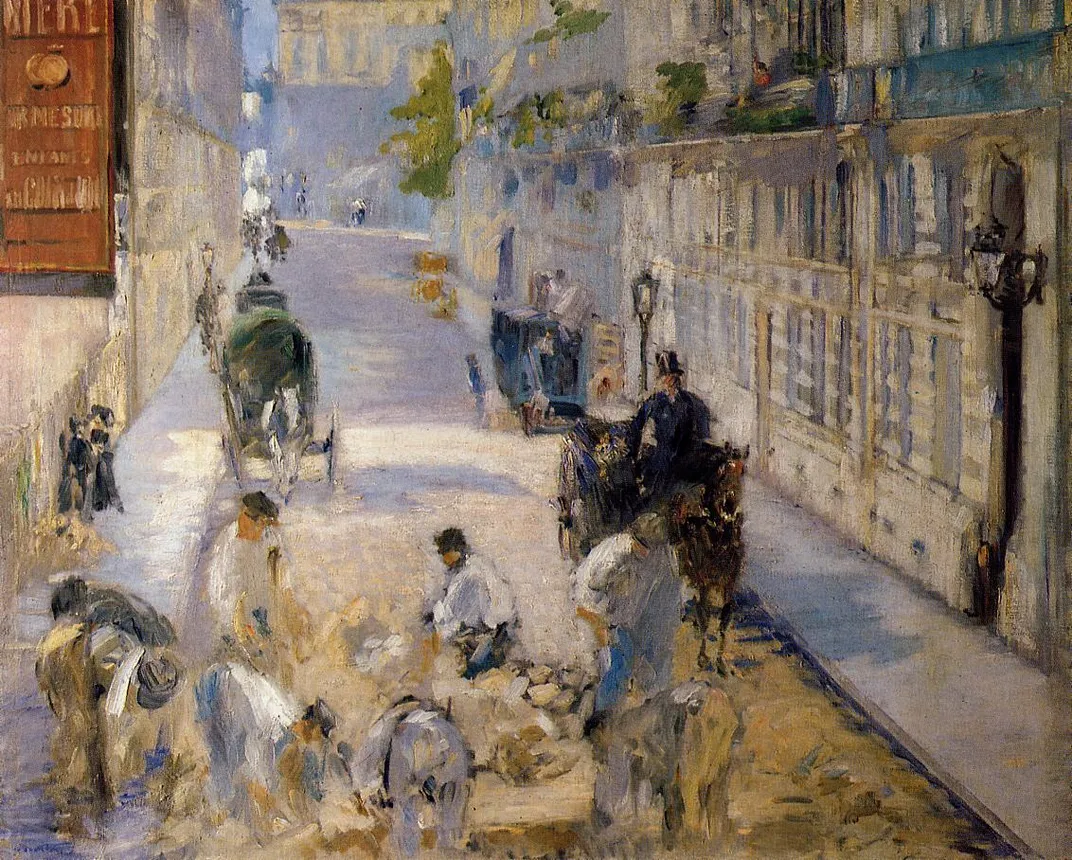
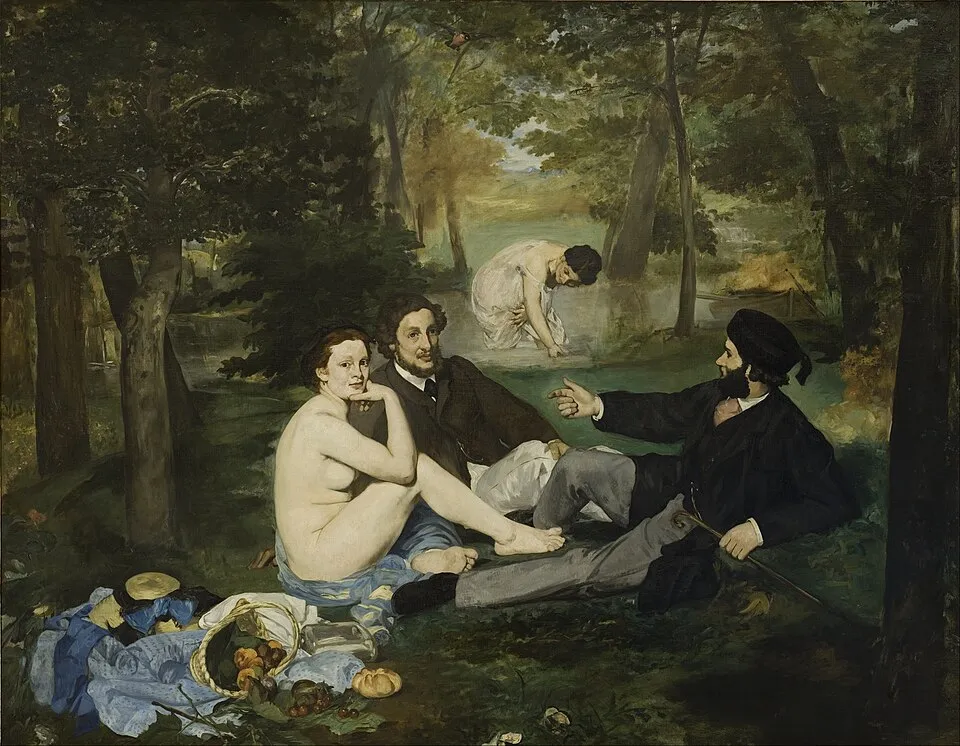
That focus fitted Manet’s broader break with academic convention. He became one of the defining nineteenth-century painters of modern daily life, drawing material from ordinary people and contemporary settings rather than relying only on inherited grand subjects. Cafés, rail travel and bars were among the places and situations that informed his work, as were the rougher, less polished streets of Europe’s major cities.
The rediscovered drawing therefore suggests a working process behind an image that can otherwise seem deliberately immediate. A single chalk figure may preserve the concentrated observation from which a more complex scene developed. It also directs attention to drawing as more than a secondary activity: in this case, the sheet may help explain how Manet tested the presence and bearing of a figure before setting her within a wide social tableau.
For viewers, the attribution changes the scale of the story without changing the drawing itself. The paper remains a small study of a girl, yet its possible relationship to The Old Musician places it beside a canvas concerned with visibility, poverty and urban life. It invites comparison between the private, closely observed figure and the group setting in which marginal people are made impossible to overlook.
Manet’s contemporaries already recognized the unusual directness of his approach. Writing in 1867, the novelist Émile Zola described the paintings as “simple and direct translations of reality,” in a Royal Academy of Arts translation. Zola also saw an uneasy elegance in their treatment of the world, praising an art that could be luminous and grave while approaching nature with force rather than sentimental polish.
The identification is likely to prompt closer viewing of both the chalk sheet and the painted girl it may anticipate. Its significance depends on the proposed relationship between them, so the attribution should be read with the caution appropriate to a scholarly assessment of a rediscovered work. It may also lead scholars to reconsider how such preparatory studies can clarify the choices behind Manet’s large-scale scenes. What emerges clearly, however, is a fuller picture of his sustained interest in ordinary sitters and in the expressive possibilities of a single observed figure.
Source: Smithsonian Magazine
Related articles

Immerse Yourself in the Cosmos at Frank Lloyd Wright's Only Planetarium, Recently Restored to Its Former Glory in Florida
Completed in 1958, the domed building is located on the campus of Florida Southern College, home to 13 Wright-designed buildings, the world's largest single-site collection of the architect's work

Play Tractor online with friends — free
Real-time Sheng Ji / Tractor for 3–5 players, with complete bidding and trump rules across web, iOS and Android.
Play bidfive →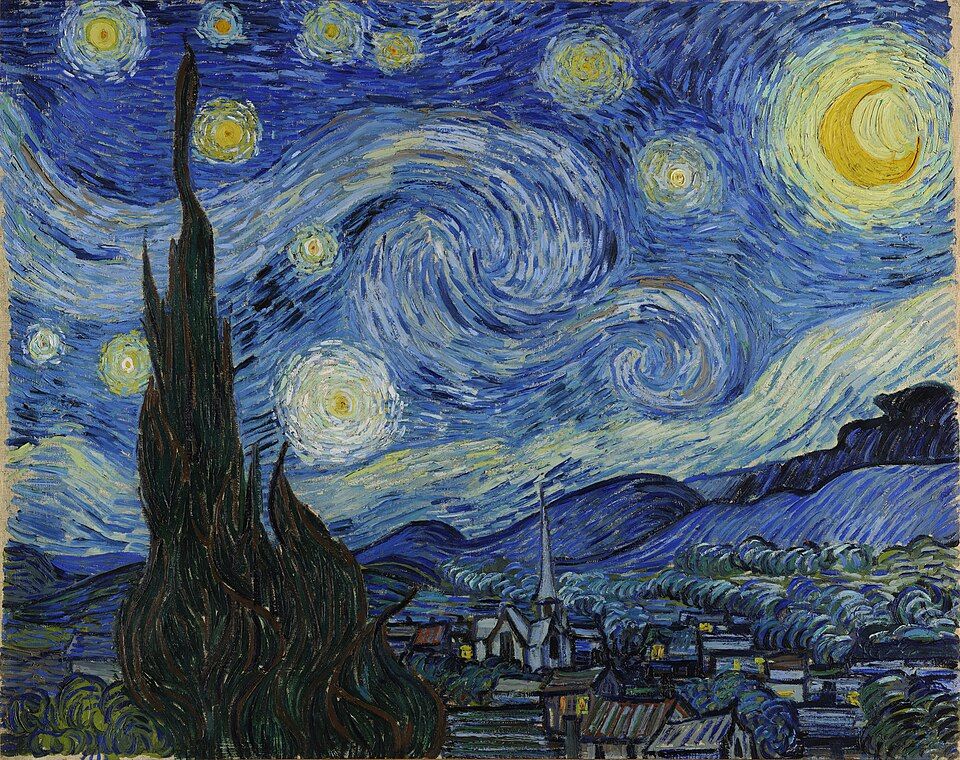
A Team of Astronomers Thinks They Have Identified the Exact Night Sky That Inspired Vincent van Gogh's 'Starry Night.' Not Everyone Is Convinced
Very few night skies seen from the south of France during the summer of 1889 would match the scene on van Gogh's canvas. A new study argues that it could have been July 22

'Pretty Boy' Floyd, One of the Most Notorious Outlaws of the Great Depression, Was Shot and Killed in an FBI Raid 92 Years Ago
Some Americans lauded the 30-year-old bank robber as a Robin Hood-esque folk hero. Others castigated him as a violent criminal whose misdeeds were emblematic of the troubled era

GTA 6 guides, updates and practical reference
Explore a Chinese GTA 6 guide library covering the release, map, characters, missions, vehicles and weapons.
Browse guides →
Create AI images with your own API key
aixipi runs on desktop/web, uses your own model API balance, and avoids subscription lock-in.
Try aixipi →