
Ancient Rome’s Largest Fresco and Mosaic Complex, Featuring Depictions of a Mysterious Maritime City, Opens to the Public After 2,000 Years

Rome has opened a newly restored pair of ancient artworks to public view, bringing visitors face to face with what is regarded as the city’s largest surviving fresco-and-mosaic ensemble. The centerpiece is a painted scene known as the Painted City, alongside an enormous work called the Great Mosaic. Both date to the first century C.E., and their arrival in public display gives a modern audience access to images that lay below ground for much of the intervening two millennia. It is the first occasion in centuries on which the public has been able to see the complex.
Officials in Italy’s capital presented the restored works this week. Their unveiling follows a long interval in which the decorations were not available for ordinary viewing, despite their scale and visual ambition. The opening turns an archaeological discovery into a public cultural encounter: rather than existing only as material examined by excavators and conservators, the two works can now be considered together by visitors. The restoration has made that shift possible without changing the central importance of their ancient setting.

The artworks came to light during excavations in the 1990s at the Baths of Trajan. That discovery placed first-century decoration within the setting of one of Rome’s major ancient complexes and revealed material that had remained concealed underground. The gap between discovery and public presentation also underscores the different stages involved in bringing fragile archaeological finds from excavation to restoration and exhibition. It also links the current opening to an excavation undertaken decades ago, rather than to a recent find.
The Painted City offers the more enigmatic image. Covering 107 square feet, the fresco presents a fortified settlement beside the sea, viewed from above. Blue and terracotta colors organize a compact urban landscape of structures and open areas. Within its walls are buildings, towers, a theater, a temple and public squares, creating a detailed portrait of civic architecture rather than a single isolated monument. Its elevated perspective enables those elements to appear as parts of a planned city, from enclosed precincts to shared spaces.
Its subject has particular appeal because the maritime city remains mysterious. The fresco records a place with defensive walls, ceremonial and communal spaces, yet the information provided by the painting does not settle the question of precisely what city it represents. That uncertainty is part of its significance: the work preserves an ancient visual conception of an urban waterfront while leaving room for continued scrutiny of its identity and meaning.
Beside it, the Great Mosaic establishes the physical scale of the complex. It measures 33 feet in height and 52 feet across, dimensions that help explain why the combined fresco and mosaic display is described as the largest of its kind in ancient Rome. A work of that size changes the experience from looking at a small fragment to confronting an architectural-scale surface, one intended to command attention within its original environment.
The pairing also gives the public a fuller sense of the range of visual culture that once accompanied Roman built spaces. Paint and mosaic use different materials and effects, but their display together highlights how imagery, design and architecture could meet in a single setting. For visitors, the restored complex is therefore both an opportunity to examine individual scenes and a reminder that ancient interiors were often more richly articulated than scattered surviving fragments suggest.
Questions remain central to what follows the opening. Public access does not eliminate the interpretive limits of a work recovered from beneath the ground, especially when its principal cityscape is still described as mysterious. The exhibition instead creates a wider forum for attention to the fresco’s walled seaport and the mosaic’s exceptional dimensions. As visitors begin to see the artworks directly, the balance between what they reveal and what they still withhold is likely to remain part of their draw.
Source: Smithsonian Magazine
Related articles

Immerse Yourself in the Cosmos at Frank Lloyd Wright's Only Planetarium, Recently Restored to Its Former Glory in Florida
Completed in 1958, the domed building is located on the campus of Florida Southern College, home to 13 Wright-designed buildings, the world's largest single-site collection of the architect's work

Play Tractor online with friends — free
Real-time Sheng Ji / Tractor for 3–5 players, with complete bidding and trump rules across web, iOS and Android.
Play bidfive →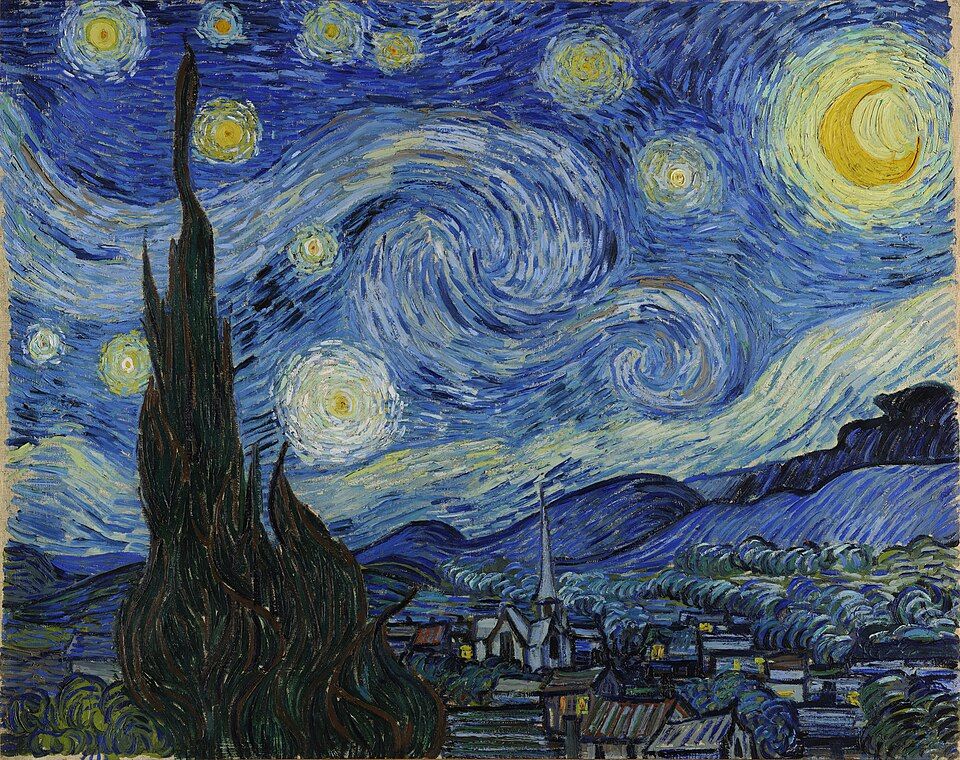
A Team of Astronomers Thinks They Have Identified the Exact Night Sky That Inspired Vincent van Gogh's 'Starry Night.' Not Everyone Is Convinced
Very few night skies seen from the south of France during the summer of 1889 would match the scene on van Gogh's canvas. A new study argues that it could have been July 22

'Pretty Boy' Floyd, One of the Most Notorious Outlaws of the Great Depression, Was Shot and Killed in an FBI Raid 92 Years Ago
Some Americans lauded the 30-year-old bank robber as a Robin Hood-esque folk hero. Others castigated him as a violent criminal whose misdeeds were emblematic of the troubled era

GTA 6 guides, updates and practical reference
Explore a Chinese GTA 6 guide library covering the release, map, characters, missions, vehicles and weapons.
Browse guides →
Create AI images with your own API key
aixipi runs on desktop/web, uses your own model API balance, and avoids subscription lock-in.
Try aixipi →