
As Most of England Relaxed Its Stance on Witchcraft, One Hardline City Bucked the Trend. It Even Went After 'Service Magicians,' Who Used Magic to Investigate Petty Crimes

New historical research has drawn attention to Exeter’s unusually severe pursuit of alleged witchcraft at a time when attitudes elsewhere in England were becoming less punitive. The study’s most striking example is not a grand political case but a missing purse, an attempted amateur investigation and the prosecution of the woman brought in to help. It suggests that the city’s authorities were prepared to treat even practical, low-level uses of magic as a matter for the courts.
The episode unfolded in Exeter in 1642, though several parts of the original theft remain unresolved. Records that survive indicate that a purse disappeared with 13 shillings and a sixpence inside. Anne King, married to a local weaver, was asked to discover where it had gone. Her assignment was modest: identify a likely thief and, presumably, help the victim recover what was lost.

King did not rely on witnesses or material clues. Instead, she used a sieve and shears in a divination ritual. As names of possible suspects were spoken quietly, the sieve was said to turn only when Marie Matthews’ name was mentioned. That result was taken as an indication that Matthews was responsible, turning a small theft inquiry into an allegation reached through supernatural means.
The investigation then took an unexpected direction. Rather than remaining the person asked to assist, King became the subject of an accusation herself. She was reported to the authorities, detained and tried on a witchcraft charge. She secured release on bail and appears to have avoided the most severe outcome, likely leaving the episode with a warning rather than a lasting punishment.
The case matters because it places an everyday act of divination inside a wider pattern of legal enforcement. The research argues that Exeter continued seeking out people accused of witchcraft while much of England was easing away from such prosecutions. In that setting, a person who offered supernatural help to solve an ordinary dispute could be viewed not as a useful local problem-solver, but as someone whose methods invited official suspicion.
King can therefore be understood as a kind of service magician: someone approached for a task with immediate, practical stakes rather than for an abstract display of occult power. The purse case shows how thin the boundary could be between community demand for such services and the danger facing the people who supplied them. A method meant to name a thief also created a record of magical practice that could be turned against its user.
The evidence also calls for restraint. The theft itself remains only partly explained, and the surviving material does not settle every question about what occurred after the purse vanished. Nor does the record establish that the divination correctly identified the person responsible. What is clear from the account is the sequence of official action against King after she used the ritual, and her eventual release on bail.
That uncertainty is central to the story’s historical value. Court documents often preserve moments of conflict more readily than the ordinary assumptions that preceded them. Here, a routine request for help became visible because it escalated into a prosecution. The surviving case gives researchers a narrow but revealing view of how accusations could form around practices that may have circulated locally as informal ways to address loss, suspicion and petty wrongdoing.
The research shifts attention from witchcraft cases involving sweeping claims of harm to a smaller encounter between neighbors, a missing sum of money and local authority. It also raises a broader question for future work: how often did people seek magical assistance in daily life without attracting a court’s attention? Exeter’s record indicates that, in at least some circumstances, authorities were willing to pursue not only alleged witches but also those whose supposed powers were offered in service of everyday investigation. The contrast with a country becoming less willing to prosecute such matters makes the city’s response especially notable. It leaves historians with a more complicated picture: popular belief, neighborhood problem-solving and official punishment could overlap, rather than existing as clearly separate worlds.
Source: Smithsonian Magazine
Related articles

Engineers Delicately Removed the Masts From This Bomb-Laden World War II Shipwreck in the River Thames. But 1,500 Tons of Explosives Are Still in Place
The operation marks a major milestone in efforts to address the risks posed by the sunken American military cargo ship, which still contains a massive cache of unexploded munitions

Play Tractor online with friends — free
Real-time Sheng Ji / Tractor for 3–5 players, with complete bidding and trump rules across web, iOS and Android.
Play bidfive →
A Rare Nanotyrannus Skeleton Sells for $47.3 Million, Becoming the Second Most Valuable Dinosaur Ever Auctioned
Paleontologists have long argued over whether some small tyrannosaur skeletons belonged to a new genus, called Nanotyrannus, or were young Tyrannosaurus rex. "Jodi" was sold just one year after researchers reported the most conclusive evidence yet that Nanotyrannus is valid
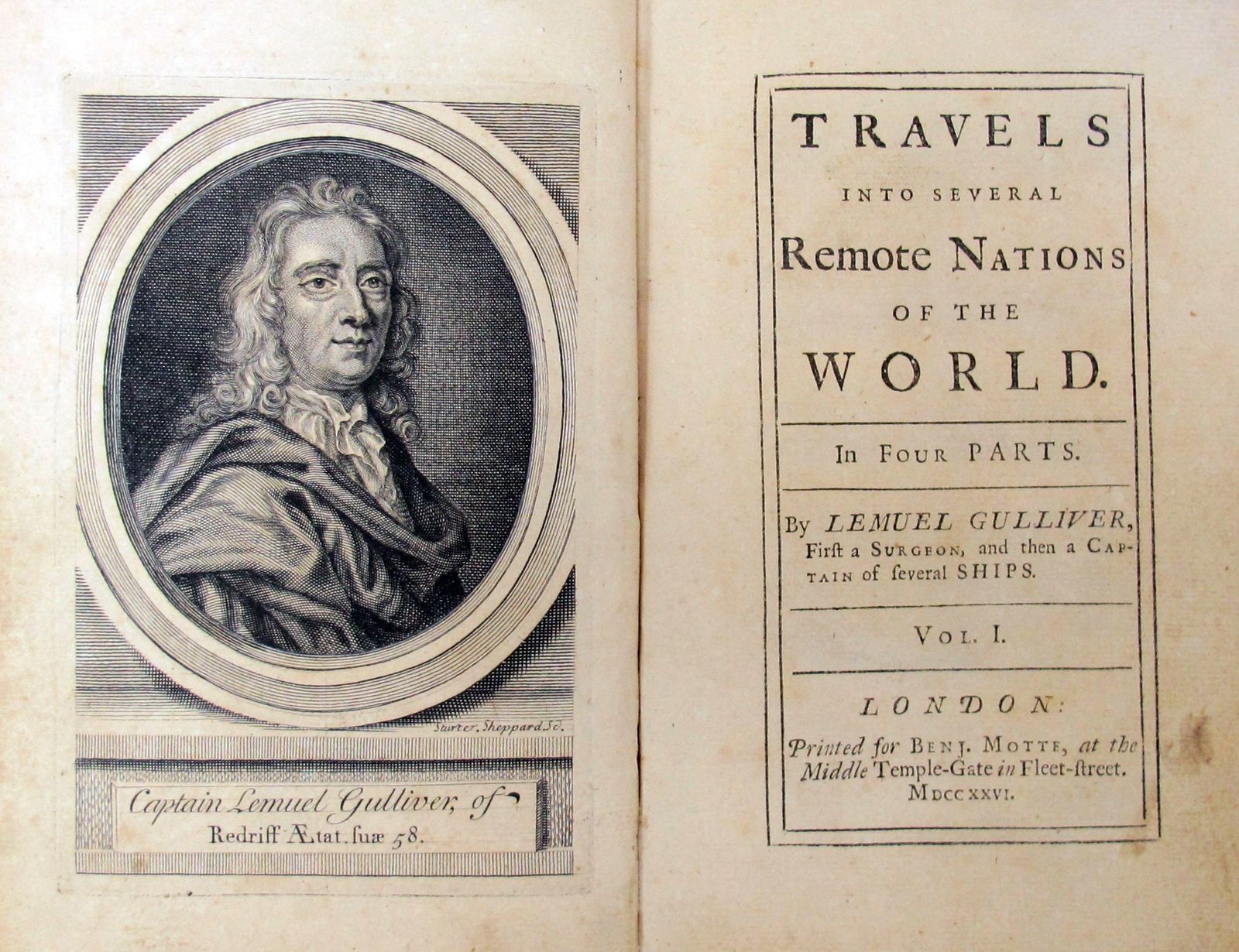
'Gulliver's Travels' Turns 300 This Week. Jonathan Swift's 'Profound Satire of Human Nature' Is Still Just as Bitingly Relevant
Since it was first published in October 1726, the novel purporting to tell the fantastical travel tales of Captain Lemuel Gulliver has never left print. An exhibition of rare editions and adaptations in Dublin celebrates Swift's most famous work

GTA 6 guides, updates and practical reference
Explore a Chinese GTA 6 guide library covering the release, map, characters, missions, vehicles and weapons.
Browse guides →
Create AI images with your own API key
aixipi runs on desktop/web, uses your own model API balance, and avoids subscription lock-in.
Try aixipi →