
'Gulliver's Travels' Turns 300 This Week. Jonathan Swift's 'Profound Satire of Human Nature' Is Still Just as Bitingly Relevant
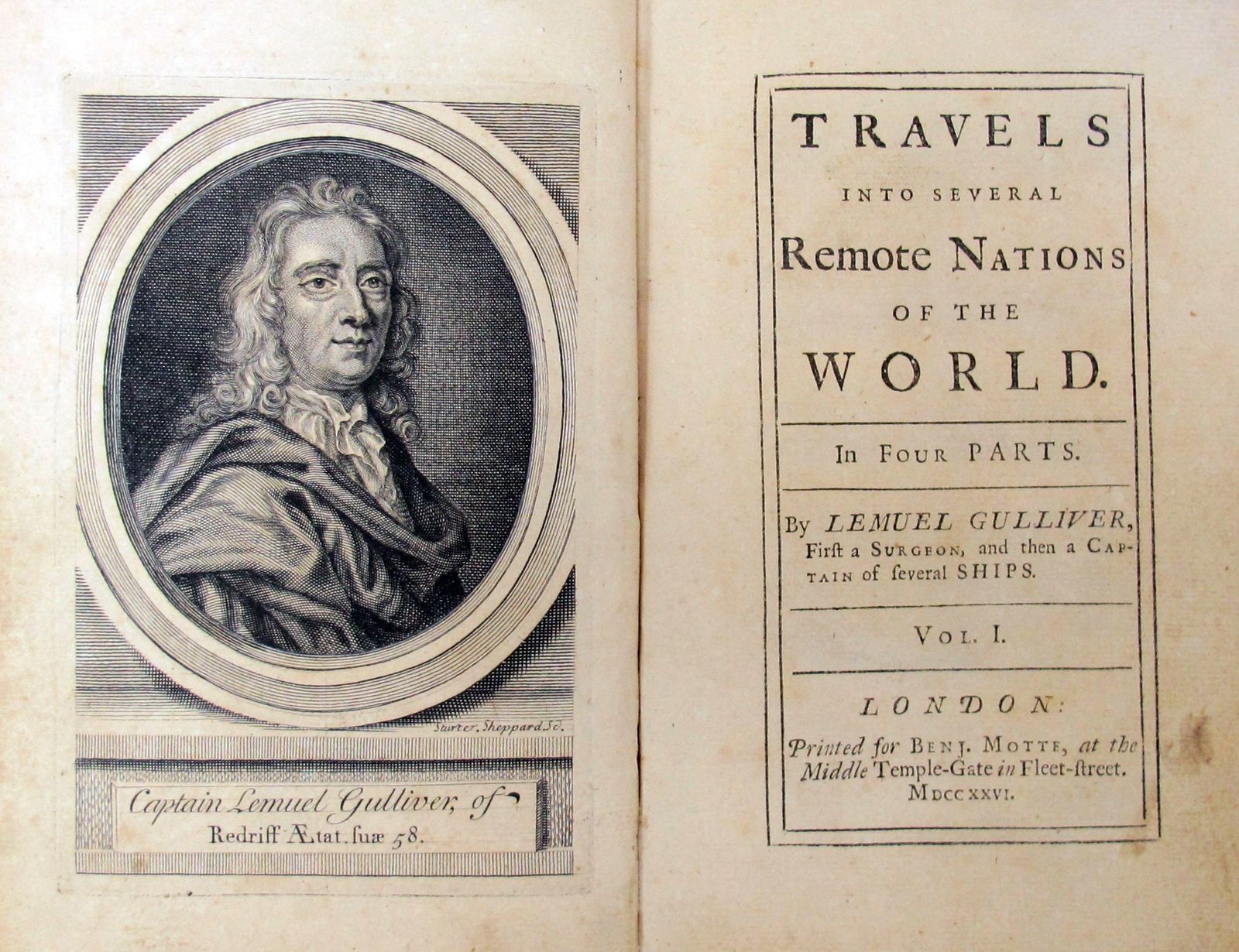
Jonathan Swift’s Gulliver’s Travels reaches its 300th anniversary this week, marking three centuries for a book that began life as an anonymous-looking account of impossible voyages and became one of literature’s most durable satires. First issued in late October 1726, the work has remained in print ever since. A Dublin exhibition devoted to unusual editions and later adaptations is using the anniversary to revisit the book that secured Swift’s widest and longest-lasting reputation.
The familiar title arrived only after publication. Readers in 1726 encountered a more formal name: Travels Into Several Remote Nations of the World, presented as the work of a sea captain named Lemuel Gulliver. Gulliver was not the author but the mask through which Swift, a writer, essayist and Anglican clergyman born in Dublin, chose to tell the story. That framing mattered: the book initially invited readers to treat its narrator as a traveler reporting on what he had seen.

Its route to print was deliberately theatrical. In the spring of 1726, a person whose identity was concealed by a cloak brought a manuscript to Benjamin Motte, a London bookseller. The pages were written in a hand Motte did not recognize and attributed to Gulliver. The visitor’s staging reinforced the fiction around the manuscript, leaving Motte to assess the work without knowing who had actually composed it.
Motte decided the manuscript was worth acquiring and paid for the rights despite that uncertainty. On October 28, 1726, he released the story as a novel in two volumes. The response was immediate: the book quickly won broad attention. The supposed captain behind the account was soon unmasked as Swift, already a prominent literary figure, but the invented authorship had helped establish the tone of a tale that mixed travel writing with sharp social observation.
At the center is a mariner carried far beyond ordinary maps. Among the places he reaches is Lilliput, an island inhabited by people only about six inches tall. The image of a full-sized outsider among miniature residents supplied memorable fantasy, but it also gave Swift a way to reduce familiar disputes and habits to a strange scale. Through Gulliver’s misfortunes abroad, the novel targets the elaborate behavior of people and the conventions of British society.
That double function helps explain why the book can be approached in more than one way. It can be read as an adventure of distant lands, a comic story built around extraordinary proportions, or an attack on social pretension and public life. The anniversary exhibition’s focus on rare printings and adaptations points to a further consequence of that flexibility: the narrative has been repeatedly recast for new audiences while retaining the central figure and the places he encounters.
The exhibition does not require the novel to remain fixed in its original setting. By placing rare copies alongside adaptations, it highlights how new formats and retellings can shape a reader’s first encounter with the story. A central question for anniversary programming will be whether these versions emphasize the spectacle of Gulliver’s destinations or the more disturbing examination of conduct embedded in Swift’s design.
Yet the book’s survival is not simply a story of a beloved children’s fantasy. Its fantastic episodes can be separated from the harsher implications of Swift’s satire, and the enduring appeal of Lilliput can make the work seem lighter than its broader argument. The anniversary offers a reason to look beyond the best-known scenes and consider the way the invented travel account scrutinizes human conduct, rather than treating its small inhabitants as the whole of the novel.
Three hundred years after Motte took a chance on an author he could not identify, the book’s publishing history remains part of its meaning. An anonymous manuscript, a fictitious captain and a rapid reveal of the real writer created an unusual launch for a work that never disappeared from print. The Dublin display will place that long afterlife in view through editions and adaptations, while the date of the original two-volume publication remains the milestone at its center.
Source: Smithsonian Magazine
Related articles

A Rare Nanotyrannus Skeleton Sells for $47.3 Million, Becoming the Second Most Valuable Dinosaur Ever Auctioned
Paleontologists have long argued over whether some small tyrannosaur skeletons belonged to a new genus, called Nanotyrannus, or were young Tyrannosaurus rex. "Jodi" was sold just one year after researchers reported the most conclusive evidence yet that Nanotyrannus is valid

Play Tractor online with friends — free
Real-time Sheng Ji / Tractor for 3–5 players, with complete bidding and trump rules across web, iOS and Android.
Play bidfive →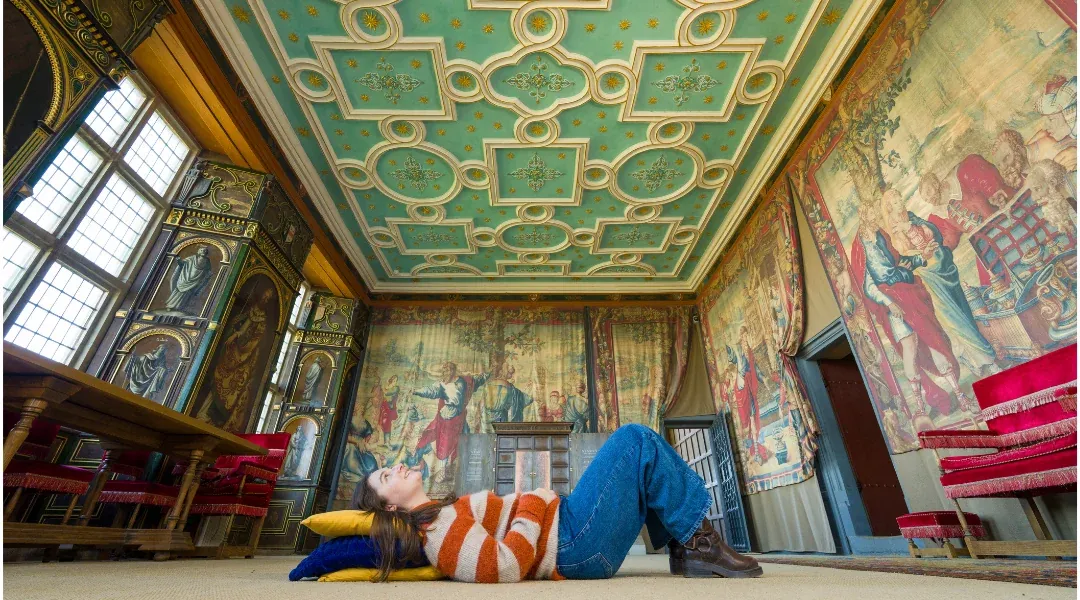
'Lie Down and Look Up' at England's Most Ornate Ceilings, From Sparkling Gold-Leaf Stars to Intricate Plaster Designs at Queen Victoria's Seaside Retreat
A new campaign encourages visitors to take in the lavish art above their heads at five historic sites across England. There are even cushions for maximum comfort while you gaze

Did Women and Children Collaborate With Male Artisans to Create China's Terra-Cotta Army? Fingerprints Left on the 2,000-Year-Old Clay Warriors May Hold the Answer
A new study found that adult women and juveniles under the age of 15 accounted for 67 percent of the fingerprints analyzed. The research challenges long-held assumptions about the age and gender of the workers who sculpted Qin Shi Huang's soldiers

GTA 6 guides, updates and practical reference
Explore a Chinese GTA 6 guide library covering the release, map, characters, missions, vehicles and weapons.
Browse guides →
Create AI images with your own API key
aixipi runs on desktop/web, uses your own model API balance, and avoids subscription lock-in.
Try aixipi →