
'Lie Down and Look Up' at England's Most Ornate Ceilings, From Sparkling Gold-Leaf Stars to Intricate Plaster Designs at Queen Victoria's Seaside Retreat
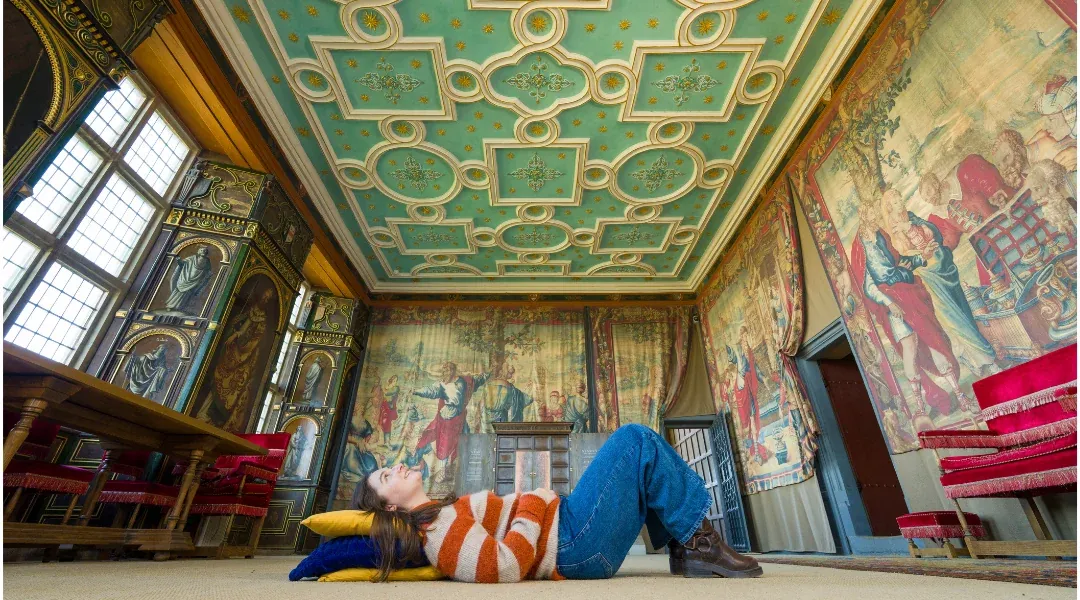
Historic buildings across England are asking visitors to pause their usual route through grand rooms and turn their attention overhead. English Heritage has launched a campaign called Lie Down and Look Up, inviting the public to examine decorative ceilings that can be easy to miss while moving from one display or architectural feature to the next. The initiative focuses on five heritage locations and runs until November 1.
The premise is unusually literal. At every participating room, English Heritage has set aside an area where visitors can look upward without rushing, with cushions supplied for those who want to recline. The arrangement is intended to make close observation more practical, whether someone chooses to lie on their back or simply settles in for a longer view of work normally seen only in passing.
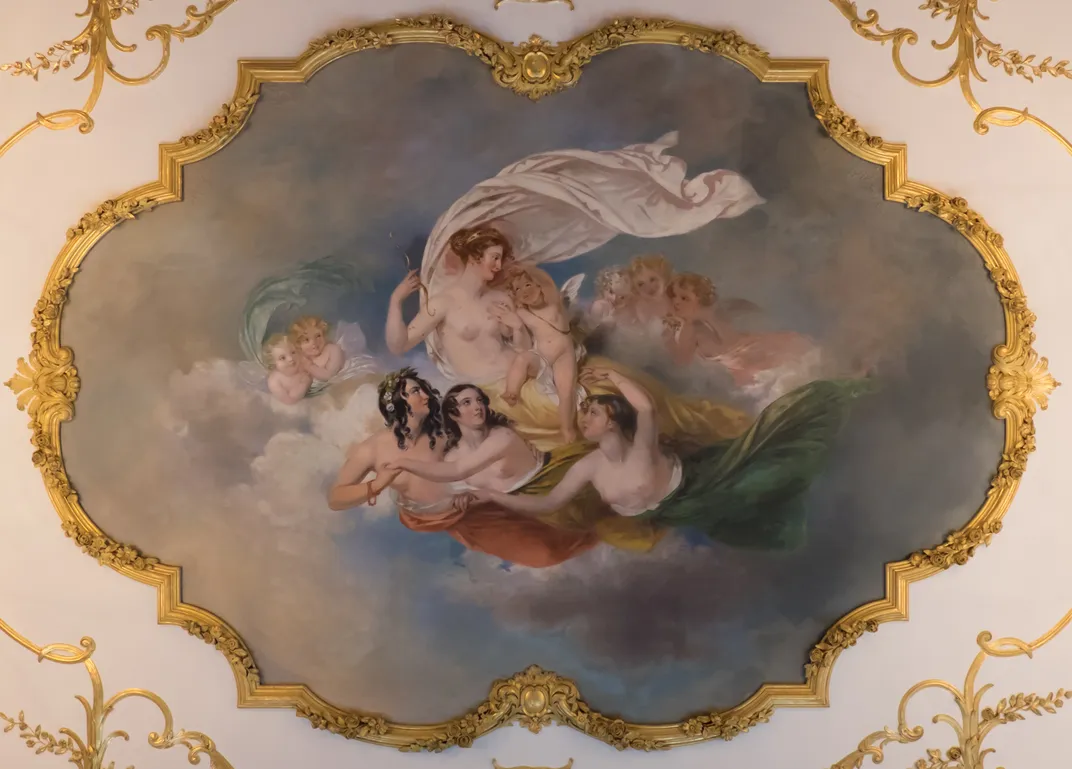
The campaign places ceilings at the center of a visit rather than treating them as a backdrop. In historic interiors, their position can make them among the least examined elements of a room, despite the visual labor they contain. English Heritage is using the project to draw attention to the decorative choices, surviving materials and skilled workmanship visible above floor level.
One featured example is the Star Chamber at Bolsover Castle. The selection reflects the campaign’s broader interest in ceilings that make a distinct visual statement, including designs associated with sparkling gold-leaf stars and complex plaster ornament. By encouraging visitors to study those details at leisure, the charity is shifting the emphasis from a quick glance to the structure and decoration of the room itself.
Jeremy Ashbee, English Heritage’s head curator of properties, described ceilings as the “crowning glory” of historic buildings. He said they were made to create a sense of awe and noted that their decoration can remain in strikingly good condition. That survival is central to the campaign’s argument: ceiling art is not only an architectural setting, but evidence of design and craft that visitors can still inspect directly.
The effort also changes the physical habits usually associated with heritage tourism. Visitors are commonly directed toward objects at eye level, wall displays or views through windows; looking above them for an extended period can be uncomfortable and disruptive in a busy room. Cushions and dedicated space offer a simple response, while also signaling that the ceiling deserves the same concentration as more familiar attractions.
There is a practical limitation to the approach. Looking at a ceiling from below cannot reveal every aspect of how it was made, and the campaign does not turn each room into a detailed conservation lesson. Its immediate purpose is more modest: to create time and comfort for people to notice features they might otherwise overlook. The value of the experience will therefore depend partly on how visitors use that invitation.
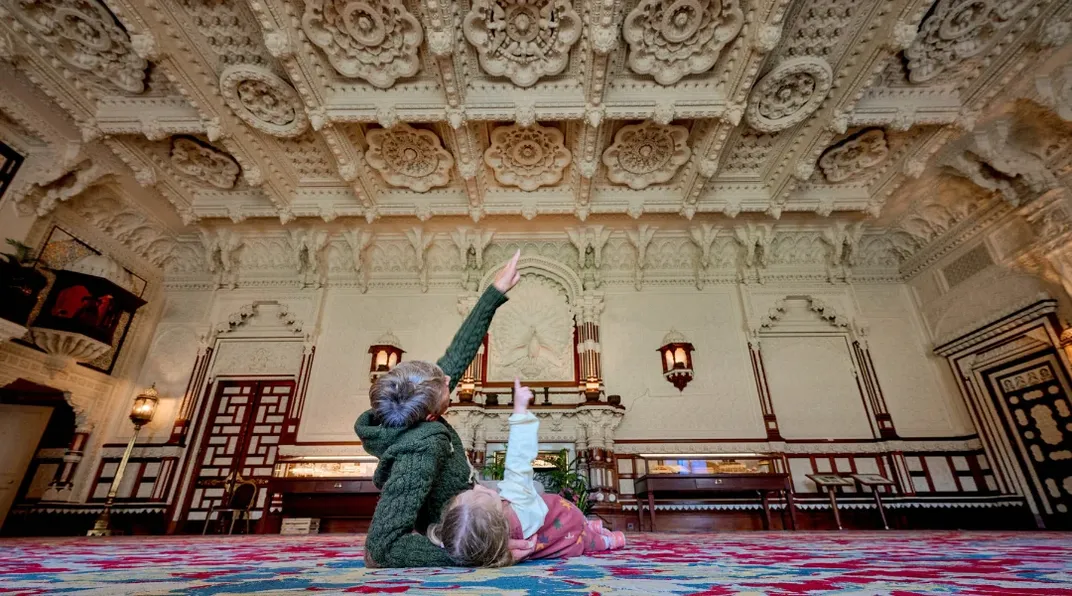
The five sites include rooms linked to very different historic settings, from Bolsover Castle to Queen Victoria’s seaside retreat. That range helps explain why English Heritage has framed the project around observation rather than a single style or period. Gold-leaf stars, ornamental plaster and other forms of overhead decoration can reward attention in different ways, even when visitors encounter them within the same broader campaign.
With the program scheduled to continue through November 1, the next question is whether the experiment encourages a lasting change in how guests move through historic interiors. The selected ceilings provide a focused test of an overlooked part of England’s built heritage. For now, English Heritage is making a case that some of the richest elements of a visit may be the ones above the visitor’s head.
Source: Smithsonian Magazine
Related articles

Did Women and Children Collaborate With Male Artisans to Create China's Terra-Cotta Army? Fingerprints Left on the 2,000-Year-Old Clay Warriors May Hold the Answer
A new study found that adult women and juveniles under the age of 15 accounted for 67 percent of the fingerprints analyzed. The research challenges long-held assumptions about the age and gender of the workers who sculpted Qin Shi Huang's soldiers

Play Tractor online with friends — free
Real-time Sheng Ji / Tractor for 3–5 players, with complete bidding and trump rules across web, iOS and Android.
Play bidfive →
Divers Recover a Mysterious Cauldron That Had Been Hiding at the Bottom of an English River for Hundreds of Years
Nobody knows how the three-legged iron cauldron ended up in the River Wear. Weeks before Halloween, it finally returned to the surface

Specialists Removed Three Thrilling, Century-Old Murals From the Walls of a French Monastery. Beneath, They Made 'a Discovery for the History of Art'
Hidden under multi-paneled Symbolist murals by French artist Odilon Redon were sketches that he had drawn directly on the walls of the 11th-century Abbaye de Fontfroide

GTA 6 guides, updates and practical reference
Explore a Chinese GTA 6 guide library covering the release, map, characters, missions, vehicles and weapons.
Browse guides →
Create AI images with your own API key
aixipi runs on desktop/web, uses your own model API balance, and avoids subscription lock-in.
Try aixipi →