
Canada, EU look to forge an "Alliance for the Future" amid Trump threats
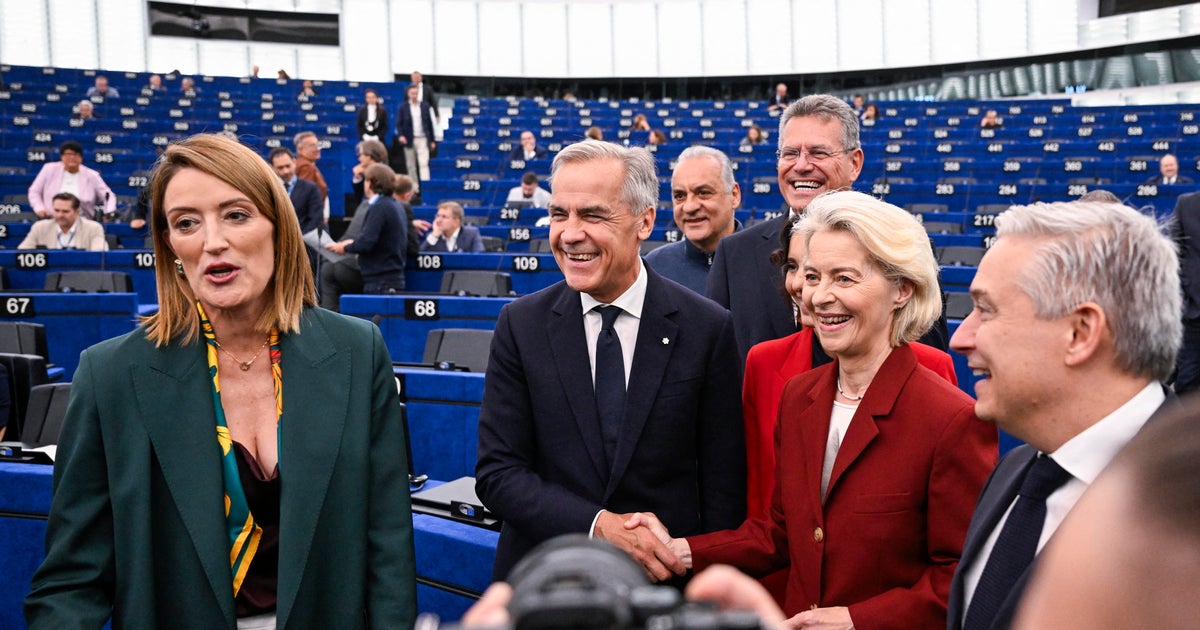
Canadian Prime Minister Mark Carney used an address in Strasbourg on Thursday to make the case for a deeper partnership with the European Union, receiving a standing ovation from members of the European Parliament as a worsening dispute with the United States reshapes Canada’s economic and diplomatic calculations.
The appearance came as Canada faces sustained criticism and tariff pressure from President Donald Trump. The two countries, whose economic relationship has long been central to Canada’s trade outlook, are caught in an intensifying trade conflict. That fraught backdrop was unmistakable even as Carney’s speech focused on the potential benefits of working more closely with Europe.
Carney presented Canada and the EU as partners with shared interests in cooperation and resilience. He repeatedly emphasized the value of a closer transatlantic relationship, arguing that broader ties could give Canada more room to act at a time when its established relationship with Washington is becoming less predictable.
His message reflected a change in emphasis rather than a claim that Canada can quickly detach from its largest and longest-standing economic connection. The United States has shaped Canada’s economy for decades, making the current strain especially consequential. A move toward Europe is being cast as an effort to widen Canada’s options while confronting the risks of relying heavily on a single external market.
A central element of that argument was the possibility of Canada becoming the EU’s first associate member. Carney welcomed the idea rather than treating it as a symbolic gesture. In his framing, a closer institutional link with the bloc could help ensure that Canada is not left dependent on the decisions of any single country when it comes to access to markets.
The prime minister also connected economic diversification to national independence. He said stronger links with the EU would make it harder for another government to exert leverage over Canadian commerce or weaken Canadian sovereignty. The point was directed at a broader strategic concern: trade relationships can carry political consequences when one partner holds outsized influence.
Trump has threatened consequences over Canada’s effort to draw nearer to Europe, according to the report. Carney dismissed that pressure in Strasbourg, signaling that Canada intends to pursue alternatives even while the dispute with the United States continues. The exchange shows how disagreements over tariffs have widened into a debate over Canada’s room to choose its economic and political partners.
European lawmakers’ response provided a visible contrast to the tensions surrounding Ottawa’s dealings with Washington. The ovation for Carney was a gesture of support for closer cooperation, but it did not settle the practical questions raised by an associate relationship. Neither the speech nor the reception described a completed arrangement, and the proposal’s terms and timetable remain matters for further discussion.
For European leaders, stronger engagement with Canada offers the prospect of working more closely with a major North American country at a time of transatlantic uncertainty. For Canada, warmer rhetoric in Strasbourg does not automatically replace the scale, proximity or history of its commercial ties to the United States. The challenge is to pursue diversification without overlooking the importance of that existing relationship.
What follows will depend on whether the associate-member concept gains substance, how the trade confrontation develops, and whether pressure from Washington changes Canada’s calculations. The immediate significance of Carney’s visit was political: it placed Europe at the center of Canada’s search for greater flexibility as disputes with its southern neighbor intensify. His address also made clear that Ottawa sees market access and sovereignty as closely linked in the next phase of its foreign economic policy.
Source: CBS World
Related articles

Zelenskyy accuses Russia of using cluster warheads in deadly strikes
Russia launched the strikes on Ukraine less than a day after negotiations to end the war, which also involved the United States, ended in St. Petersburg.

Create AI images with your own API key
aixipi runs on desktop/web, uses your own model API balance, and avoids subscription lock-in.
Try aixipi →
At least 16 dead when powerful 7.0 magnitude earthquake strikes Tibet
It was the biggest earthquake in the region in the last five years, China

See how Big Tech is transforming Spain's landscape
A drought-stricken region of northeast Spain has become a focus for American companies searching for locations to place their data centers.