
Chinese analysts say Trump should "understand pressure doesn't work" on Xi
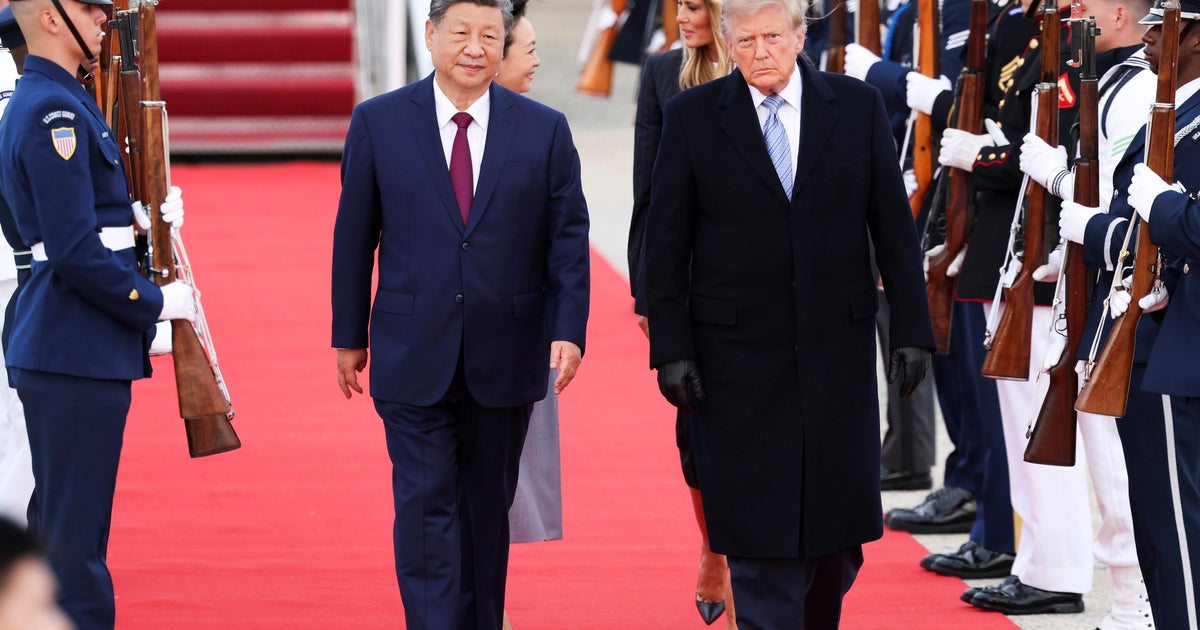
Chinese analysts are urging President Donald Trump to recognize the limits of coercive tactics as he prepares to meet President Xi Jinping in Washington on Thursday. Their message is that applying pressure, by itself, is unlikely to change Beijing’s approach or alter Xi’s position. The planned talks will bring the leaders together at a moment when China is widely viewed in the United States as its foremost geopolitical competitor, giving the encounter significance beyond a routine diplomatic visit.
Xi’s arrival in Washington on Wednesday night marked his first return to the U.S. capital in 11 years. His last visit came in 2015, when he met then-President Barack Obama at the White House. Since that earlier meeting, both Xi’s standing and China’s place in global affairs have shifted considerably, creating a different setting for the new discussion with Trump.
Zhao Hai, vice president of the Chinese Institute of Hong Kong and a specialist in U.S.-China relations, said Washington should have learned from years of dealing with Beijing that pressure is not an effective standalone strategy. He argued that such methods do not succeed with Xi, the Chinese government or the broader Chinese public. His assessment points to a central difficulty for the Trump administration: how to pursue U.S. interests without assuming that tougher rhetoric or demands will automatically produce concessions.
The meeting will take place against a relationship defined increasingly by strategic competition. China’s rise has made it a central factor in American foreign-policy planning, while Xi is returning to Washington with an image of confidence and authority. That contrast with his 2015 visit is important. The two leaders are not approaching the talks from the same circumstances that existed during the Obama administration, and expectations surrounding their exchange are likely to reflect the sharper rivalry now associated with the relationship.
For Beijing, the analysts’ argument suggests that resilience under external pressure is part of the message it wants to project. A government that believes it can withstand demands may be less inclined to respond quickly to them, especially when it considers those demands a test of national resolve. That does not mean dialogue is impossible, but it does indicate that the tone, terms and sequencing of negotiations could matter as much as the public display of firmness.
For Washington, the challenge is to balance competition with the practical need to communicate directly with China’s leadership. Trump’s meeting with Xi offers an opportunity to establish how each side intends to manage a relationship in which disagreement and mutual scrutiny are likely to remain prominent. A summit cannot by itself resolve the underlying tensions between two major powers, but it can clarify whether either side sees room for sustained engagement alongside rivalry.
There is also a caveat to the Chinese analysts’ view. Zhao’s comments represent an assessment from within the debate over how the United States should deal with China, rather than a guarantee of how either government will act after the meeting. Pressure can take many forms, and its effects may depend on the issue involved, the timing of decisions and the political priorities of both capitals. The immediate result of the talks may therefore be less important than the signals the leaders send about future dealings.
What happens after Thursday’s meeting will be closely watched for indications of whether the two governments can keep channels of contact open while competing more openly. Xi’s return to Washington underscores how much has changed since his previous White House visit, while the analysts’ warning highlights the risks of treating pressure as a complete policy. The summit is set to test not only the personal diplomacy between Trump and Xi, but also the assumptions guiding a consequential relationship between Washington and Beijing.
Source: CBS World
Related articles

Zelenskyy accuses Russia of using cluster warheads in deadly strikes
Russia launched the strikes on Ukraine less than a day after negotiations to end the war, which also involved the United States, ended in St. Petersburg.

Create AI images with your own API key
aixipi runs on desktop/web, uses your own model API balance, and avoids subscription lock-in.
Try aixipi →
At least 16 dead when powerful 7.0 magnitude earthquake strikes Tibet
It was the biggest earthquake in the region in the last five years, China

See how Big Tech is transforming Spain's landscape
A drought-stricken region of northeast Spain has become a focus for American companies searching for locations to place their data centers.