
Could This Dutch Invention Help Tackle Plastic Pollution in America's Waterways?
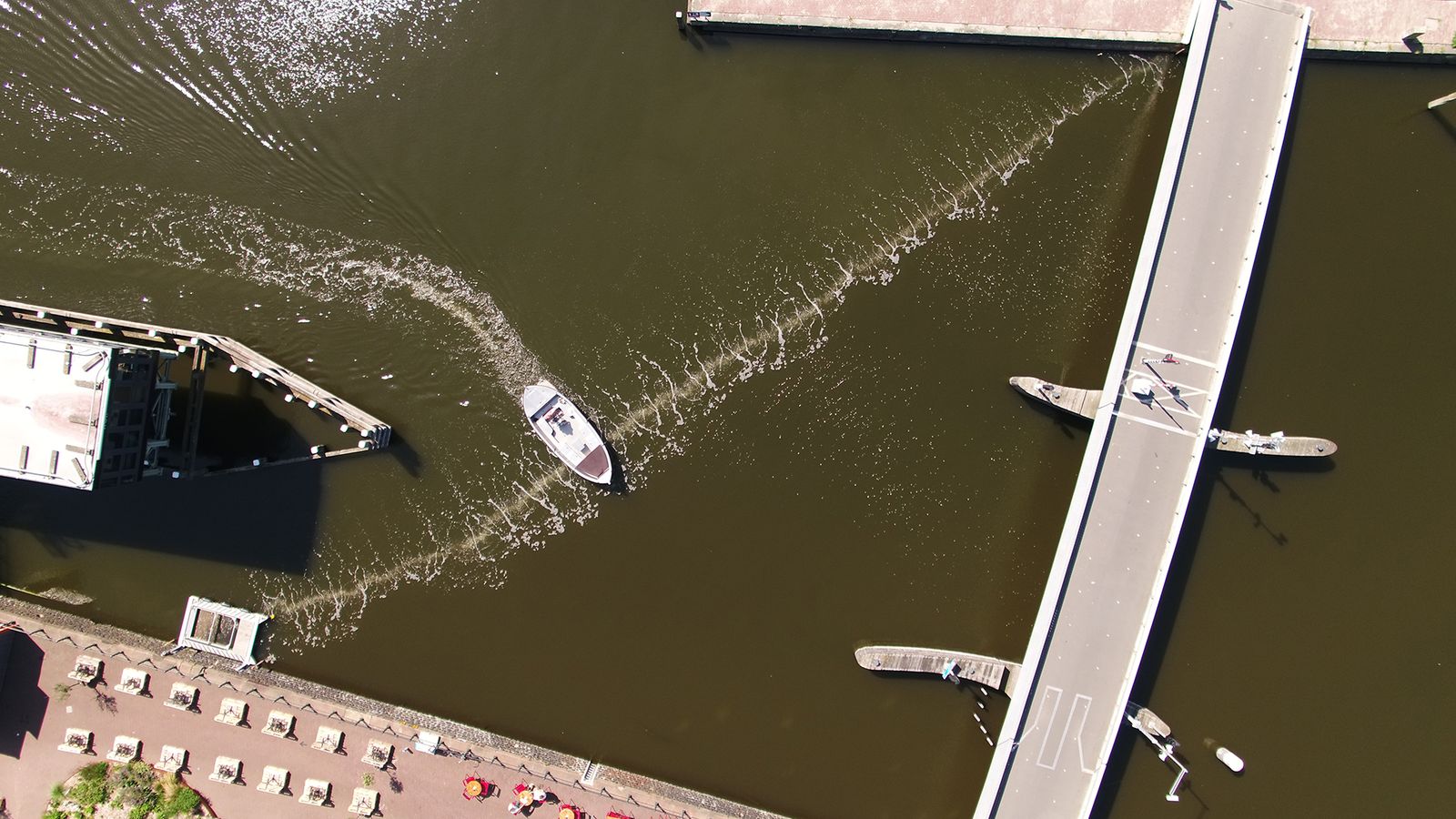
Lansing, Michigan, is considering an air-powered way to collect plastic from its waterways before it can travel farther downstream. The proposal could make the city the first place in the United States to install a Bubble Barrier, a Dutch technology that has already been used in the Netherlands. Rather than stretching a hard barrier across a channel, the system uses a rising field of air to steer litter toward a collection point at the water’s edge.
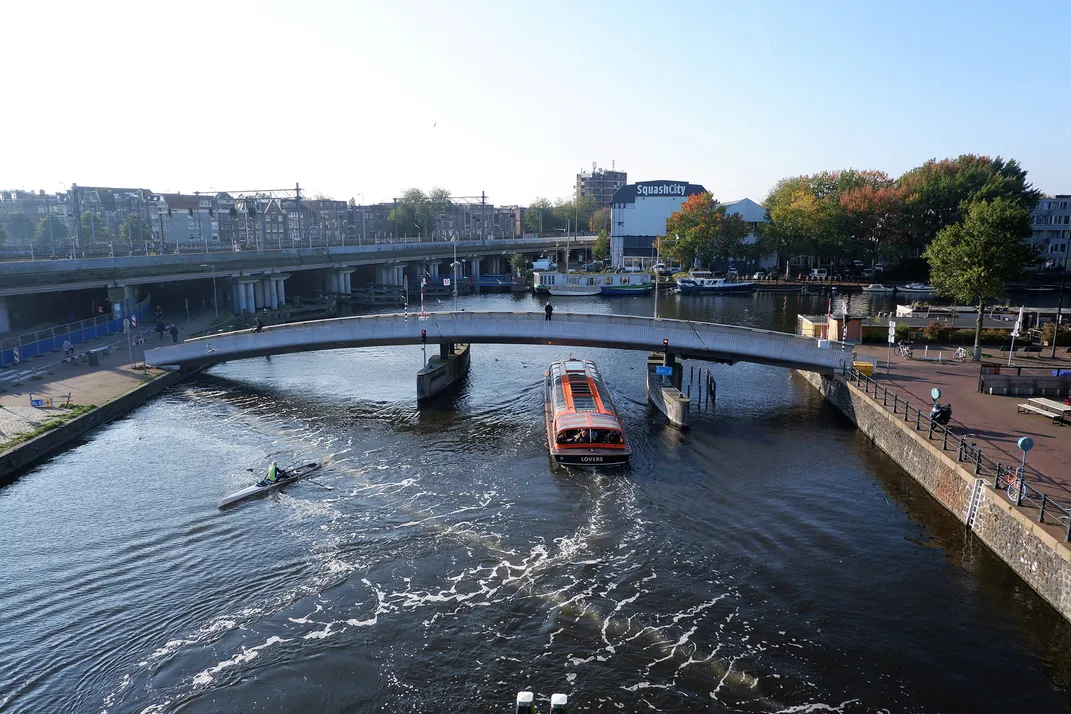
The technology is visible in Amsterdam’s Westerdok, an outlet connected to the city’s historic canal network. Boats and birds still pass through the familiar urban scene, but one feature sets this stretch apart: a diagonal swath of pale, agitated water. That line is the surface expression of an apparatus beneath the canal, giving residents and visitors a clue that a waste-capture system is operating below the waterline.
A perforated pipe rests along the bed of the waterway. When it releases pressurized air, the bubbles rise through the water in a broad curtain. Plastic caught in that upward movement is brought toward the surface and directed across the channel. The installation is set at an angle, so the current can help carry the diverted debris toward the point where it can be captured.
At the side of Amsterdam’s canal, an aluminum collection unit receives the material that reaches it. The objective is to stop that litter from continuing through the canal system and eventually reaching the North Sea. In effect, the approach pairs a man-made stream of bubbles with the waterway’s natural movement, seeking to intercept discarded objects without attempting to halt the water itself.
That operating principle is central to the interest in Lansing. The proposed installation would test whether a system developed for Dutch canals can be fitted to an American waterway. Its usefulness would depend not only on the bubble curtain but also on the local flow, the placement of the catchment unit and the continued removal of what is collected. An installation would therefore be both a pollution-control effort and a practical trial of the technology under different conditions.
The material found at the Dutch site suggests that the issue is broader than a single type of plastic container. Philip Ehrhorn, co-founder and chief technology officer of Great Bubble Barrier, has said the team has encountered many everyday objects used in cities. Among the items recently collected were laminated restaurant menus, food wrappers and a selfie stick, evidence of the varied waste that can enter an urban canal.

The system’s design also carries an important limitation: directing debris into a trap is only one step in managing it. Waste that reaches the collection unit still has to be taken out and dealt with, and material that does not encounter the barrier may continue on its route. The technology is aimed at interception after litter has entered the water, not at preventing the original disposal of those items.
For Lansing, the next question is whether the proposed project moves from consideration to installation. If it does, the city’s results would offer the first domestic example of a bubble-driven collection system already associated with Amsterdam’s canals. Observers will be watching what the barrier captures, how it performs in its selected waterway and whether the collected debris can be managed consistently over time.
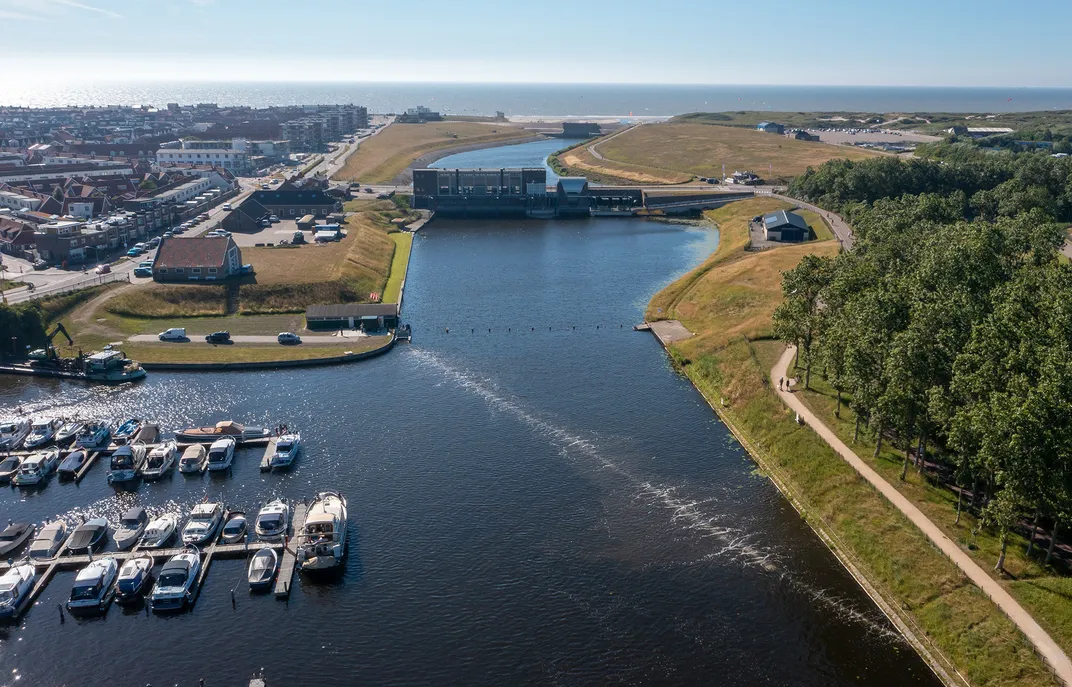
Amsterdam’s Westerdok offers a visible example of the concept, but it does not by itself settle how the approach will work elsewhere. The Dutch installation is part of a canal setting whose water flow carries lifted debris toward a side-mounted trap. Lansing would need to adapt the same basic sequence—air rising from a bottom pipe, litter moving at the surface and current delivering it to a collector—to the circumstances of the waterway chosen for the project. That distinction makes the proposed U.S. site a test as well as an expansion.
Source: Smithsonian Magazine
Related articles
Immerse Yourself in the Cosmos at Frank Lloyd Wright's Only Planetarium, Recently Restored to Its Former Glory in Florida
Completed in 1958, the domed building is located on the campus of Florida Southern College, home to 13 Wright-designed buildings, the world's largest single-site collection of the architect's work

Play Tractor online with friends — free
Real-time Sheng Ji / Tractor for 3–5 players, with complete bidding and trump rules across web, iOS and Android.
Play bidfive →
A Team of Astronomers Thinks They Have Identified the Exact Night Sky That Inspired Vincent van Gogh's 'Starry Night.' Not Everyone Is Convinced
Very few night skies seen from the south of France during the summer of 1889 would match the scene on van Gogh's canvas. A new study argues that it could have been July 22

'Pretty Boy' Floyd, One of the Most Notorious Outlaws of the Great Depression, Was Shot and Killed in an FBI Raid 92 Years Ago
Some Americans lauded the 30-year-old bank robber as a Robin Hood-esque folk hero. Others castigated him as a violent criminal whose misdeeds were emblematic of the troubled era

GTA 6 guides, updates and practical reference
Explore a Chinese GTA 6 guide library covering the release, map, characters, missions, vehicles and weapons.
Browse guides →
Create AI images with your own API key
aixipi runs on desktop/web, uses your own model API balance, and avoids subscription lock-in.
Try aixipi →