
Designers and Computer Scientists Create New Decoy Fonts That Humans Can Read but A.I. Bots Cannot

A new typeface experiment called Decoy Font is designed to create a split reading experience: people can make out one message while automated systems may detect another. Developed through MixFont, the project arrives as artificial-intelligence features become more visible in search products, messaging services and writing tools, raising fresh concerns among some researchers and creators about how human-written material is gathered and reused.
The idea is not to make text unreadable in the conventional sense. Instead, it uses typography to present competing signals to different viewers. In one demonstration, a machine-reading system identifies the words “Sorry Robot,” while a person can also perceive “Happy Human” within the same visual arrangement. The two statements occupy overlapping layers rather than appearing as separate lines of ordinary text.

That arrangement gives the font a deliberately playful quality, but its purpose is tied to a serious question: whether writers can retain more control over words published in environments increasingly scanned by bots and AI agents. Rather than relying solely on access restrictions or legal notices, Decoy Font explores whether the appearance of language itself can become part of a defensive strategy.
The method draws on a much older visual principle. It resembles hybrid imaging, an optical-illusion technique in which different features become more prominent under different viewing conditions. The approach gained broad attention in 2007, when researchers at the Massachusetts Institute of Technology created a portrait that could be recognized as Marilyn Monroe or Albert Einstein depending on how far away someone stood.
Hybrid images were originally useful for examining the mechanics of human vision. Decoy Font redirects that visual logic toward privacy and the distinction between human interpretation and automated extraction. Its designers are using the mismatch not primarily to study perception, but to test whether a reader and an AI system can be guided toward different textual outputs from the same displayed object.
Visually, the typeface combines two text treatments. One layer is rendered with sharp, legible outlines in the foreground, while another sits behind it in a darker, softened blur. The clearer letters can carry the message most immediately available to a human reader. The obscured layer, however, remains part of the composition and can be arranged to reveal a second phrase through the overall design.
In the example featuring “Sorry Robot” and “Happy Human,” the crisp wording is paired with the blurrier hidden statement to produce an intentional contrast between the two audiences. The format could let writers build humorous or pointed combinations into a line of text. It also suggests that type design may offer a new surface for negotiating the boundary between content made for people and systems trained to process it.
There are important limits to what a visual workaround can promise. Automated systems do not all examine text in the same way, and methods for recognizing images, layouts and characters continue to change. A design that confuses one model may not affect another, while heavy visual camouflage could also make material less accessible or less clear for the people a writer hopes to reach.
Still, Decoy Font illustrates how a familiar design tool can be repurposed as AI use expands across everyday digital services. The next question is whether such techniques remain chiefly conceptual experiments or develop into practical options for publishers, artists and individual writers. Their usefulness will depend on how well they preserve readable communication while making automated collection more difficult.

Source: Smithsonian Magazine
Related articles
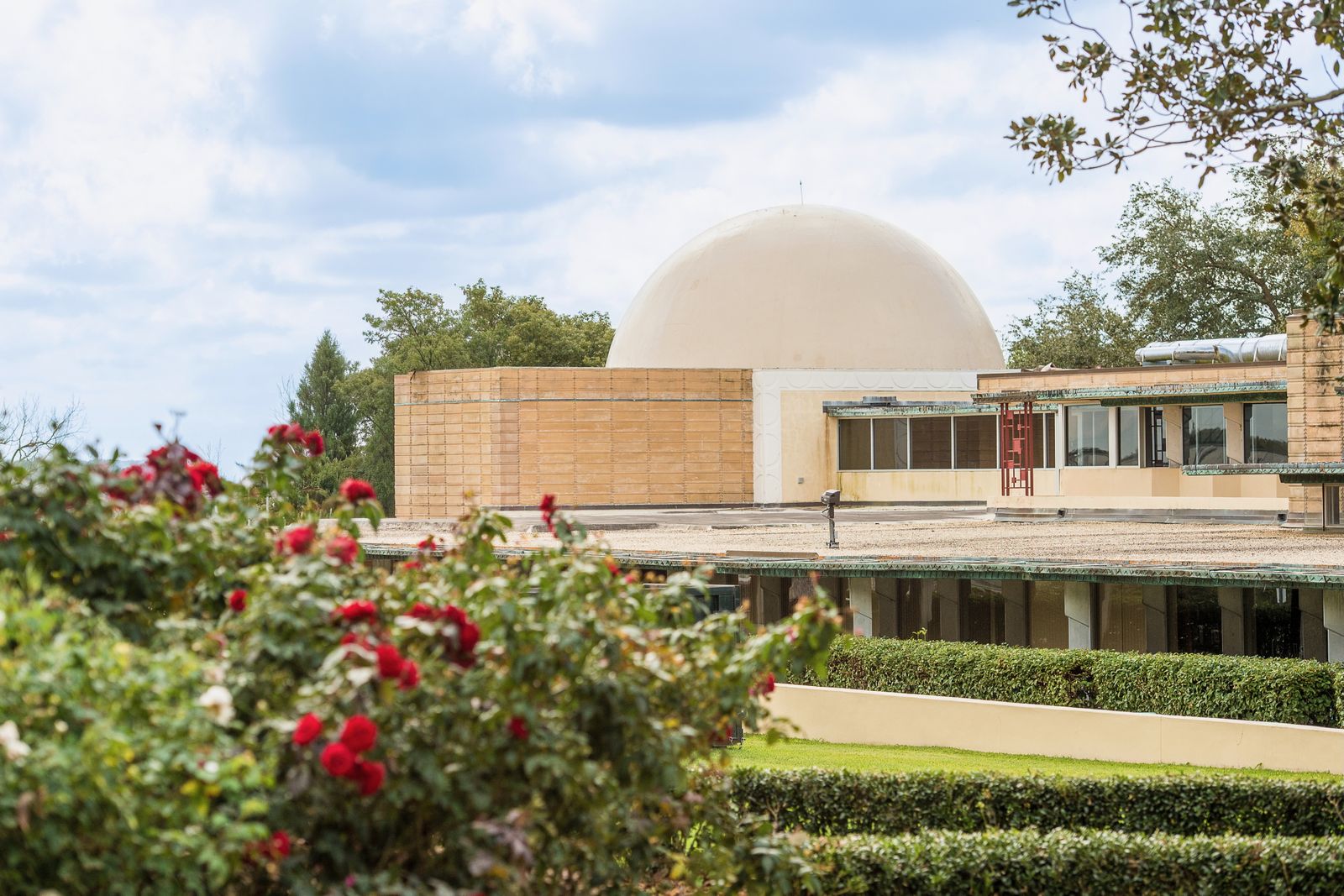
Immerse Yourself in the Cosmos at Frank Lloyd Wright's Only Planetarium, Recently Restored to Its Former Glory in Florida
Completed in 1958, the domed building is located on the campus of Florida Southern College, home to 13 Wright-designed buildings, the world's largest single-site collection of the architect's work

Play Tractor online with friends — free
Real-time Sheng Ji / Tractor for 3–5 players, with complete bidding and trump rules across web, iOS and Android.
Play bidfive →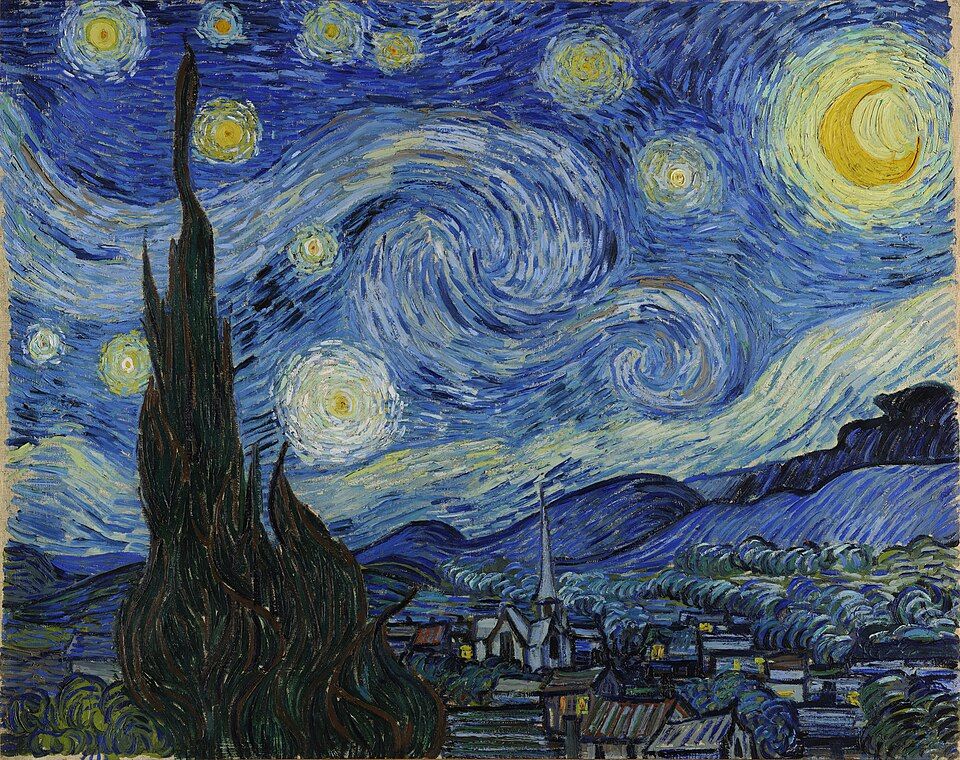
A Team of Astronomers Thinks They Have Identified the Exact Night Sky That Inspired Vincent van Gogh's 'Starry Night.' Not Everyone Is Convinced
Very few night skies seen from the south of France during the summer of 1889 would match the scene on van Gogh's canvas. A new study argues that it could have been July 22

'Pretty Boy' Floyd, One of the Most Notorious Outlaws of the Great Depression, Was Shot and Killed in an FBI Raid 92 Years Ago
Some Americans lauded the 30-year-old bank robber as a Robin Hood-esque folk hero. Others castigated him as a violent criminal whose misdeeds were emblematic of the troubled era

GTA 6 guides, updates and practical reference
Explore a Chinese GTA 6 guide library covering the release, map, characters, missions, vehicles and weapons.
Browse guides →
Create AI images with your own API key
aixipi runs on desktop/web, uses your own model API balance, and avoids subscription lock-in.
Try aixipi →