
Elon Musk's Starlink and Starshield, and what they mean to Ukraine
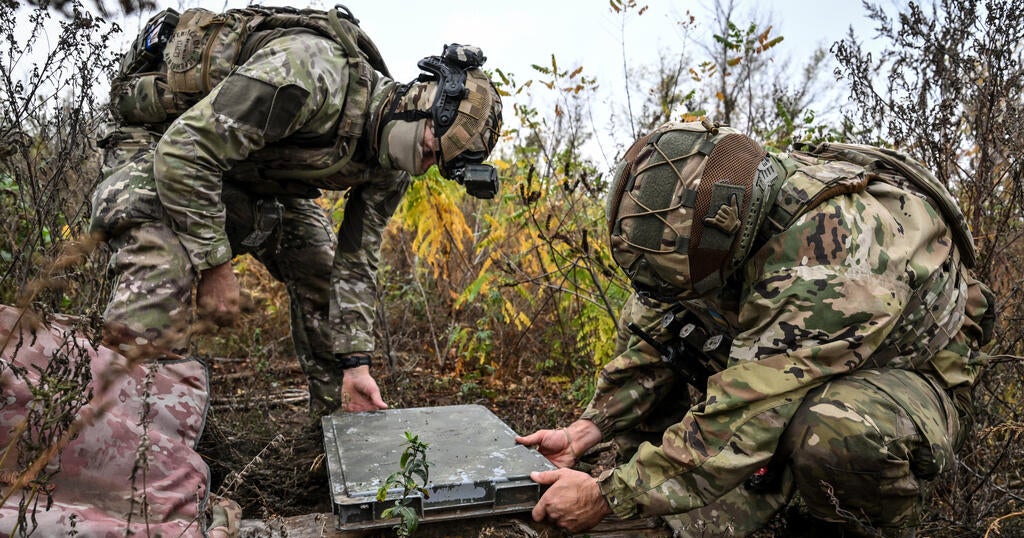
Ukraine’s reliance on Elon Musk’s satellite services came into sharper view over the past week after the country said limits on the Starshield network were disrupting drone missions. In a conflict approaching its fifth year, Ukrainian forces have made unmanned aircraft central to both holding territory and striking back at Russia. Reports that some drones were losing connection in flight — and falling before they could finish their missions — turned a technical access problem into an immediate battlefield concern.
The episode matters because Ukraine is fighting a far larger opponent with substantially greater resources. Since Russia began its full-scale invasion in early 2022, Kyiv has leaned heavily on rapidly developed drone capabilities to help narrow that imbalance. Small, remotely operated systems have become important on the defensive line as well as in operations beyond it. Their usefulness, however, depends on a continuous data link; without one, a drone can cease to be controllable long before it reaches its intended task.
That connection is supplied through two related SpaceX services. Starlink is the company’s commercial satellite internet offering. Starshield, by contrast, is designed for military use and is provided through arrangements licensed to the U.S. government and partner countries, including Ukraine. The distinction is significant: one service is sold commercially, while the other sits inside a defense framework, even though both rely on SpaceX’s satellite infrastructure.
Both networks draw on a large group of satellites operating in low Earth orbit. Rather than depending on a single spacecraft far above the planet, the system uses thousands of satellites moving relatively close to Earth. That architecture can provide coverage across broad areas and has made satellite connectivity a consequential part of Ukraine’s wartime technology. It also means that access rules, service controls and network performance can have direct effects far from the companies and governments that manage them.
Ukraine’s account of Starshield throttling showed how quickly those effects can become visible. A reduction in available service is not merely an inconvenience when aircraft are already airborne. If the link guiding a drone is interrupted, the mission may end at once and the aircraft may be lost. For a military that has sought to compensate for a resource gap through adaptable, lower-cost technology, repeated failures of that kind could weaken an advantage it has worked to develop.
The reported disruption also highlights how much more a drone operation requires than the aircraft itself. A mission depends on a chain that includes the drone, its operator and the connection that enables control. When the network portion of that chain is constrained, equipment already in the air can become ineffective regardless of the mission’s purpose. In Ukraine’s case, the issue is especially sensitive because drone warfare has become a major element of its effort to withstand Russia’s larger military capacity.
The incident underscores a broader tension in Ukraine’s use of privately built infrastructure during war. SpaceX operates the satellite systems, while Starshield is connected to U.S. government licensing and allied users. Ukraine therefore depends on technology that is not entirely under its own control, even as the service is woven into a major part of its defense effort. That arrangement can bring sophisticated capabilities, but it leaves operational planning exposed to decisions about availability, policy and technical management outside Kyiv.
There is another way to view the situation. Starlink and Starshield are not interchangeable labels for the same product: their commercial and military purposes differ, and Starshield’s government licensing places it in a separate channel from consumer-oriented Starlink. Yet the reported disruption has drawn attention to the common satellite foundation beneath them. For Ukraine, the practical question is less about the branding of the service than whether the connection required for a particular drone mission remains available when it is needed.
What happens next will depend on the scope and duration of the reported restrictions and on whether drone operations can be maintained without similar interruptions. The immediate event has already illustrated the stakes. Ukraine’s drone strategy has helped it continue fighting a much larger invading force, but the strategy is tied to dependable satellite links. As the war enters another year, the reliability and governance of those links are likely to remain as important as the drones they help keep in the air.
Source: CBS World
Related articles

Zelenskyy accuses Russia of using cluster warheads in deadly strikes
Russia launched the strikes on Ukraine less than a day after negotiations to end the war, which also involved the United States, ended in St. Petersburg.

Create AI images with your own API key
aixipi runs on desktop/web, uses your own model API balance, and avoids subscription lock-in.
Try aixipi →
At least 16 dead when powerful 7.0 magnitude earthquake strikes Tibet
It was the biggest earthquake in the region in the last five years, China

See how Big Tech is transforming Spain's landscape
A drought-stricken region of northeast Spain has become a focus for American companies searching for locations to place their data centers.