
Firefighting helicopters collide in Greece amid European wildfire crisis
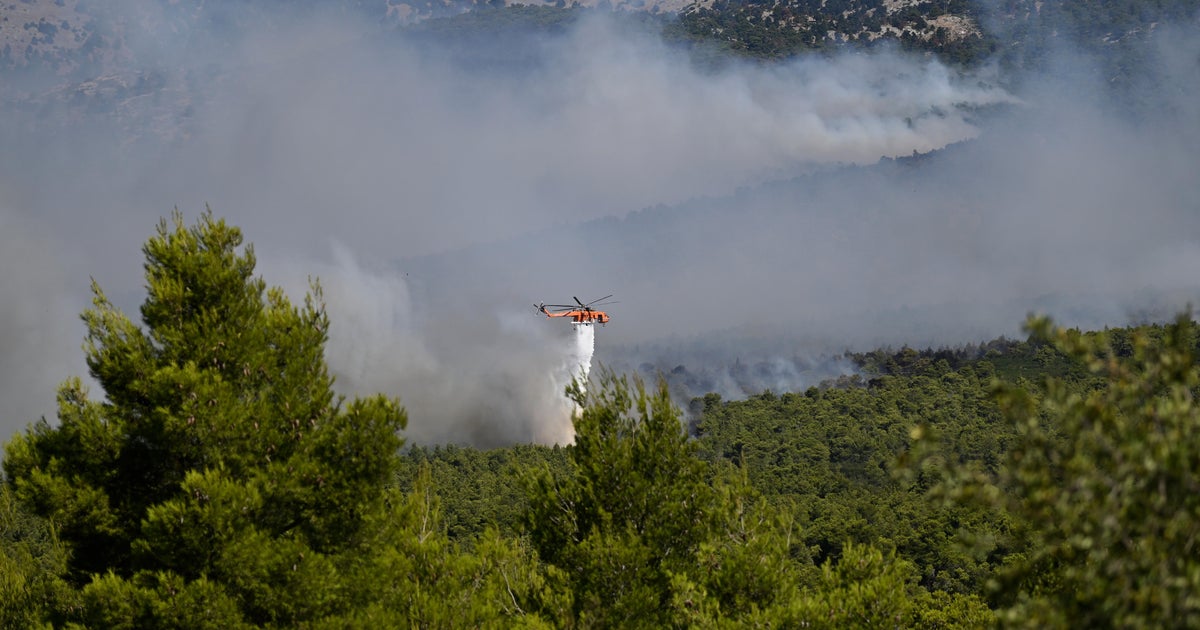
Two helicopters assigned to fight a wildfire collided while operating near Psatha, west of Athens, on Sunday, turning an emergency response mission into a fatal aviation accident. One of the aircraft fell to the ground after the contact, according to footage from the scene. The helicopters had been deployed against a blaze being pushed by strong winds, a condition that can rapidly alter a fire’s direction and complicate work above it. The collision occurred during the response itself, not after the crews had left the fire zone.
The four people aboard the two aircraft came from Greece, Denmark and Britain. A Greek crew member and a Danish crew member died in the crash. The remaining pair — one Greek national and one British national — were found alive. The available account did not provide details about their condition, their roles on the aircraft or the fate of the second helicopter after the collision. It also did not identify the sequence of events immediately before the aircraft made contact.
Both aircraft were Bell helicopters, and each carried a crew of two. They were flying over the Psatha area as part of the effort to contain the fire. No further detail was given on the aircraft configuration, their water loads or their individual assignments. Still, the small number of people aboard each helicopter underscores how quickly the consequences of an incident can become severe when aerial firefighting crews are operating close to a fast-moving emergency.
Aircraft can support fire crews on the ground by making repeated runs over active flames, but such work depends on coordination between crews and changing conditions around the fire. In this case, the wind-driven nature of the blaze formed part of the setting in which the two helicopters were working. After the impact, the focus of the operation necessarily included both the wildfire and the fate of the personnel who had been deployed against it.
The accident occurred west of the Greek capital rather than in Athens itself, but its impact reached beyond the immediate fireground. Greece drew personnel of several nationalities into the operation, and the casualty list reflects that international element: Greek, Danish and British crew members were among those aboard. The deaths and rescues leave a sharply divided outcome for the two crews who had set out on the same mission. The account does not specify the agencies or employers connected to the four people.
Footage showing one helicopter descending to the ground after the midair collision offers a visible record of the event, but it does not by itself establish why the aircraft made contact. The information available so far identifies the location, aircraft type, crew size and outcome, rather than a cause. Any assessment of flight paths, visibility, communications or the effect of the wildfire conditions will depend on further examination. Those questions should not be answered from the images alone.
The crash came amid wider concern over wildfires in Europe, as reflected in the broader context of the incident. That backdrop gives the Psatha accident significance beyond a single aviation emergency: it shows the danger faced by crews operating from the air when ground fires are being driven by wind. It does not, however, explain the collision. The available information contains no comparison with other fires, no assessment of regional firefighting capacity and no finding of responsibility.
Attention will now be on the surviving crew members, the recovery after the crash and any fuller account of how the mission unfolded. Such an account would need to clarify the movement of both helicopters before the contact and the operational conditions surrounding the fire. For communities and responders dealing with the blaze near Psatha, the immediate wildfire emergency remains central while any review develops. For the aviation response, the deaths of the Greek and Danish crew members underline the risk carried by those working above an active fire.
Source: CBS World
Related articles
Flights canceled as WestJet flight attendants strike over pay dispute
WestJet canceled more than 300 flights as of early Sunday, snarling travel plans in Canada in the middle of a three-day weekend.

Create AI images with your own API key
aixipi runs on desktop/web, uses your own model API balance, and avoids subscription lock-in.
Try aixipi →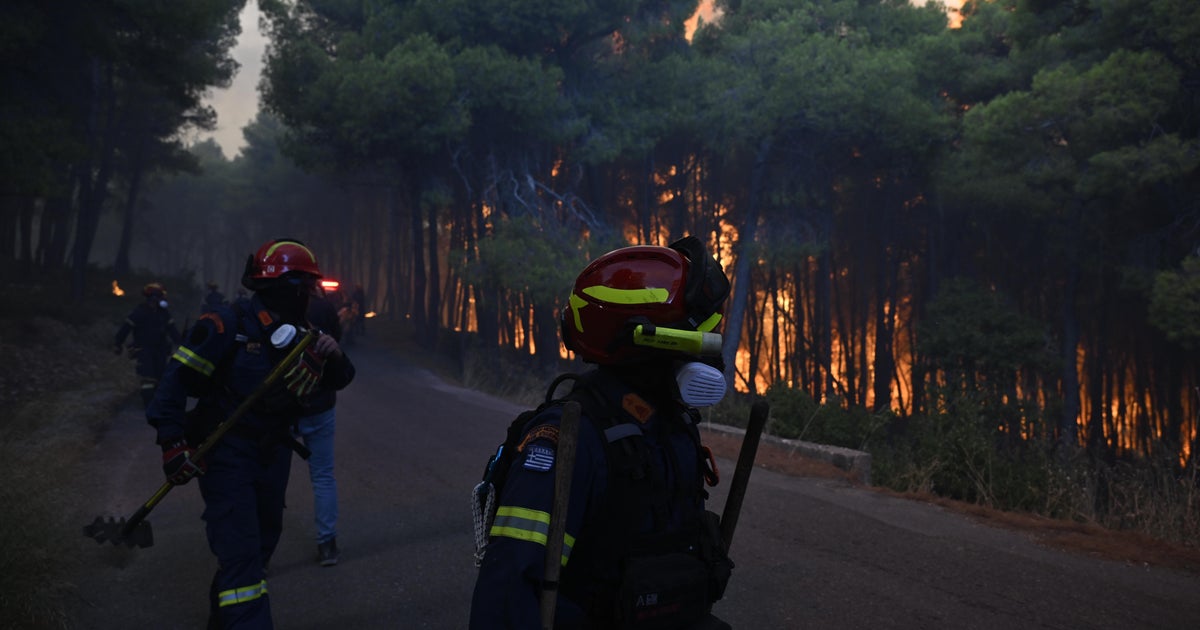
Wildfire danger in Europe shifts to Greece as evacuation orders remain in France
For Greece, the danger carried grim resonance: a 2018 wildfire at the seaside community of Mati, near Athens, killed 104 people.

Spain's Pedro Sánchez was a hero of migrants. After Ceuta, he faces his biggest challenge
The pro-immigration leader is facing backlash at home and abroad after roughly 60,000 people crossed from Morocco into the Spanish enclave.