
Five Discoveries That Changed Our Understanding of T. Rex Forever, From Warm Blood to Lips
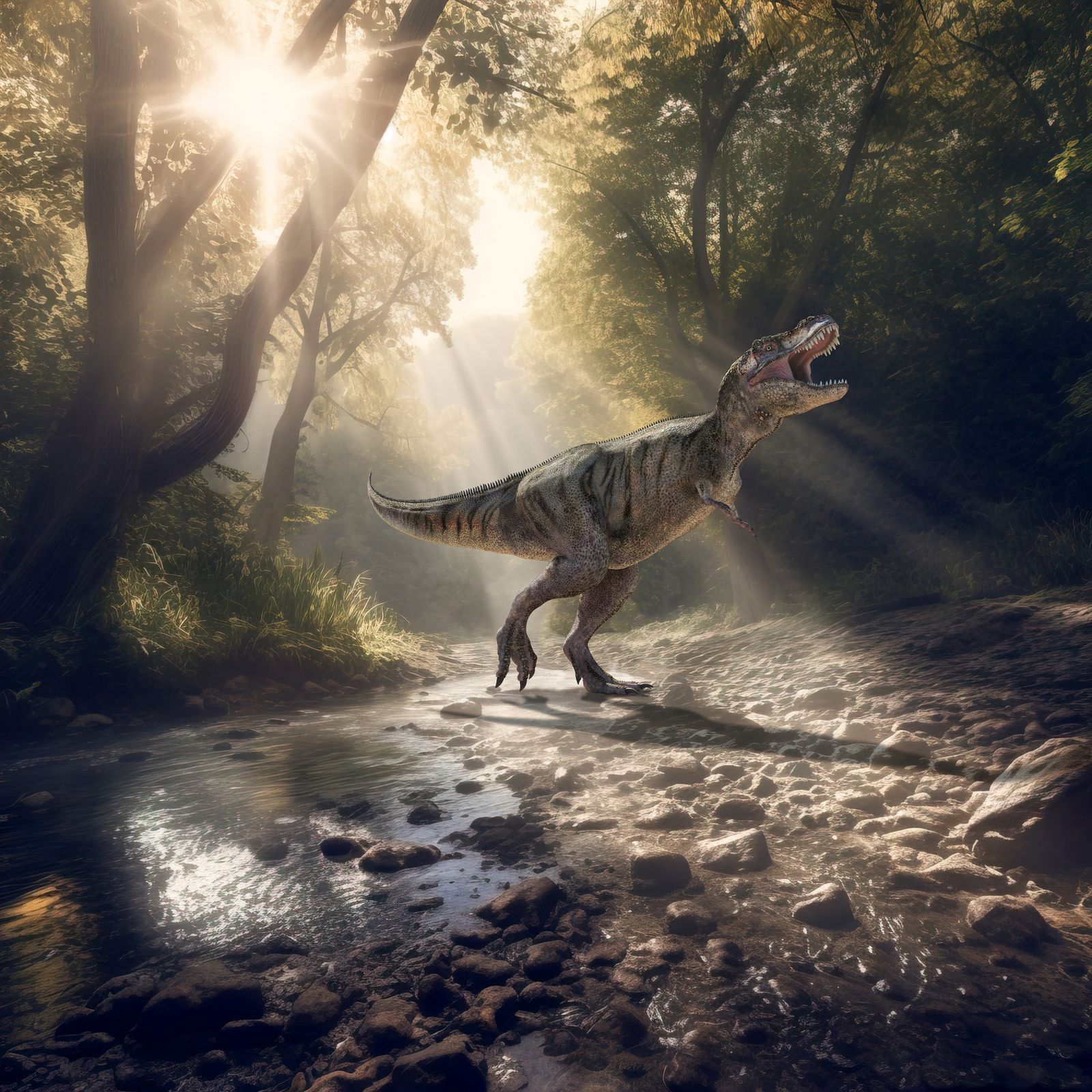
The image of Tyrannosaurus rex has been remade repeatedly since the animal first entered public imagination more than a century ago. Five major lines of discovery, including evidence bearing on body temperature and the possibility of lip-like coverings over its teeth, have pushed researchers away from the old caricature of a lumbering reptilian brute. The result is not a final portrait, but a sharper and more complicated account of one of prehistory’s best-known predators.
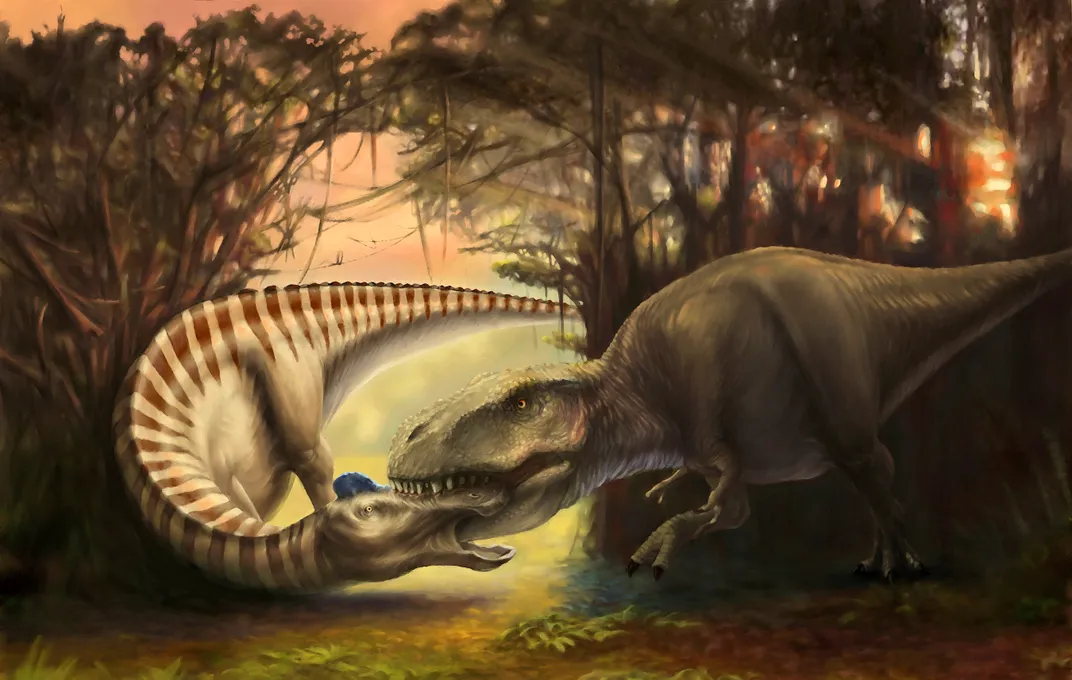
Early reconstructions cast the dinosaur as an enormous, slow creature that dragged its tail through marshy ground. Popular scenes often placed it in relentless, violent confrontations with Triceratops, reinforcing the idea that giant dinosaurs occupied a world defined by constant combat. Cassius Morrison, a paleontologist at University College London, has described the early view as one shaped by an imagined savage age ruled by sluggish dinosaurs.
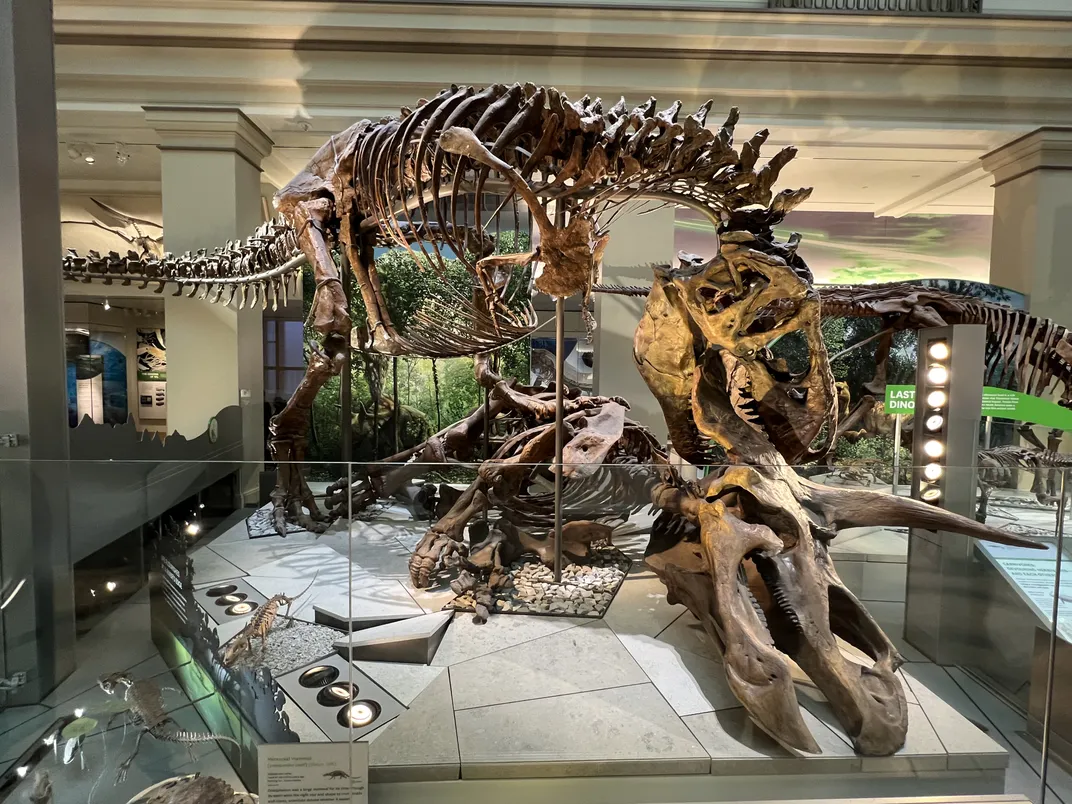
That framing has changed as fossil research has accumulated. Rather than treating T. rex as simply another oversized meat-eater, paleontologists now distinguish it as a predator with its own biological and ecological role. The animal is understood to have generated internal heat, a major departure from the traditional cold-blooded dinosaur stereotype. The question of whether it carried feathers, at least across parts of its body or during stages of life, has also broadened how researchers think about its appearance.
Its face has become another important area of revision. The possibility that T. rex had soft tissue covering its teeth when its mouth was closed challenges the familiar picture of permanently exposed fangs. That proposal has attracted attention because a small change in facial anatomy alters the animal’s silhouette in museums, illustrations and films. It also shows why outward appearance remains difficult to settle: bones preserve exceptionally well, while skin, scales, feathers and other soft tissues usually do not.
The newer interpretation also places feeding behavior in a broader setting than a series of dramatic duels. T. rex likely took advantage of vulnerable herbivores, including young or weakened individuals. At the same time, it could consume carcasses left by animals too large or difficult to bring down, such as adult Triceratops and Edmontosaurus. Hunting and scavenging need not be competing identities; together they describe a large carnivore using several opportunities within its environment.
That ecological view matters because it replaces a single-purpose monster with an animal connected to the rest of its community. Large plant-eaters were not merely adversaries in staged battles but potential prey, sources of carrion and part of the food web in which T. rex operated. A predator capable of exploiting injured animals and available remains could have influenced how nutrients and carcasses moved through its ancient ecosystem, even when it was not making a kill.
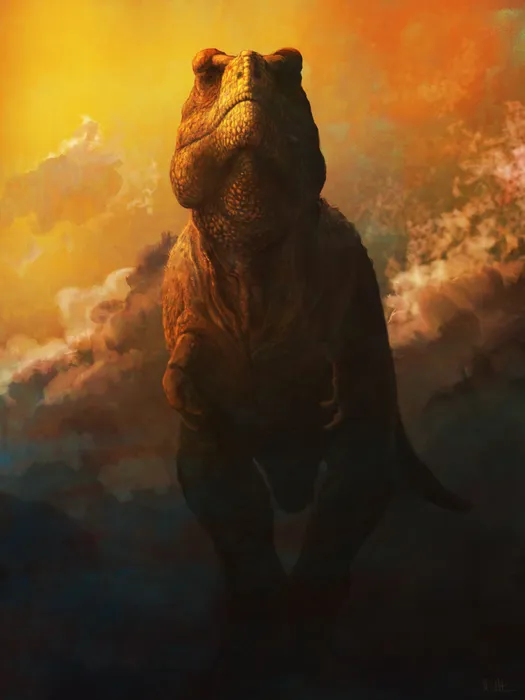
The transformation did not come from one fossil or one decisive experiment. It emerged gradually as researchers combined separate observations and reconsidered assumptions that had shaped the earliest reconstructions. Each finding narrowed some possibilities while opening new questions, from metabolism to external covering and feeding. In that sense, the five discoveries are less a closing argument than milestones in an ongoing scientific process.
There are still limits to what the evidence can show. Scientists can infer much from anatomy, fossils and comparisons, but some features of a long-extinct animal cannot be observed directly. The warm-blooded interpretation, possible feathers and lip question illustrate how active debate can coexist with a broad shift in understanding. Different reconstructions may emphasize different uncertainties rather than represent a simple choice between an old picture and a settled new one.
Future discoveries may again revise the public’s most familiar dinosaur. New specimens, better methods and fresh comparisons could clarify how T. rex looked, how it obtained food and how it fit into its Late Cretaceous world. For now, the clearest lesson from its changing image is that even an icon can remain scientifically unfinished: the “tyrant lizard king” is better known than before, but far from fully explained.
Source: Smithsonian Magazine
Related articles

Immerse Yourself in the Cosmos at Frank Lloyd Wright's Only Planetarium, Recently Restored to Its Former Glory in Florida
Completed in 1958, the domed building is located on the campus of Florida Southern College, home to 13 Wright-designed buildings, the world's largest single-site collection of the architect's work

Play Tractor online with friends — free
Real-time Sheng Ji / Tractor for 3–5 players, with complete bidding and trump rules across web, iOS and Android.
Play bidfive →
A Team of Astronomers Thinks They Have Identified the Exact Night Sky That Inspired Vincent van Gogh's 'Starry Night.' Not Everyone Is Convinced
Very few night skies seen from the south of France during the summer of 1889 would match the scene on van Gogh's canvas. A new study argues that it could have been July 22

'Pretty Boy' Floyd, One of the Most Notorious Outlaws of the Great Depression, Was Shot and Killed in an FBI Raid 92 Years Ago
Some Americans lauded the 30-year-old bank robber as a Robin Hood-esque folk hero. Others castigated him as a violent criminal whose misdeeds were emblematic of the troubled era

GTA 6 guides, updates and practical reference
Explore a Chinese GTA 6 guide library covering the release, map, characters, missions, vehicles and weapons.
Browse guides →
Create AI images with your own API key
aixipi runs on desktop/web, uses your own model API balance, and avoids subscription lock-in.
Try aixipi →