
For Decades, Scientists Thought an 'American Cheetah' Once Roamed North America. Turns Out the Extinct Cat Wasn't a Cheetah

North America’s so-called American cheetah may need a new identity. A genetic study of fossil material has concluded that Miracinonyx trumani, a vanished cat long described through a cheetah comparison, was genetically nearer to the living puma than to the cheetahs found today. The finding shifts more than a familiar label: it changes the starting point for interpreting how this predator moved, fed and developed in the ancient continent.
The evidence comes from ancient DNA recovered from four fossil specimens. They were collected at sites in present-day Wyoming and Canada’s Yukon Territory, placing the investigation across two parts of the animal’s former northern landscape. Rather than relying only on resemblances preserved in bones, the researchers examined inherited material to reassess a classification that had endured for decades. They reported the results in Current Biology on September 4.

M. trumani lived during the Pleistocene, the long interval spanning roughly 2.6 million to 12,000 years ago. It occupied grasslands in territory that is now North America. In that setting, the cat is understood to have preyed chiefly on plant-eating animals; the study identifies herbivores including saiga antelope among the animals associated with its hunting. That era supplies the broad prehistoric setting for a predator now known through physical remains and genetic traces.
The name “American cheetah” had made the animal sound like a regional counterpart to the modern cheetah. That shorthand now appears too confident. The new analysis instead places its closest modern comparison with the puma, a species also commonly called a cougar or mountain lion. The distinction matters because a name can quietly carry assumptions about an extinct animal’s habits and ecological role. It can lead readers to expect a direct lifestyle match that a memorable common name alone cannot establish.
Molecular ecologist Molly Cassatt-Johnstone of the University of California, Santa Cruz, a co-author of the study, cautioned that the old title can suggest a particular way of living. Calling the cat an American cheetah, she said, implies behavior and ecology that may not fit the species. Her point is not simply taxonomic: a genetic relationship can alter the questions researchers ask of the fossil record.
For this animal, the revised family connection provides a different framework for reading the available clues. Fossils can show where an animal was found, while the study’s DNA analysis supplies another line of evidence about ancestry. Bringing the two together allows scientists to revisit its geographic range, its diet and its evolutionary history rather than treating the cheetah comparison as settled. That is particularly useful when one type of evidence has encouraged a familiar comparison and another tests it.
The Wyoming and Yukon finds are especially important because they anchor the genetic conclusion in material from widely separated locations. Yet four fossils are still a limited sample of a species that lived across a vast period of prehistory. The research therefore offers a strong reinterpretation of the known remains, while leaving room for additional specimens to sharpen the picture of variation within the extinct cat and across its range. Finds from other places or periods could test how broadly the genetic pattern applies.
There is also a practical consequence for public understanding. Extinct animals are often introduced through modern analogies, which can make distant prehistory easier to picture but can also outlast the evidence behind them. In this case, the cheetah label became a concise story about an ancient North American hunter. The DNA findings invite a more careful account: an extinct predator with its own history, whose nearest living relative may be a puma rather than a cheetah.
The next stage will be to see how this genetic reclassification affects reconstructions of the animal’s place in Pleistocene grasslands. Researchers will need to weigh the DNA result alongside fossils and evidence connected to prey and distribution. For general readers, the update is a reminder that familiar names can change as new methods examine old remains. What is clear from the study is that the label used for Miracinonyx trumani should no longer be treated as a straightforward description of what the cat was.

Source: Smithsonian Magazine
Related articles

Immerse Yourself in the Cosmos at Frank Lloyd Wright's Only Planetarium, Recently Restored to Its Former Glory in Florida
Completed in 1958, the domed building is located on the campus of Florida Southern College, home to 13 Wright-designed buildings, the world's largest single-site collection of the architect's work

Play Tractor online with friends — free
Real-time Sheng Ji / Tractor for 3–5 players, with complete bidding and trump rules across web, iOS and Android.
Play bidfive →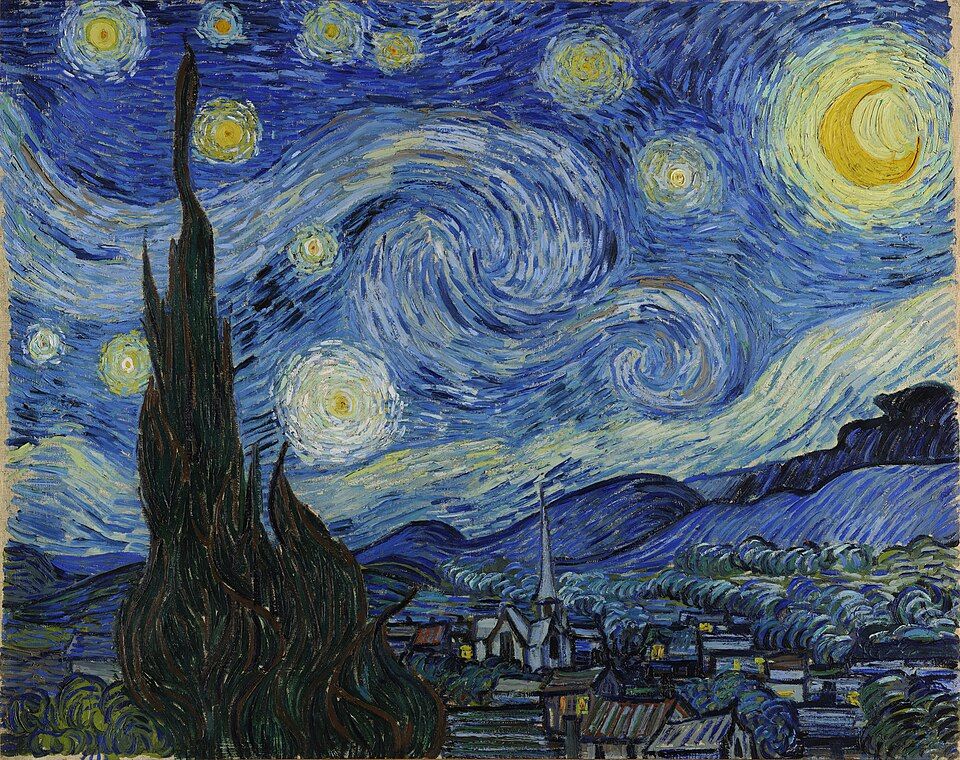
A Team of Astronomers Thinks They Have Identified the Exact Night Sky That Inspired Vincent van Gogh's 'Starry Night.' Not Everyone Is Convinced
Very few night skies seen from the south of France during the summer of 1889 would match the scene on van Gogh's canvas. A new study argues that it could have been July 22

'Pretty Boy' Floyd, One of the Most Notorious Outlaws of the Great Depression, Was Shot and Killed in an FBI Raid 92 Years Ago
Some Americans lauded the 30-year-old bank robber as a Robin Hood-esque folk hero. Others castigated him as a violent criminal whose misdeeds were emblematic of the troubled era

GTA 6 guides, updates and practical reference
Explore a Chinese GTA 6 guide library covering the release, map, characters, missions, vehicles and weapons.
Browse guides →
Create AI images with your own API key
aixipi runs on desktop/web, uses your own model API balance, and avoids subscription lock-in.
Try aixipi →