
Former Army secretary praises Ukraine in 1st public appearance since resigning
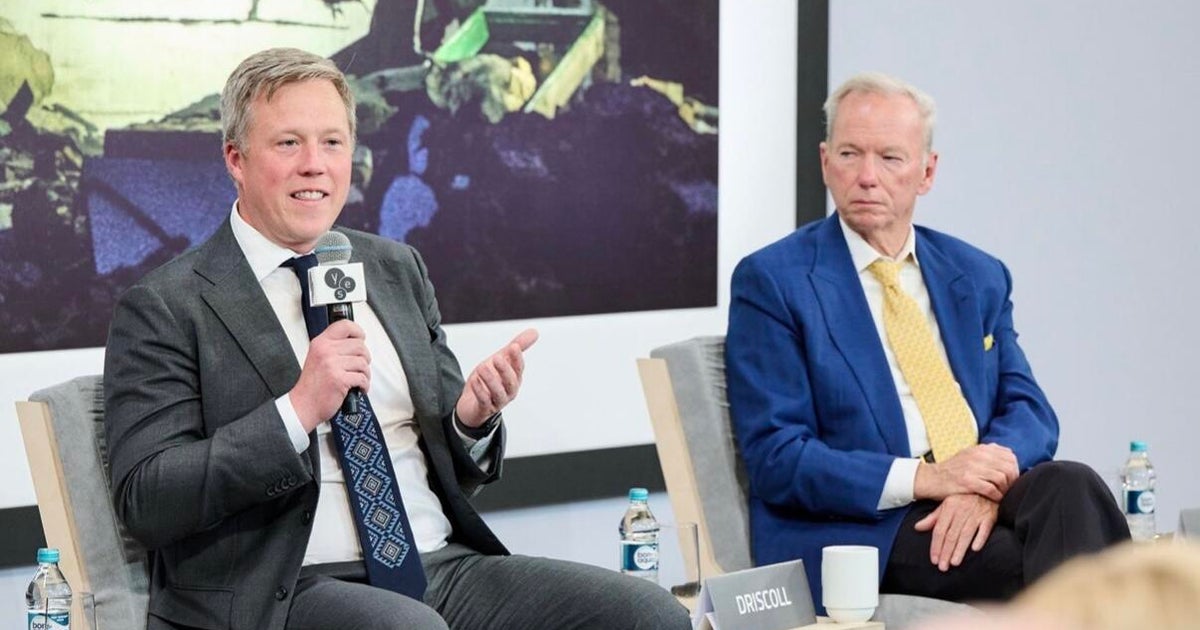
Former U.S. Army Secretary Dan Driscoll used his first public remarks after departing the Trump administration to argue that Ukraine has become an important test case for military adaptation. Speaking in Kyiv, Driscoll said combat is at what he called an “inflection point in warfare,” and contended that the biggest armed forces have not moved quickly enough to incorporate the pace and inventiveness now on display in Ukraine.
His appearance came at the Yalta European Strategy forum, a yearly gathering convened by the Victor Pinchuk Foundation. The conference brings together participants to consider Ukraine’s place in Western security arrangements. CNN journalist Fareed Zakaria led the session on the forum’s second day. Driscoll wore a tie decorated with a Ukrainian traditional motif, an outward sign of the setting in which he delivered the remarks.
Driscoll shared the stage with Eric Schmidt, the former Google chief executive who leads Perennial Autonomy. The U.S. defense company operates in Ukraine, placing Schmidt in a discussion centered not only on battlefield experience but also on the companies and systems involved in translating it into military capability. Both speakers singled out Ukrainian innovations developed during the war as examples of how forces can adapt under pressure.
The central example was DELTA, a Ukrainian digital platform that combines information from radar, field sensors and troops. By bringing those inputs together, the system is designed to give commanders a broader view of conditions across the battlefield. Driscoll said DELTA is ahead of anything currently available to the U.S. military. His assessment placed the focus on software and information-sharing, rather than only on weapons or troop numbers.
He also pointed to the potential effect of greater computing resources and expanded artificial-intelligence capacity in Ukraine. In his view, those developments could help the country move more rapidly than Russia in innovation and partnerships. That observation framed technological capacity as a continuing contest, while leaving open the practical question of how quickly equipment, data systems and organizations can be expanded during an ongoing war.
Driscoll’s comments follow an 18-month tenure as Army secretary in which he pressed the U.S. Army to learn from the conflict in Ukraine. In January, the service began introducing changes to its procurement process intended to shorten the time between developing a weapon and putting it in soldiers’ hands. His argument in Kyiv suggested that the challenge is not simply recognizing a new technology, but changing institutional processes quickly enough to use it.
The urgency he described was also illustrated by the war with Iran. After Driscoll concluded that U.S. forces did not have sufficient protection against Iranian Shahed drones, Perennial Autonomy supplied 13,000 Merops interceptor drones and 10,000 Bumblebee drones for reconnaissance and strikes. Both models have been used extensively in Ukraine. Schmidt said the episode raised the question of whether the government could have anticipated the need through longer-term planning.
His departure adds another layer to the discussion. The administration announced his resignation on Aug. 31 amid reports of disagreements with Defense Secretary Pete Hegseth involving senior-officer removals and Army modernization. The White House did not publicly provide a reason for Driscoll’s exit. A veteran of the Iraq War and a former venture capitalist, Driscoll had also participated in administration efforts to seek an end to Russia’s war against Ukraine while serving as Army secretary.
The broader U.S. record offers a counterpoint to his call for faster learning. In August, the Army wound down a drone battalion established to study lessons from Ukraine’s use of drones. Two prominent supporters of that unit, former Army Chief of Staff Gen. Randy George and former U.S. Army Europe and Africa commander Gen. Christopher Donahue, were fired or compelled to leave early this year. Driscoll did not address those personnel decisions in Kyiv, though he defended the administration’s Ukraine policy and acknowledged that support had not met Kyiv’s expectations.
Source: CBS World
Related articles
Zelenskyy accuses Russia of using cluster warheads in deadly strikes
Russia launched the strikes on Ukraine less than a day after negotiations to end the war, which also involved the United States, ended in St. Petersburg.

Create AI images with your own API key
aixipi runs on desktop/web, uses your own model API balance, and avoids subscription lock-in.
Try aixipi →
At least 16 dead when powerful 7.0 magnitude earthquake strikes Tibet
It was the biggest earthquake in the region in the last five years, China

See how Big Tech is transforming Spain's landscape
A drought-stricken region of northeast Spain has become a focus for American companies searching for locations to place their data centers.