
Girl Scouts of America Announces a First for Its Iconic Cookie Lineup—One Created Exclusively for Dogs
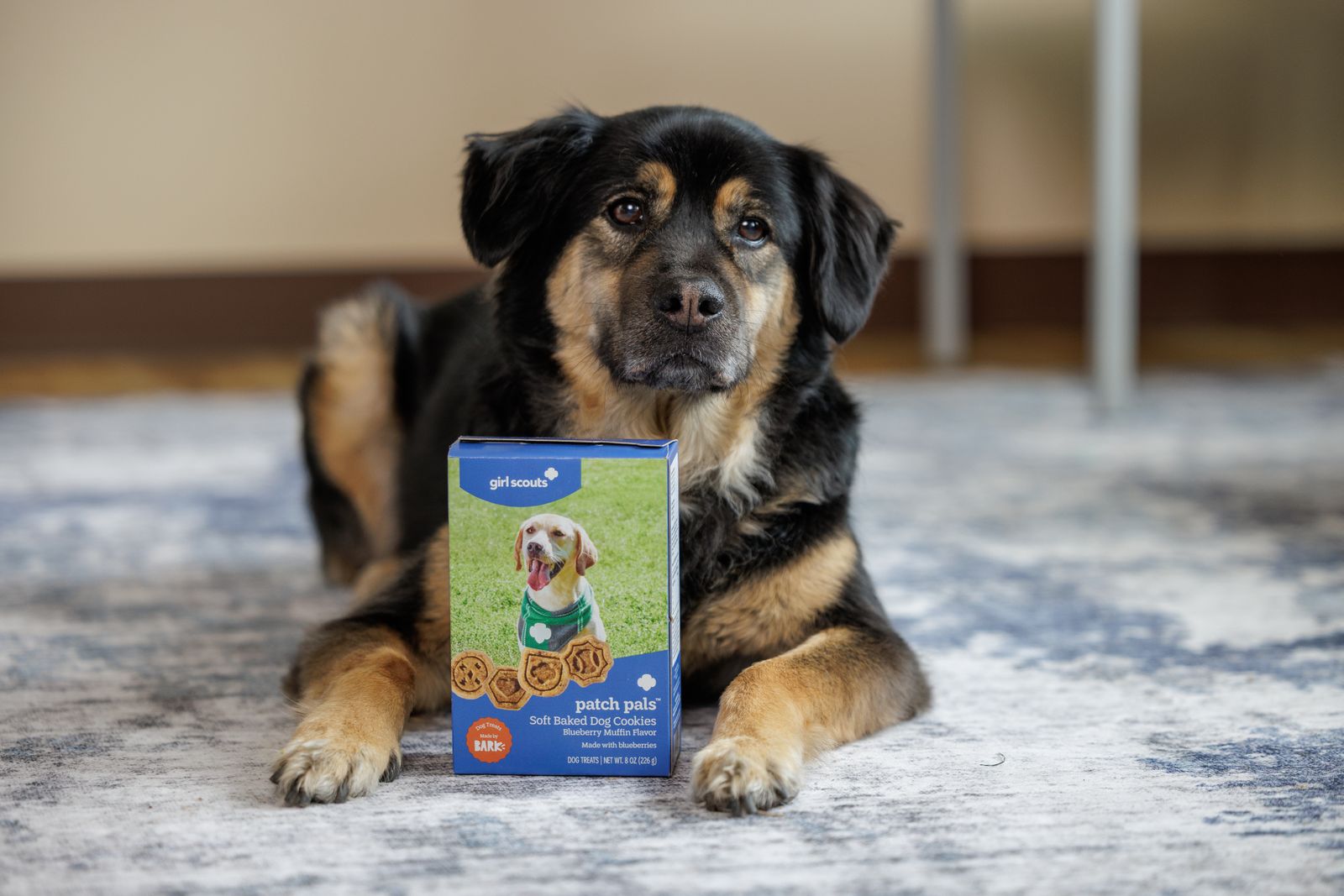
Girl Scouts of America has announced an addition unlike any previous entry in its celebrated cookie program: a treat made for dogs. The product marks the first time the organization’s cookie business has extended its lineup to four-legged companions, according to the announcement. For a program long associated with familiar human snacks and seasonal community sales, the move opens a new, pet-focused chapter while keeping the Girl Scout cookie name at the center of the campaign.
The milestone is notable because cookie sales have been part of the organization’s public identity for 109 years. Across that history, the program has connected local Scout activity with products recognized far beyond the troops that sell them. A dog-specific offering is therefore more than a routine flavor change: it is a departure in the intended customer, shifting from a conventional food item for people to a specially created product aimed at pet owners and their animals.

The announcement presents the dog treat as a purpose-built addition rather than simply another variation of a familiar cookie. That distinction matters in a category where consumers generally expect clear separation between food meant for people and products made for pets. The available description identifies the item as being exclusively for dogs, but it does not, on its own, settle practical questions such as ingredients, distribution, price, timing or how broadly the product will be offered.
Those unanswered details will shape how the announcement is received. For families already involved in Scout sales, a pet-oriented option could make a household pet part of a ritual that has traditionally focused on people. For buyers, however, the novelty may prompt closer attention to what exactly is being sold and under what terms. The significance of the news lies first in the historic first; the operational details will determine whether it becomes a limited curiosity or a more lasting part of the program. It may also test how easily a well-established fundraising tradition can adapt its appeal without losing the simple familiarity that has helped define it for generations.
The change also illustrates how a legacy fundraising tradition can look for new audiences without abandoning its best-known symbol. Girl Scout cookies are closely tied to the organization’s public-facing sales efforts, and the new dog treat uses that association in a different market. The announcement does not suggest that the established human cookie selection is being replaced. Instead, it frames the pet product as an additional offering connected to the wider cookie enterprise.
A message included with the material surrounding the announcement invoked the language of Scouting, urging participants to march forward, bake and sell while showing what the movement means to them. That appeal places the product launch within the organization’s familiar emphasis on participation and local engagement. It also signals that the dog treat is being introduced through the same broader culture of Scout involvement that has long accompanied cookie sales, rather than as a detached consumer-brand experiment.
There is room for different reactions to the idea. Supporters may see a playful way to acknowledge the place pets hold in many homes and to give supporters another way to engage with a recognizable tradition. Others may reserve judgment until more is known about the product itself and its place in the sales program. Both responses reflect the unusual nature of the announcement: a historic brand is crossing into pet treats, but the immediate news offers more about the concept than about its rollout.
What comes next will be watched closely by Scouts, families and customers who follow the annual cookie season. Further information could clarify whether the dog treat will be sold alongside existing cookies, how it will reach local communities and whether the initiative is intended to return in later years. For now, the confirmed development is straightforward: after more than a century of cookie selling, Girl Scouts of America has introduced its first cookie-related treat designed for dogs.
Source: Smithsonian Magazine
Related articles

Immerse Yourself in the Cosmos at Frank Lloyd Wright's Only Planetarium, Recently Restored to Its Former Glory in Florida
Completed in 1958, the domed building is located on the campus of Florida Southern College, home to 13 Wright-designed buildings, the world's largest single-site collection of the architect's work

Play Tractor online with friends — free
Real-time Sheng Ji / Tractor for 3–5 players, with complete bidding and trump rules across web, iOS and Android.
Play bidfive →
A Team of Astronomers Thinks They Have Identified the Exact Night Sky That Inspired Vincent van Gogh's 'Starry Night.' Not Everyone Is Convinced
Very few night skies seen from the south of France during the summer of 1889 would match the scene on van Gogh's canvas. A new study argues that it could have been July 22

'Pretty Boy' Floyd, One of the Most Notorious Outlaws of the Great Depression, Was Shot and Killed in an FBI Raid 92 Years Ago
Some Americans lauded the 30-year-old bank robber as a Robin Hood-esque folk hero. Others castigated him as a violent criminal whose misdeeds were emblematic of the troubled era

GTA 6 guides, updates and practical reference
Explore a Chinese GTA 6 guide library covering the release, map, characters, missions, vehicles and weapons.
Browse guides →
Create AI images with your own API key
aixipi runs on desktop/web, uses your own model API balance, and avoids subscription lock-in.
Try aixipi →