
Greetings from the Royal Pavilion, a stunning reminder of India in southern England

On Brighton’s south-coast streets, the Royal Pavilion stands as an unexpected architectural connection to India. Its clustered domes, curved entrances and turreted forms can look strikingly out of place amid southern England’s often gray weather and conventional urban landscape. Yet the building preserves evidence that British taste did not move in only one direction during the imperial era: South Asian visual language also reached a royal setting in Britain.
The Pavilion was created in the late 18th century for British royals drawn to the architecture they associated with South Asia. It is not presented as a copy of one Indian monument. Rather, the building brings together a range of motifs that its British patrons viewed as Indian, placing them in a royal retreat on the English coast. Its outline therefore carries a history of attraction, adaptation and power at the same time.

Among the details that define the structure are bulbous, or onion-like, domes; arches with pronounced scalloped curves; and towers topped by chhatris. Chhatris are small domed pavilions that appear in South Asian architectural traditions. Seen together, these features can immediately recall the palaces, sacred buildings and fortified complexes that shape many visitors’ memories of India, even though the Pavilion occupies a very different climate and setting.
For a visitor who had spent five years living in India, that recognition was especially strong. Regular weekend outings had included maharaja palaces, Sikh temples and forts linked to sultans, where elaborately shaped arches were a familiar part of the experience. Images from those trips were frequently shared on Instagram. By comparison, walking through Brighton suddenly brought back forms that had become commonplace during those years abroad.
The moment came last winter, after a swim in the English Channel. The visitor was cold and heading on foot toward the railway station when the Pavilion appeared during a drizzly, overcast day. Against that coastal backdrop, the India-inspired building produced an abrupt reminder of warmer memories and landscapes far from England. The reaction illustrates how architectural details can retain an emotional force even when they are transplanted across continents.
The sight also reverses a more familiar observation about Britain’s relationship with India. Mumbai contains numerous buildings whose Victorian character, stone construction and overall appearance resemble places in northern England. Those similarities can be read as visible remnants of Britain’s presence and authority on the subcontinent, where imported British styles became part of the urban environment.
Brighton offers the other side of that visual exchange. The Royal Pavilion shows that British architects and royal patrons absorbed Indian-inspired forms into a building at home while Britain was extending control across the subcontinent. That context matters. The building’s decorative borrowing was linked to a period of unequal political power, not simply to a neutral international sharing of design ideas.
That history supports more than one response. Some people may see the Pavilion first as an imaginative and lavish landmark, with domes and ornate towers giving Brighton an unusual silhouette. Others may regard it as an imperial-era appropriation that separated architectural forms from the communities and places that shaped them. The contrasting views do not cancel each other out; together, they help explain why the building remains more complicated than a decorative curiosity.
For current visitors, the Pavilion invites a broader reading of the links between India and Britain. Its forms demonstrate that imperial influence left marks in both places, even though the power behind that exchange was not equal. The continuing question for historic sites is whether they describe such architecture only as exotic spectacle, or also explain the political circumstances through which South Asian motifs were carried into a British royal residence. That choice affects whether visitors encounter only an unusual facade or a fuller account of the history behind it.

Source: NPR World
Related articles

Zelenskyy accuses Russia of using cluster warheads in deadly strikes
Russia launched the strikes on Ukraine less than a day after negotiations to end the war, which also involved the United States, ended in St. Petersburg.

Create AI images with your own API key
aixipi runs on desktop/web, uses your own model API balance, and avoids subscription lock-in.
Try aixipi →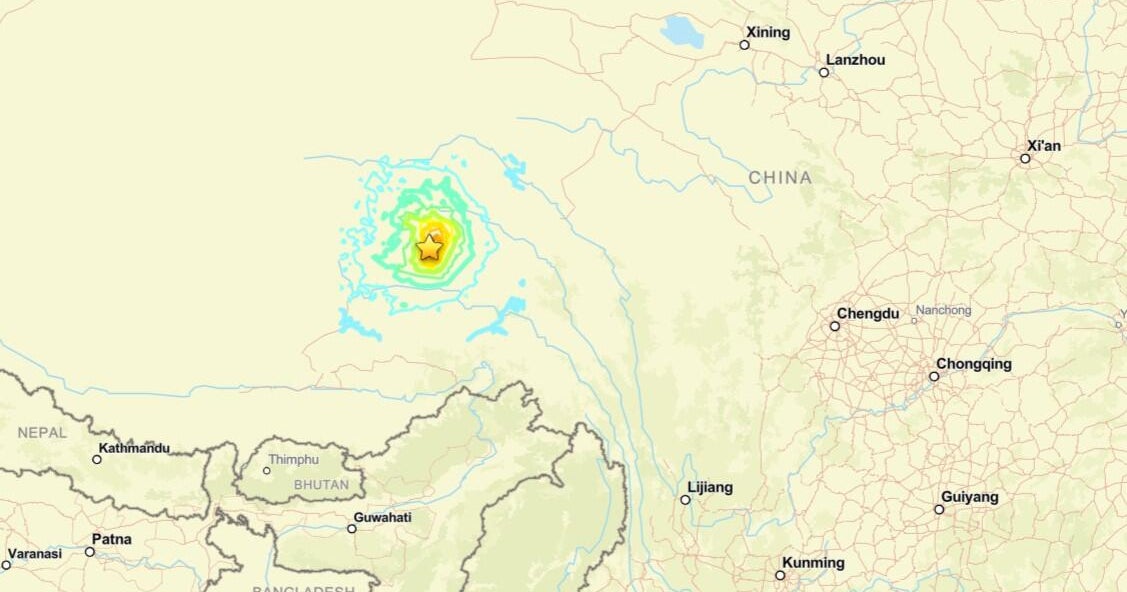
At least 16 dead when powerful 7.0 magnitude earthquake strikes Tibet
It was the biggest earthquake in the region in the last five years, China

See how Big Tech is transforming Spain's landscape
A drought-stricken region of northeast Spain has become a focus for American companies searching for locations to place their data centers.