
Iran war has cost well over $33.4 billion, Pentagon report says
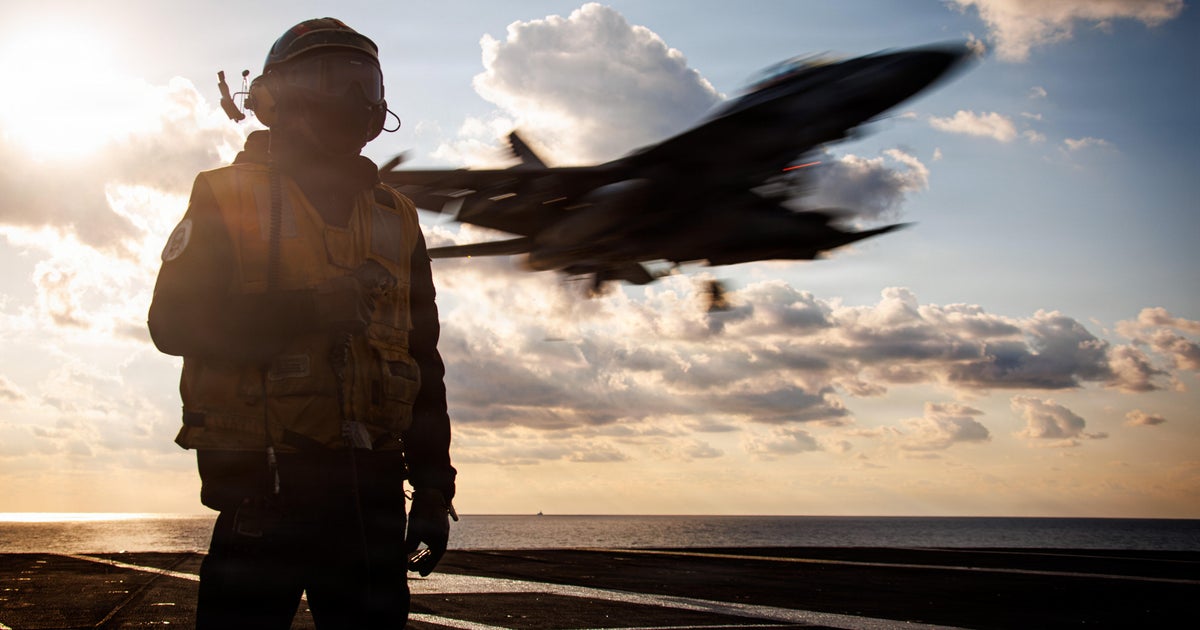
The U.S. military’s war against Iran has generated at least $33.4 billion in costs, according to a Pentagon accounting, underscoring the scale of spending associated with the conflict. The department said ammunition accounted for the largest share of that military total. The figure is not a full governmentwide price tag: it leaves out hundreds of millions of dollars spent by other federal agencies, meaning the documented public-sector outlay extends beyond the Pentagon’s tally.
The Pentagon’s estimate places the emphasis on a central feature of modern military operations: the consumption and replacement of munitions. By identifying weapons expenditure as the dominant component, the report distinguishes that spending from the broader range of costs that can accompany a war. It also sets a minimum rather than a final ceiling on the military bill. The department’s use of an at-least figure signals that the stated amount should not be treated as a definitive endpoint for overall costs.

The distinction between the Pentagon’s books and spending elsewhere in government is important when assessing the financial reach of the war. Other agencies have already incurred costs running into the hundreds of millions of dollars, the Pentagon said, although those amounts are outside its $33.4 billion calculation. Taken together, the disclosures indicate that the military number is a major measure of the conflict’s expense, but not a complete account of all U.S. government spending connected to it.
Several questions remain beyond the reported total. The available accounting does not, by itself, establish how costs may change as operations continue, how additional munitions needs could affect future spending, or what final aggregate will emerge once non-Pentagon expenses are included. Those gaps make subsequent government updates especially significant. Any later revision will need to be read alongside the current baseline, which records both the size of the military burden so far and the limits of the estimate.
Developments in the region have also drawn a response from Kuwait. On Tuesday, Kuwait’s government denounced missile and drone strikes by the Iran-backed Houthi movement in Yemen against cities in Saudi Arabia. Kuwait described the attacks as an affront to Saudi sovereignty and said they contravened international law as well as international humanitarian law. The statement put the Gulf state on record after the cross-border attacks targeted Saudi territory.
Kuwait’s Foreign Ministry said the Houthi operations had struck civilians and civilian sites. It reported that some civilians were injured and that homes and vehicles suffered material damage. The ministry’s account did not frame the incident merely as a military exchange; instead, it highlighted the impact on people and property. That emphasis formed a central part of Kuwait’s condemnation of the attacks, which it characterized as directed at protected civilian life and facilities.
The ministry also declared Kuwait’s full solidarity with Saudi Arabia. Its language connected the condemnation of the strikes with a broader diplomatic expression of support for the kingdom. The position is notable because it pairs concern over the reported injuries and destruction with an explicit defense of Saudi Arabia’s sovereignty. Kuwait’s response therefore addressed both the alleged civilian consequences of the attacks and the interstate dimension raised by missiles and drones aimed at Saudi cities.
What happens next will depend on further information from the parties involved and on whether additional official cost data are released. The Pentagon’s current disclosure offers a measured minimum for U.S. military spending, while Kuwait’s statement supplies its government’s account of the attacks in Saudi Arabia and their effects. Neither development settles the wider financial or security picture on its own. For readers assessing the disclosures, the central distinction is between Pentagon-confirmed costs and the broader, still incomplete spending picture identified by the report.
Source: CBS World
Related articles

Zelenskyy accuses Russia of using cluster warheads in deadly strikes
Russia launched the strikes on Ukraine less than a day after negotiations to end the war, which also involved the United States, ended in St. Petersburg.

Create AI images with your own API key
aixipi runs on desktop/web, uses your own model API balance, and avoids subscription lock-in.
Try aixipi →
At least 16 dead when powerful 7.0 magnitude earthquake strikes Tibet
It was the biggest earthquake in the region in the last five years, China

See how Big Tech is transforming Spain's landscape
A drought-stricken region of northeast Spain has become a focus for American companies searching for locations to place their data centers.