
ISIS-K member sentenced to 20 years in prison in case tied to Kabul bombing
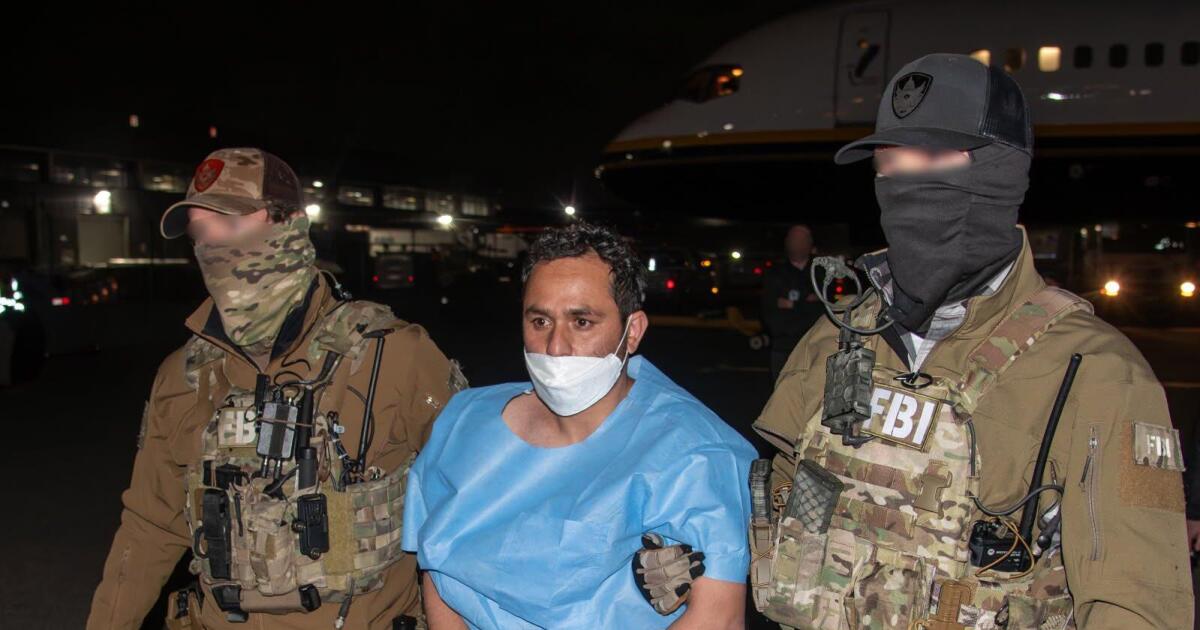
Mohammad Sharifullah, identified as a member of the Islamic State’s Afghanistan-based affiliate, has been given a 20-year federal prison term for supporting the extremist organization behind the 2021 bombing at Kabul’s airport. ISIS-K claimed the attack, which killed 13 American service members and about 160 Afghan people during the final, chaotic phase of the U.S. military withdrawal from Afghanistan. The prison sentence was handed down Wednesday.
The case grew out of the government’s effort to link assistance to ISIS-K with an attack that became a defining tragedy of the evacuation. In April, a federal jury in Virginia found Sharifullah guilty of providing material support to the affiliate. ISIS-K is the name used for the Islamic State branch active in Afghanistan. That guilty verdict established that he had aided the group, but it did not resolve every allegation prosecutors placed before the jury.
Most importantly, jurors did not reach a unanimous decision on whether Sharifullah was responsible in part for the Aug. 26, 2021, airport bombing. The result created a clear legal boundary in the proceedings. His 20-year punishment rests on the material-support conviction; the jury did not return a conclusive finding that he bore responsibility for the specific mass-casualty attack at the airport. The sentencing therefore does not erase the unresolved question from the trial.
The blast took place while U.S. troops were conducting an evacuation at Hamid Karzai International Airport. A lone suicide attacker detonated an improvised explosive device close to Abbey Gate, an entrance to the facility. It came during a period when the airport was a focal point of the American departure from Afghanistan. The explosion killed U.S. military personnel and a far larger number of Afghans caught in the attack.
Prosecutors described Sharifullah’s alleged connection to the bombing as reconnaissance, not the physical act of detonating the device. According to their account, he surveyed a route leading to Hamid Karzai International Airport. The government presented that alleged scouting as activity connected with planning for the attack later claimed by ISIS-K. The case thus focused on a claimed supporting role in the lead-up, alongside the broader charge that he aided the organization.
The verdicts and sentence leave two related but distinct conclusions. Prosecutors obtained a conviction that Sharifullah assisted the Islamic State affiliate, and that conviction produced a lengthy prison term. Yet the jury was divided over the more specific assertion that his conduct made him responsible for the Abbey Gate bombing. That difference matters because it separates proven organizational support from an allegation of involvement in one particular attack.
The prosecution also brings renewed attention to the scale of the Kabul airport bombing. Thirteen U.S. troops died, as did approximately 160 Afghans, in the attack tied to the case. Those deaths occurred amid an operation meant to evacuate people from the country while American forces were withdrawing. The numerical imbalance in the toll underscores that the attack’s victims included both service members on duty and Afghan civilians at or near the airport.
For the victims’ families and for those examining the withdrawal, the sentence is a consequential court outcome, although it is not a complete judicial answer to every question raised by the bombing. The material-support finding has now led to a 20-year sentence. But because the jury could not agree on Sharifullah’s responsibility for the attack itself, the court record preserves an important caveat about the limits of what was unanimously established at trial.
What follows is defined by that divided outcome. Sharifullah has been convicted of aiding ISIS-K and sentenced to two decades in prison. The narrower allegation concerning the suicide bombing at Abbey Gate remains without a unanimous jury determination. The case consequently offers both a completed sentencing decision and a reminder that criminal proceedings can establish support for an armed group without producing a final consensus on every claimed role in a particular act of violence.
Source: CBS World
Related articles
Zelenskyy accuses Russia of using cluster warheads in deadly strikes
Russia launched the strikes on Ukraine less than a day after negotiations to end the war, which also involved the United States, ended in St. Petersburg.

Create AI images with your own API key
aixipi runs on desktop/web, uses your own model API balance, and avoids subscription lock-in.
Try aixipi →
At least 16 dead when powerful 7.0 magnitude earthquake strikes Tibet
It was the biggest earthquake in the region in the last five years, China

See how Big Tech is transforming Spain's landscape
A drought-stricken region of northeast Spain has become a focus for American companies searching for locations to place their data centers.