
'People are still afraid of those three letters': Fighting the stigma of HIV

At Rio de Janeiro’s Ipanema Beach, former Wales rugby player Gareth Thomas joined a public-facing effort aimed at confronting HIV prejudice. The appearance came during this year’s International AIDS Conference in Rio, where Thomas used his platform to draw attention to the social burdens that can accompany the virus. His message was not centered on a match result or sporting career, but on the continuing damage caused when HIV is treated as something to fear in the people who live with it. The location made that argument deliberately public, bringing a subject often shadowed by silence into a setting associated with leisure, visitors and everyday city life.
Thomas, who is living with HIV, described the persistence of that response in blunt terms. “People are still afraid of those three letters,” he said, referring to HIV. The remark captured the gap between public discussion of the virus and the experience of people who encounter avoidance, judgment or exclusion because of an HIV diagnosis. It also put stigma, rather than medical detail alone, at the center of his intervention in Rio.

The retired athlete has become an internationally recognized advocate for people with HIV since disclosing his own status in 2019. That announcement moved a personal health matter into the public arena and gave Thomas a prominent role in conversations about how people with the virus are viewed. In Rio, he again connected his name and experience to an effort that seeks to challenge assumptions attached to HIV.
The campaign was called Tackle HIV, a title that draws on Thomas’s rugby background while directing attention toward the virus and the attitudes surrounding it. His participation on one of Rio’s best-known beaches gave the campaign a visible setting during a major international gathering on AIDS. The event placed an athlete known to broad audiences alongside a subject that is often discussed in private, or avoided altogether. It also made sport a route into a public-health conversation that can otherwise feel remote, technical or uncomfortable for audiences unfamiliar with HIV-related issues.
HIV is a virus, but the story Thomas raised is also about the way a diagnosis can shape daily social life. Stigma can turn a health issue into a question of belonging: whether someone expects to be believed, welcomed, listened to or judged. That distinction matters because fear directed at a label can isolate people even when the discussion is framed as concern about illness. Thomas’s comments focused on that human consequence of the three letters.

Public advocacy can make a difficult subject more visible, especially when it comes from a person whose career was built in a high-profile, traditionally physical team sport. But visibility is not the same as a universal answer. Not every person living with HIV will want, or be able, to speak publicly about a diagnosis. A campaign built around a well-known figure can open a conversation while leaving intact the need for privacy, dignity and individual choice for others. That caveat is central to anti-stigma work: changing attitudes should not require anyone to reveal personal medical information in order to be treated fairly.
The Rio appearance also illustrates why the language around HIV remains consequential. A diagnosis may be discussed in clinical terms, while the reaction to it is shaped by wider beliefs about risk, identity and blame. Thomas’s warning suggests that those beliefs have not disappeared simply because HIV has long been part of global public-health debate. The enduring challenge is not only to circulate information, but to reduce the reflexive fear and discrimination he described.
For international audiences, the next test will be whether high-visibility moments such as the beach campaign produce conversations that continue beyond a conference week. Thomas’s role provides a recognizable voice for that effort, but the issue he highlighted extends to people whose stories are not public. His presence in Rio underscored a continuing reality: for many people affected by HIV, social treatment can be as defining as the diagnosis itself.

Source: NPR World
Related articles

Zelenskyy accuses Russia of using cluster warheads in deadly strikes
Russia launched the strikes on Ukraine less than a day after negotiations to end the war, which also involved the United States, ended in St. Petersburg.

Create AI images with your own API key
aixipi runs on desktop/web, uses your own model API balance, and avoids subscription lock-in.
Try aixipi →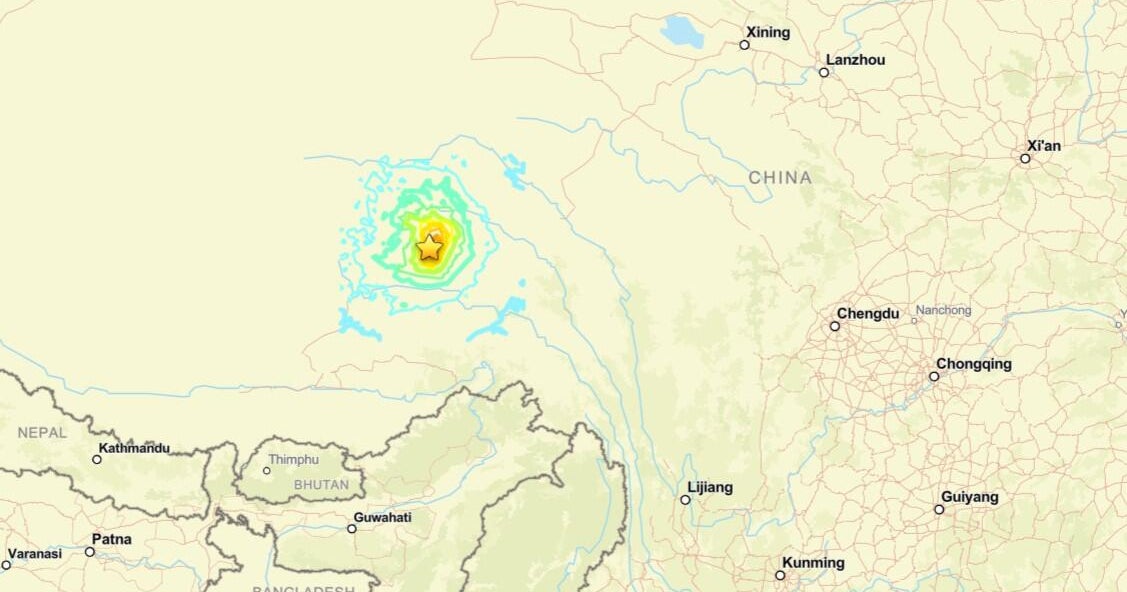
At least 16 dead when powerful 7.0 magnitude earthquake strikes Tibet
It was the biggest earthquake in the region in the last five years, China

See how Big Tech is transforming Spain's landscape
A drought-stricken region of northeast Spain has become a focus for American companies searching for locations to place their data centers.