
Renovations at Buckingham Palace Have Revealed Fascinating Artifacts Previously Lost to Time Lodged in Its Walls and Floors
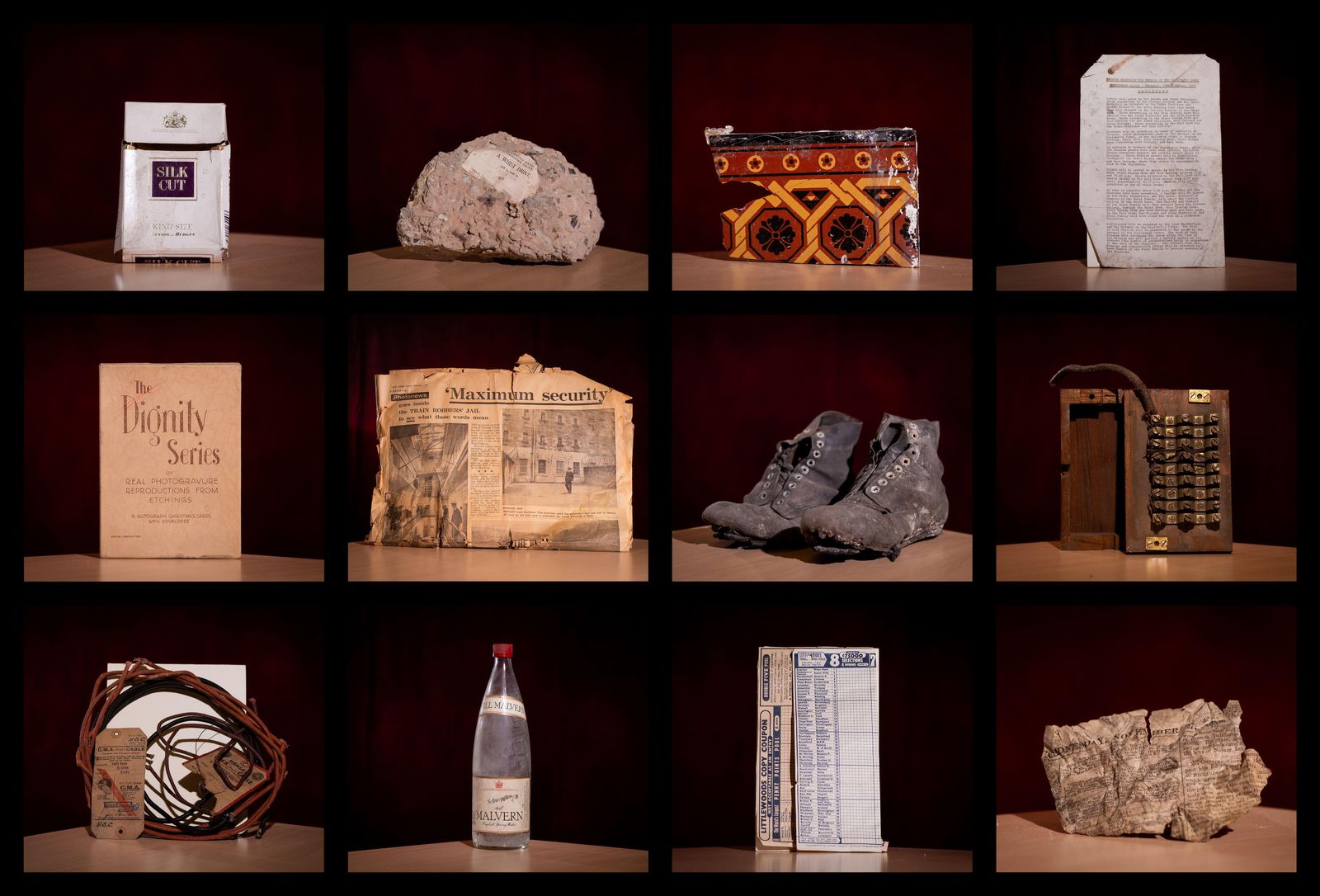
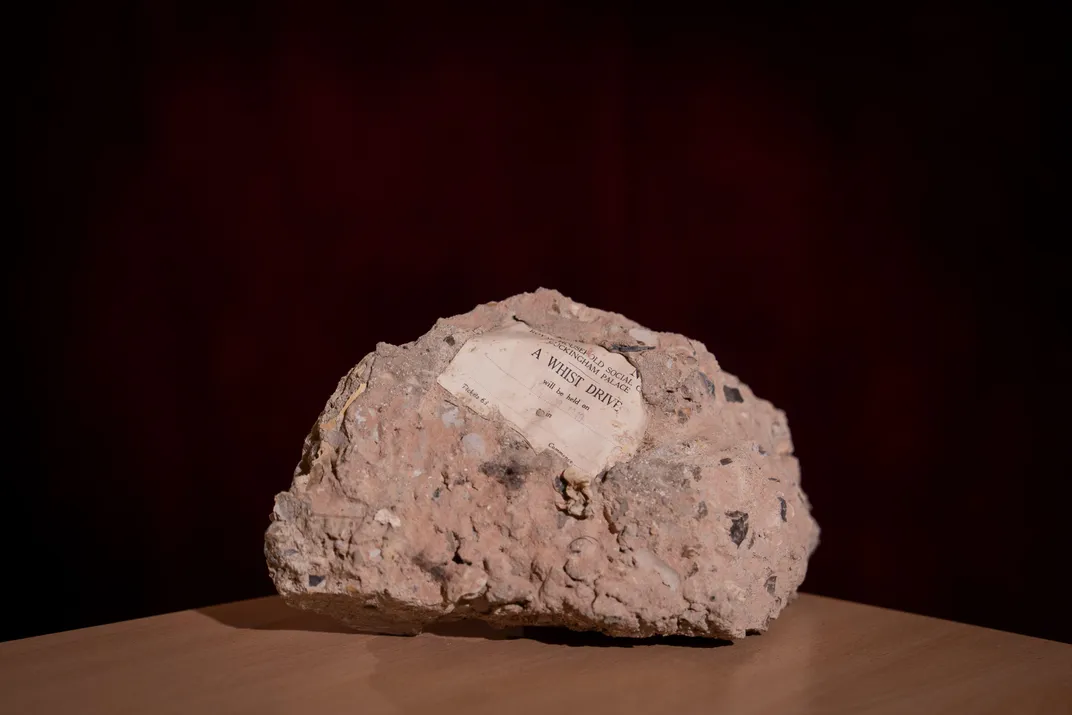
Work underway at Buckingham Palace is doing more than renewing one of Britain’s best-known buildings. As crews open up floors and walls during a major restoration, they have encountered small pieces of everyday institutional life that had disappeared from view for decades. Among the material recovered are a ticket connected to a card-game competition, a newspaper cutting with historical significance and a detailed programme for a diplomatic gathering held during the reign of Queen Elizabeth II.
The discoveries offer an unusually intimate record of a palace more often understood through ceremonies, portraits and public appearances. Objects left inside the structure are not grand treasures, yet they can preserve the practical routines behind official life. A printed ticket suggests leisure or social activity; a clipping reflects the importance once assigned to a particular moment in the news; and an event document records the careful organization required for a royal reception.
One of the most revealing items is a 1977 schedule for a diplomatic evening. It indicates that Elizabeth II was expected to circulate through the ballroom in a specified clockwise route while meeting guests. The instruction turns a formal occasion into a glimpse of logistics: even the Queen’s movement around the room was planned in advance. PA News Agency reported that the document showed the late monarch was to follow that direction during the reception.
Such papers were never designed as archaeological finds. They appear to have remained lodged in parts of the fabric of the palace until present-day work exposed them. Their value lies partly in that accident of survival. Unlike items entered into a collection or deliberately retained in an archive, these remnants can illuminate what was used, set aside or misplaced during the building’s working life.
The setting has a long and changing history of its own. The building began in 1703 as an imposing London home constructed for a duke, rather than as a royal residence. In 1761, George III acquired the property. His son, George IV, later transformed it on a far larger scale in the 1820s, giving the former house the status and form of a palace.
Buckingham Palace became the monarchy’s official London home in 1837, when Queen Victoria took up residence there. That history helps explain why its interior can contain traces from very different eras: it has evolved from an aristocratic house into the principal residence of successive British sovereigns. The latest finds sit within that long continuity, linking a 20th-century royal engagement to a structure whose origins date back more than three centuries.
The discoveries have emerged during a much broader effort to renew the building’s core services. Work began nearly ten years ago after specialists concluded that the palace infrastructure needed comprehensive replacement. The official royal website said its systems were in urgent need of a full overhaul, an assessment that placed preservation needs alongside the daily requirements of a functioning royal household.
The scale of that task is considerable. Buckingham Palace has 775 rooms, and its aging electrical wiring, pipes and heating equipment carried the risk of lasting harm to both the building and the objects kept inside it. Replacing those systems is therefore not simply a modern convenience project. It is also intended to reduce the danger that failing utilities could damage historic spaces and their contents over time.
There is a practical caveat to the appeal of the newly surfaced items: they are fragments, not a complete account of palace history. A single schedule cannot explain every aspect of a diplomatic reception, nor can a ticket or clipping establish a full story on its own. Still, their recovery shows why conservation work can produce evidence as well as repair. It also gives specialists an opportunity to identify, assess and preserve materials found during access to areas that normally remain sealed. As restoration continues, further openings in the palace may bring additional overlooked material to light, while the immediate priority remains safeguarding the building and what it holds.
Source: Smithsonian Magazine
Related articles
Immerse Yourself in the Cosmos at Frank Lloyd Wright's Only Planetarium, Recently Restored to Its Former Glory in Florida
Completed in 1958, the domed building is located on the campus of Florida Southern College, home to 13 Wright-designed buildings, the world's largest single-site collection of the architect's work

Play Tractor online with friends — free
Real-time Sheng Ji / Tractor for 3–5 players, with complete bidding and trump rules across web, iOS and Android.
Play bidfive →
A Team of Astronomers Thinks They Have Identified the Exact Night Sky That Inspired Vincent van Gogh's 'Starry Night.' Not Everyone Is Convinced
Very few night skies seen from the south of France during the summer of 1889 would match the scene on van Gogh's canvas. A new study argues that it could have been July 22

'Pretty Boy' Floyd, One of the Most Notorious Outlaws of the Great Depression, Was Shot and Killed in an FBI Raid 92 Years Ago
Some Americans lauded the 30-year-old bank robber as a Robin Hood-esque folk hero. Others castigated him as a violent criminal whose misdeeds were emblematic of the troubled era

GTA 6 guides, updates and practical reference
Explore a Chinese GTA 6 guide library covering the release, map, characters, missions, vehicles and weapons.
Browse guides →
Create AI images with your own API key
aixipi runs on desktop/web, uses your own model API balance, and avoids subscription lock-in.
Try aixipi →