
Researchers in Turkey Have Unearthed an Ancient Fragment Inscribed With the World’s Oldest Peace Treaty
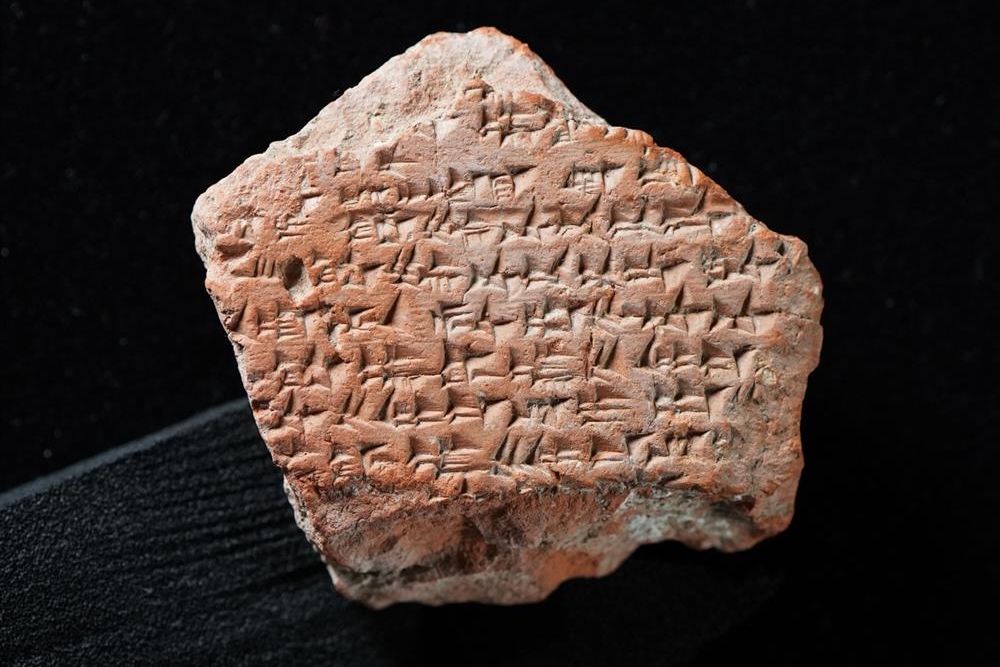
A newly identified piece of baked clay from central Turkey has been linked to an ancient diplomatic agreement often described as the world’s oldest known peace treaty. The fragment carries writing in Akkadian cuneiform, and specialists have concluded that its inscription formed part of a copy of the Kadesh Peace Treaty. The accord was made between the Egyptian and Hittite powers during the 13th century B.C.E., and the find adds another surviving trace of a settlement reached more than three millennia ago.
The discovery was made at Büyükkale, within the archaeological remains of Hattusa in Turkey’s Çorum province. Hattusa was once the Hittite capital, and its ruins have long yielded evidence of the kingdom’s political and administrative life. This latest object is not a complete tablet that can stand alone as a full treaty text. Rather, it is a broken section whose importance rests on where it was found, the script it preserves and the assessment that it belongs to one of the treaty’s ancient copies.
Turkey’s Culture and Tourism Minister Mehmet Nuri Ersoy announced the identification on social media, describing the discovery as evidence of peace found in Anatolian soil. In comments relayed by the state-run Anadolu Agency, he said scientific study had connected the cuneiform fragment from the Hattusa excavation to the Kadesh agreement. The announcement places the news in a longer archaeological process: excavation produces the object, while examination of its material, writing and context determines how securely it can be associated with a particular document.
Akkadian cuneiform is the writing system visible on the newly recognized fragment. Its presence helps place the small piece within a diplomatic world in which formal agreements were recorded and copied rather than remembered only in oral tradition. The object therefore offers a material reminder that a peace settlement could have an afterlife beyond the moment it was concluded: a text could survive in separate copies, be broken over time and still be recognized centuries later through the marks pressed into clay.
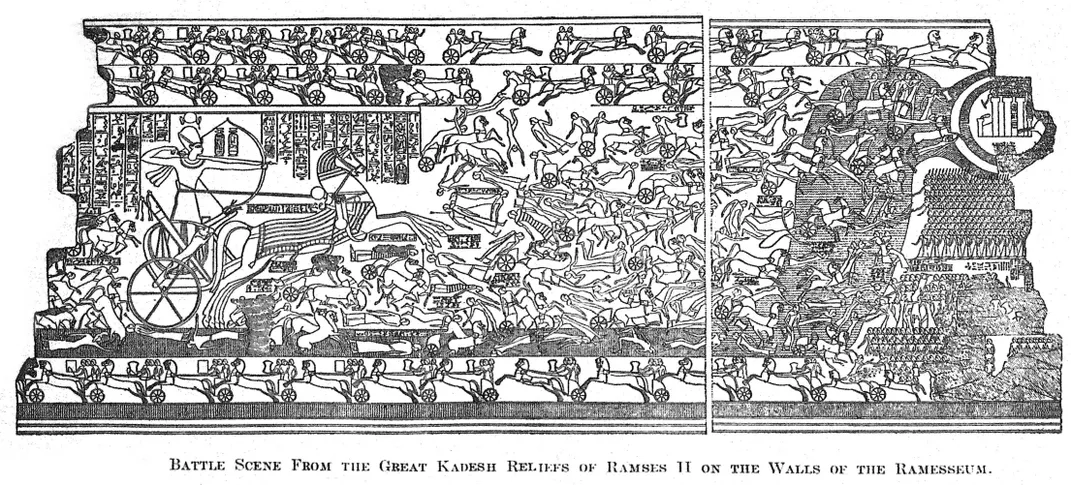
The Kadesh Peace Treaty joined two major ancient states, Egypt and the Hittite kingdom. Its 13th-century B.C.E. date gives the new fragment unusual resonance, because it connects a modern excavation to one of the earliest surviving examples of an interstate peace agreement. Calling it the oldest peace treaty reflects the treaty’s standing in the story of diplomacy, but the fragment itself should not be mistaken for a newly discovered treaty. It is a newly unearthed portion of the documentary record associated with an agreement already known from earlier finds.
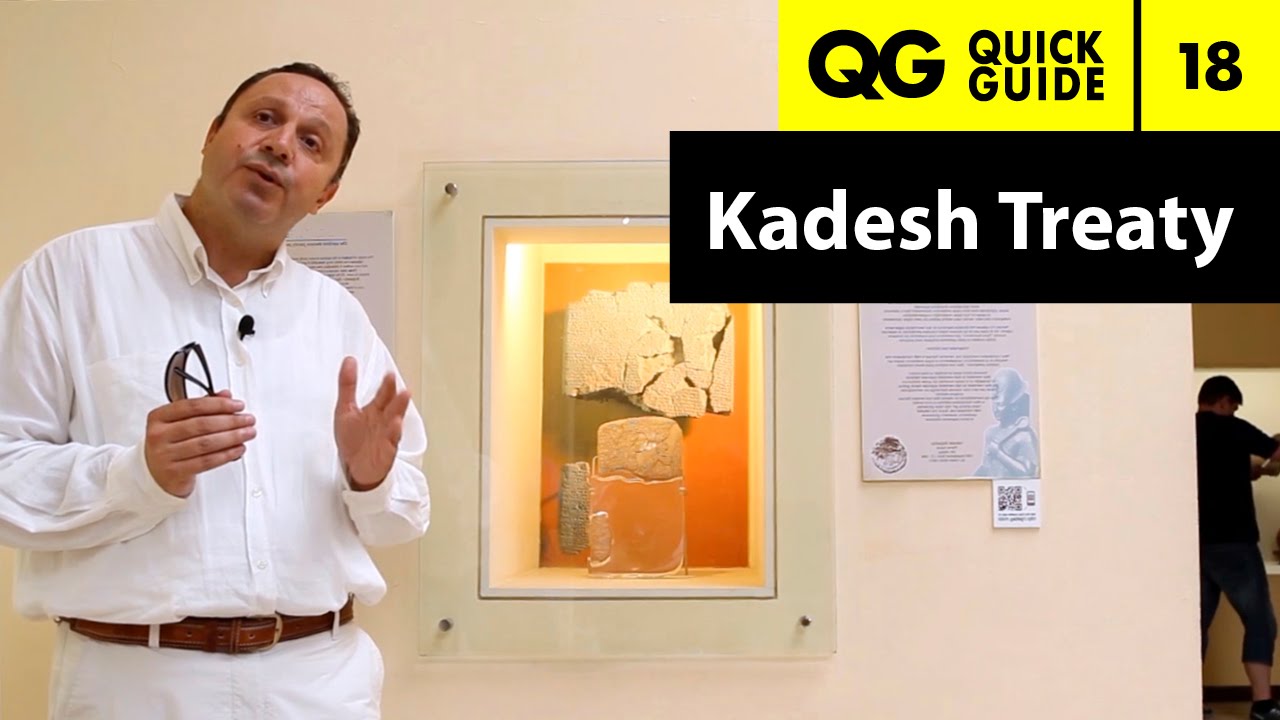
Hattusa has played a central role in that record for more than a century. In 1906, researchers there first found a treaty copy in the form of a shattered clay tablet. The pieces of that earlier discovery are now exhibited at the Istanbul Archaeological Museums. Their public display shows how an archaeological document can move from a ruined capital to a museum collection, where its physical fragments become evidence for the political history of the ancient Near East.
The treaty’s modern symbolic reach extends beyond Turkey. A copper reproduction is displayed at the United Nations headquarters in New York, bringing an ancient agreement into a contemporary institution associated with international cooperation. That display does not erase the distance between the ancient states and the modern world, but it helps explain why a small inscribed shard attracts attention. The find speaks both to the Hittite archive at Hattusa and to the continuing use of the Kadesh agreement as a widely recognized emblem of negotiated peace.
For archaeologists and historians, the next significance lies in careful documentation rather than in dramatic conclusions from a single broken piece. The fragment can be studied alongside the earlier tablet remains and the excavation context at Büyükkale to clarify its relationship to the known treaty copies. Its discovery also underscores a practical caveat of archaeology: important texts may reach the present not as intact records, but as partial objects requiring scientific analysis and comparison before their identity can be established.
The new find consequently strengthens the connection between Hattusa and a landmark diplomatic text while also highlighting the fragility of the surviving evidence. A small clay remnant, marked in an ancient script, has reopened attention on a settlement between Egypt and the Hittites and on the people who recorded it. It is a discovery rooted in Çorum’s archaeological landscape, but one whose significance is measured against a treaty still represented in Istanbul and at the United Nations.
Source: Smithsonian Magazine
Related articles
Immerse Yourself in the Cosmos at Frank Lloyd Wright's Only Planetarium, Recently Restored to Its Former Glory in Florida
Completed in 1958, the domed building is located on the campus of Florida Southern College, home to 13 Wright-designed buildings, the world's largest single-site collection of the architect's work

Play Tractor online with friends — free
Real-time Sheng Ji / Tractor for 3–5 players, with complete bidding and trump rules across web, iOS and Android.
Play bidfive →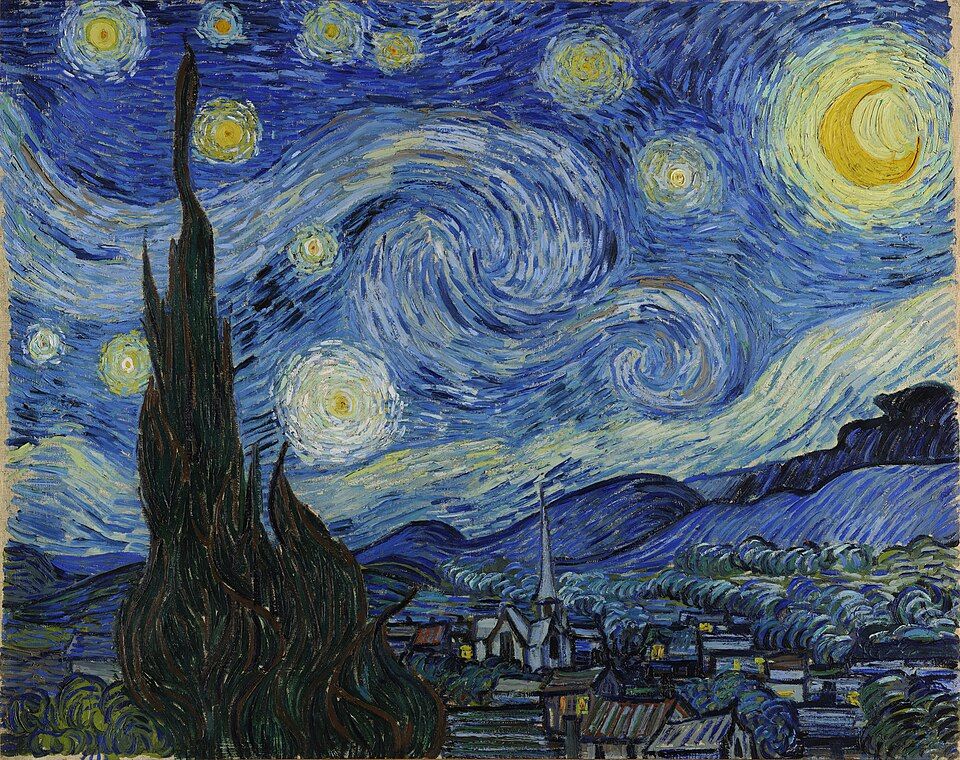
A Team of Astronomers Thinks They Have Identified the Exact Night Sky That Inspired Vincent van Gogh's 'Starry Night.' Not Everyone Is Convinced
Very few night skies seen from the south of France during the summer of 1889 would match the scene on van Gogh's canvas. A new study argues that it could have been July 22

'Pretty Boy' Floyd, One of the Most Notorious Outlaws of the Great Depression, Was Shot and Killed in an FBI Raid 92 Years Ago
Some Americans lauded the 30-year-old bank robber as a Robin Hood-esque folk hero. Others castigated him as a violent criminal whose misdeeds were emblematic of the troubled era

GTA 6 guides, updates and practical reference
Explore a Chinese GTA 6 guide library covering the release, map, characters, missions, vehicles and weapons.
Browse guides →
Create AI images with your own API key
aixipi runs on desktop/web, uses your own model API balance, and avoids subscription lock-in.
Try aixipi →