
Saudi airport stays shut as Houthi attacks kill 20 people in a week
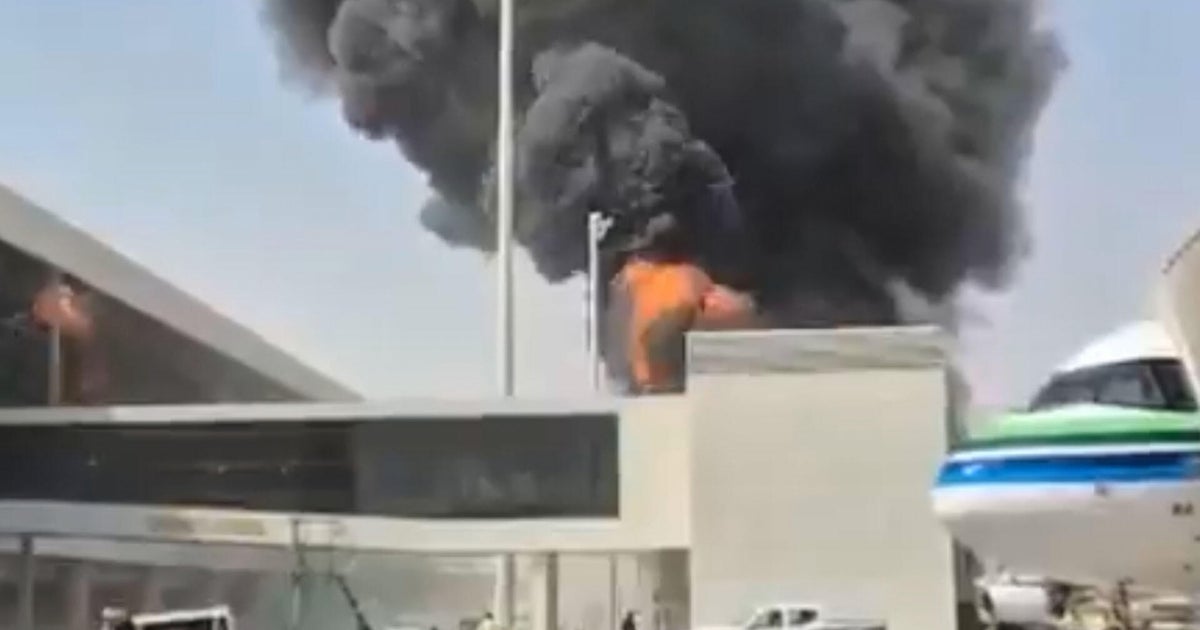
Saudi Arabia kept Riyadh's King Khalid International Airport closed Monday after a Houthi missile-and-drone assault hit the facility, killing at least 13 people and leaving more than 300 wounded, according to two regional officials. The airport strike formed part of a week of Houthi attacks that has killed 20 people, intensifying concern about the exposure of Saudi territory to weapons launched from Yemen. Saudi authorities have opened an investigation into why the defenses intended to protect the capital did not halt the incoming attack.
The officials said the review was still at an early stage. They requested anonymity because they were not permitted to discuss the matter publicly, but described a preliminary reconstruction centered on the order in which the weapons arrived. The inquiry is examining whether the attacking force used several types of weapons in a coordinated way, and how that sequence may have complicated the response of Saudi air-defense units. Its findings could shape the official account of one of the deadliest recent attacks on a Saudi civilian facility.
According to those officials, the Houthis first sent a number of drones toward the target area. That initial wave was followed by both cruise missiles and ballistic missiles aimed at the airport. The reported sequence suggests that the drones may have been intended to occupy, confuse or otherwise strain defensive systems before the more destructive weapons approached. The officials did not publicly set out a final explanation for the interception failure, and the investigation has not yet assigned responsibility for it.
The Houthi arsenal includes ballistic missiles as well as more sophisticated weapons whose warheads can alter their course while airborne. Such maneuvering presents a difficult problem for Patriot batteries and other interceptors used by Saudi Arabia, because a defense system must detect, track and strike an object whose path may not remain predictable. The reported capabilities help explain why the inquiry is examining more than the number of projectiles fired; it is also looking at the type of threat Saudi defenses faced.
The decision to keep King Khalid International Airport shut has made the attack's impact visible beyond the immediate casualty toll. The facility has become both the site of a major civilian strike and the focus of a broader security test for the kingdom. For Saudi officials, the central question is no longer only how the attack reached Riyadh, but whether the protection around an important airport can be adjusted against further mixed drone and missile attacks while the investigation continues.
The incident also unfolds amid a wider regional confrontation involving Saudi Arabia, the Houthis and Iran. The rebels are described as backed by Iran, while President Donald Trump is considering whether the United States should join Saudi attacks on Iran, according to the report. That possibility gives the airport assault consequences beyond Saudi air defenses: any expansion of the conflict could increase attention on whether attacks by the Yemeni movement are treated as an isolated threat or as part of a larger regional escalation.
There are important limits to what has been established publicly. The two officials characterized the Saudi findings as preliminary and spoke without attribution, so their account may be refined as investigators review the attack. The available description identifies the Houthis as Iran-backed, but focuses on the breach of Saudi defenses rather than offering a detailed public account of any direct Iranian operational role. The confirmed death and injury figures may also be updated as authorities assess the aftermath.
What happens next will depend on the Saudi inquiry, the airport's continued closure and decisions taken by regional governments. Investigators are expected to examine the drone-first approach, the later missile launches and the performance of the defensive network around Riyadh. The immediate record is stark: 20 people have been killed in Houthi attacks over a week, including at least 13 at the airport. Until the review produces answers, the shutdown remains a reminder of the risks facing Saudi civilian infrastructure.
Source: CBS World
Related articles
Zelenskyy accuses Russia of using cluster warheads in deadly strikes
Russia launched the strikes on Ukraine less than a day after negotiations to end the war, which also involved the United States, ended in St. Petersburg.

Create AI images with your own API key
aixipi runs on desktop/web, uses your own model API balance, and avoids subscription lock-in.
Try aixipi →
At least 16 dead when powerful 7.0 magnitude earthquake strikes Tibet
It was the biggest earthquake in the region in the last five years, China

See how Big Tech is transforming Spain's landscape
A drought-stricken region of northeast Spain has become a focus for American companies searching for locations to place their data centers.