
Scientists Created Mice With Half-Human Brains. The Hybrid Animals Could Revolutionize Our Understanding of Neurological Disorders
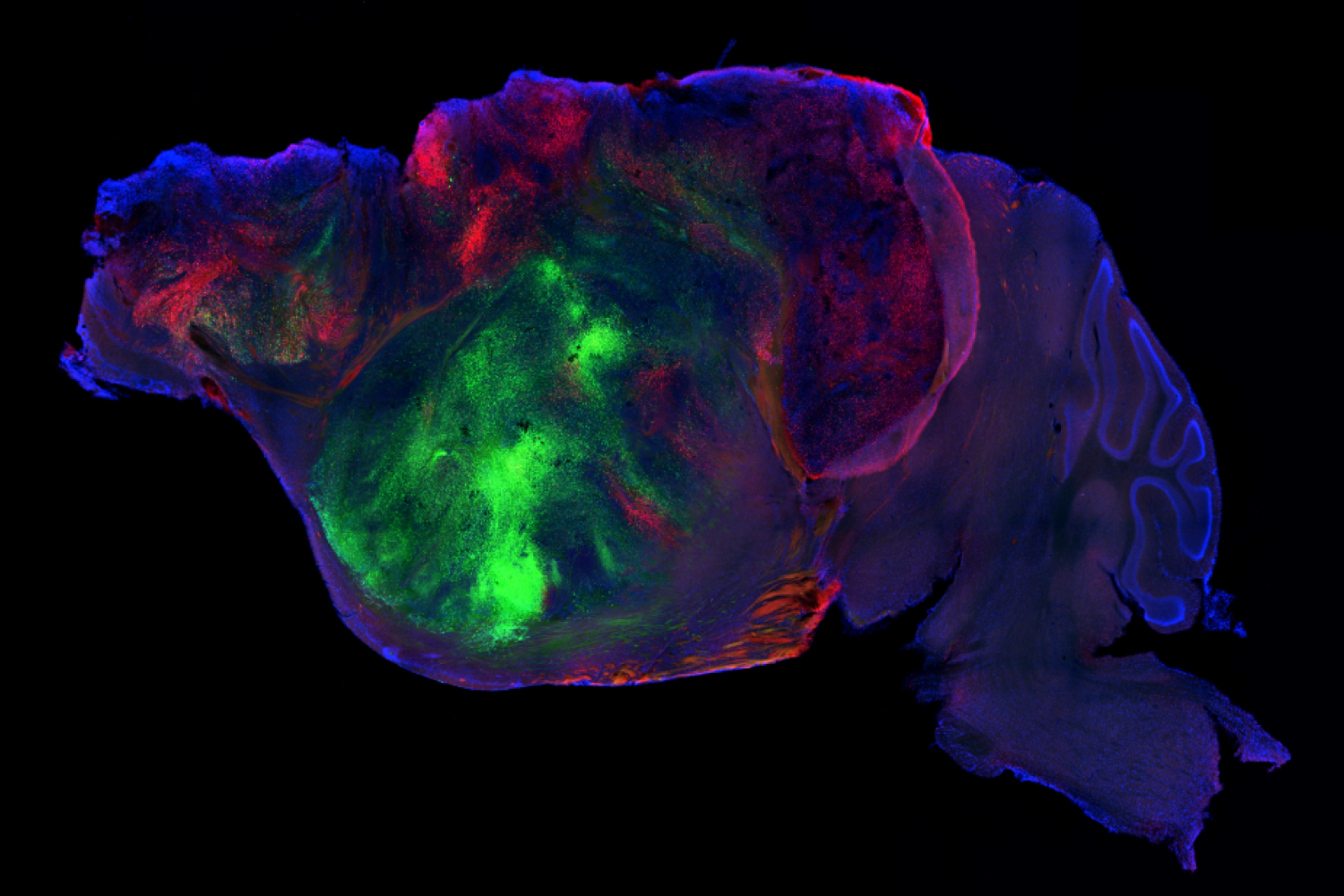
Researchers at Stanford University have produced mice whose brains contain an unusually large amount of human neural tissue, creating an experimental model intended to bring difficult-to-study brain conditions closer to the laboratory bench. The work, described in Nature on September 16, centers on animals that appear unremarkable while moving through their cages but carry a cortex formed from transplanted human-derived neurons. Scientists refer to the animals as “xenocortical” mice, a name that reflects the cross-species nature of the tissue in their brains.
A side-view image from the laboratory identifies the grafted human tissue with green and red coloring. The result is striking in scale: human nerve cells account for roughly one-half of the brain tissue in these mice. Rather than placing cells into an otherwise typical rodent brain, the researchers started with animals engineered so that crucial portions of their own brains would not develop. That design created space for laboratory-grown human neurons to take hold, grow and make up the missing cortical region.
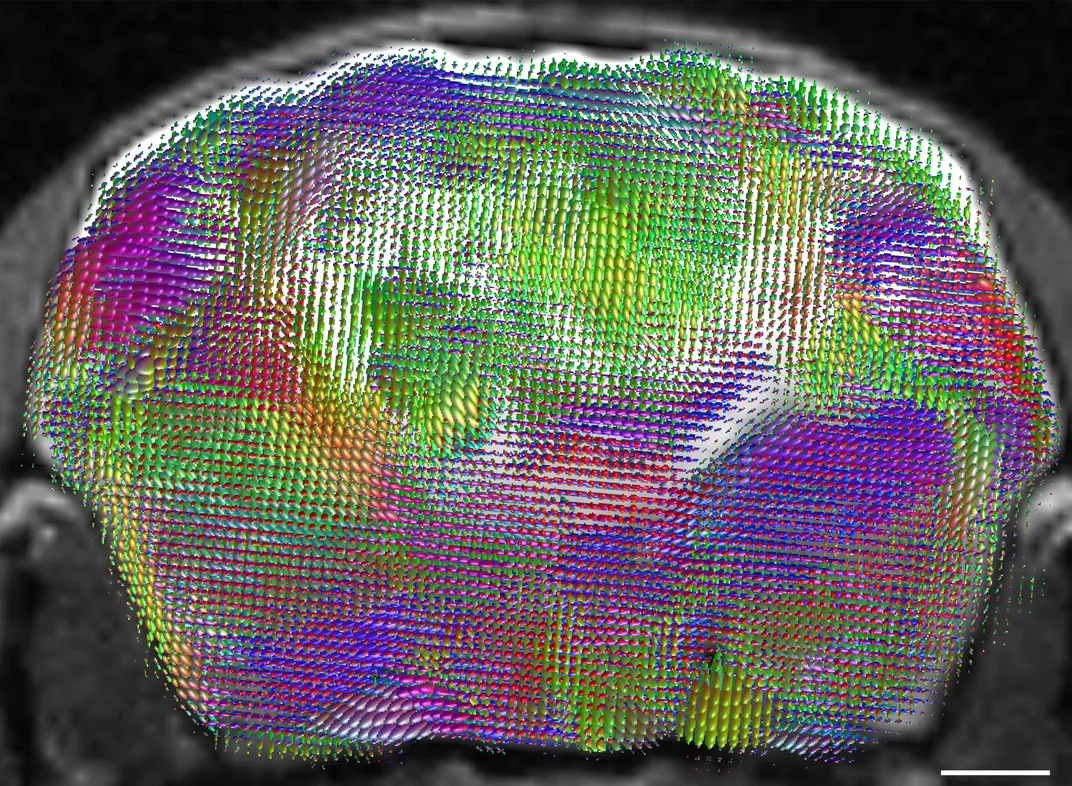
The cortex is the brain’s outer covering and is linked to abilities including movement, focus and choices. Its importance also makes it central to many questions about illness and development. Human brains, however, are exceptionally challenging to investigate directly, particularly when researchers want to follow how cells mature, connect and behave over time. The new model is meant to make selected features of human cortical development and activity more accessible to controlled study.
For the research team, that accessibility is not an end in itself. Co-author Sergiu Pașca, a Stanford neuroscientist, said the broader aim is to open parts of human brain development and function to investigation in ways that could support the search for treatments. The approach could give researchers a setting in which they can study human-derived cells while also observing them as part of a functioning animal brain, rather than only in isolated laboratory preparations.
The authors identified schizophrenia, cerebral palsy and dementia among the disorders that could be explored with xenocortical mice. Those conditions differ greatly in their symptoms and likely biological pathways, but each raises questions about brain cells, circuits and development that are hard to answer using conventional methods alone. A model built around a human-derived cortex may allow experiments to focus more directly on the tissue most relevant to those questions while retaining the wider biological environment of a living animal.
The method also represents a shift in how animal models can be designed. Instead of asking a mouse brain to stand in entirely for a human one, the experiment replaces a defined missing region with cells derived from people. That combination preserves the animal as the host while making the cortical component human-derived. It may give investigators another route for comparing how neural tissue develops or responds under different experimental conditions, with the cortex as the specific point of attention.
At the same time, the report does not mean that a mouse model has solved the challenge of explaining neurological disease or established a treatment for any condition. The value of the system will depend on what questions it can answer reliably, how its findings compare with observations in people, and whether it can be used to test possible therapies in a meaningful way. Those limits are especially important when research moves from a novel biological model to conclusions about complex human disorders.
What happens next will likely be shaped by the experiments conducted with the grafted tissue: how researchers use it to examine disease-linked processes, how consistently the cells function in the host brain and whether the model sharpens the path toward therapeutic research. For now, the study offers an unusual bridge between cell-based human neuroscience and animal experimentation. Its central promise is practical rather than cosmetic: a living research system in which a human-derived cortex can be examined where it develops and operates.
Source: Smithsonian Magazine
Related articles

Immerse Yourself in the Cosmos at Frank Lloyd Wright's Only Planetarium, Recently Restored to Its Former Glory in Florida
Completed in 1958, the domed building is located on the campus of Florida Southern College, home to 13 Wright-designed buildings, the world's largest single-site collection of the architect's work

Play Tractor online with friends — free
Real-time Sheng Ji / Tractor for 3–5 players, with complete bidding and trump rules across web, iOS and Android.
Play bidfive →
A Team of Astronomers Thinks They Have Identified the Exact Night Sky That Inspired Vincent van Gogh's 'Starry Night.' Not Everyone Is Convinced
Very few night skies seen from the south of France during the summer of 1889 would match the scene on van Gogh's canvas. A new study argues that it could have been July 22

'Pretty Boy' Floyd, One of the Most Notorious Outlaws of the Great Depression, Was Shot and Killed in an FBI Raid 92 Years Ago
Some Americans lauded the 30-year-old bank robber as a Robin Hood-esque folk hero. Others castigated him as a violent criminal whose misdeeds were emblematic of the troubled era

GTA 6 guides, updates and practical reference
Explore a Chinese GTA 6 guide library covering the release, map, characters, missions, vehicles and weapons.
Browse guides →
Create AI images with your own API key
aixipi runs on desktop/web, uses your own model API balance, and avoids subscription lock-in.
Try aixipi →