
Scientists Don't Know How Mars Acquired Its Two Moons. Japan Just Launched a Historic Space Mission That Will Fetch Samples to Find Out
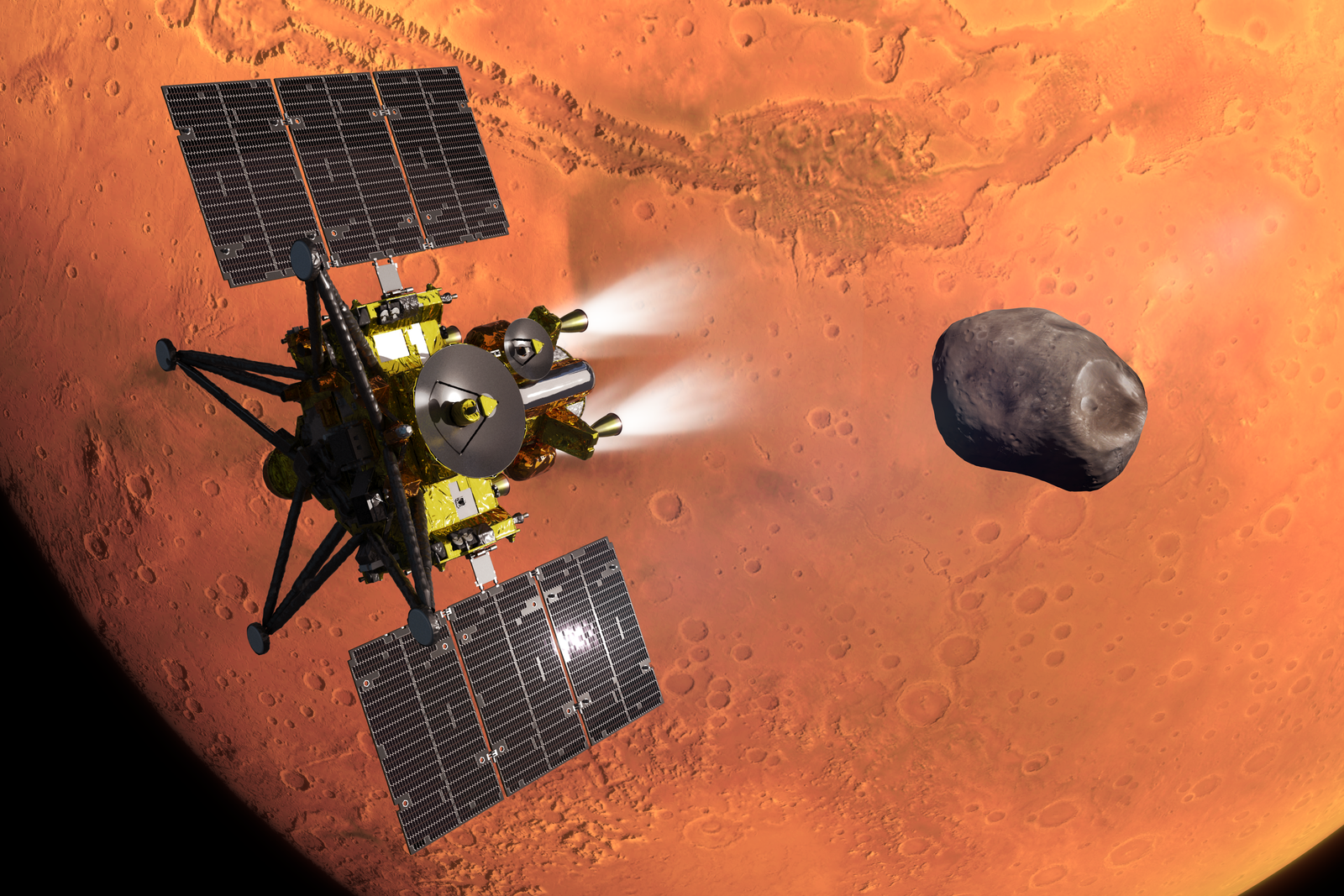
Japan has sent a spacecraft toward Mars on a mission designed to answer a question that has persisted for decades: how did the planet end up with its two small moons? The Martian Moons eXploration mission, known as MMX, lifted off from Tanegashima Space Center in southern Japan at 4:41 a.m. local time on October 20. Its central objective is to retrieve material from Phobos and deliver it to Earth, where laboratories may be able to determine the moon’s origin with far greater confidence than remote observations allow.
The Japan Aerospace Exploration Agency expects MMX to enter the Martian system in August 2027. If the journey and operations proceed as planned, the spacecraft is due to bring its collection home in 2031. That schedule makes the venture a multiyear test of navigation, landing and sample-return technology, not simply a flyby of Mars. It is also a Japan-led attempt to obtain the first returned material from a moon of Mars.

Phobos, the larger of Mars’ two companions, is the mission’s destination. Its smaller counterpart, Deimos, will still be part of the investigation through flyby observations, while the spacecraft studies Mars from afar. The pair have attracted scientific interest precisely because their histories remain unsettled. They are small bodies close to a major planet, yet their beginning could point to very different episodes in the development of the solar system.
One explanation holds that a major collision with Mars threw debris into space, where it later assembled into moons. Another proposes that the bodies began as asteroids and were captured by the planet’s gravity. Neither account has been conclusively established. The distinction matters: a moon made from Martian ejecta could preserve material from an early era of Mars, while a captured object could carry clues about the region of the solar system from which it arrived.
The scale of the moons underscores why direct evidence is valuable. Deimos measures roughly 7.5 miles across, and Phobos about 14 miles, far smaller than Earth’s moon, which spans about 2,159 miles. Their modest dimensions have not made them simple targets. JAXA planetary scientist and MMX project manager Yasuhiro Kawakatsu said the moons remain among the solar system’s most consequential places that have yet to receive a full investigation.
MMX is intended to turn that broad scientific question into samples researchers can examine grain by grain. The craft will first survey Phobos from orbit, then attempt landings at two separate sites. One collection system will use pulses of pressurized nitrogen to disturb loose surface material before drawing it in. A second device is designed to take material from several inches below the surface, giving scientists access to both exposed dust and a shallower subsurface layer.
The return payload is expected to weigh only about 0.35 ounces, but researchers say a small quantity can support many tests when divided among individual particles. The operations are not routine. After an initial landing and departure, the team must spend additional months selecting the next location before another descent. Tomohiro Usui, a JAXA planetary scientist on the mission, has emphasized that landing work carries substantial risk, a reminder that the samples depend on more than a successful launch.
Phobos was selected in part because it orbits nearer to Mars than Deimos does. Scientists think impacts on Mars may have deposited Martian debris onto Phobos, meaning the returned material could include a limited record of the planet itself. One mission scientist has estimated that Martian material might account for only around 1 percent of the collection. Even such a small share could be important if it retains chemical evidence relevant to Mars’ past environment or possible biological activity.
The mission therefore offers more than a verdict on whether the moons formed locally or arrived from elsewhere. A confirmed local origin could give researchers a route to exceptionally old Martian material without landing a return mission on the planet. A captured-asteroid result would instead broaden what Phobos can reveal about objects that moved through the early solar system. Until samples are examined on Earth, both possibilities remain open, and the mission’s milestones in 2027, the landing campaign and the 2031 return will determine how much of the mystery can be resolved.
Source: Smithsonian Magazine
Related articles
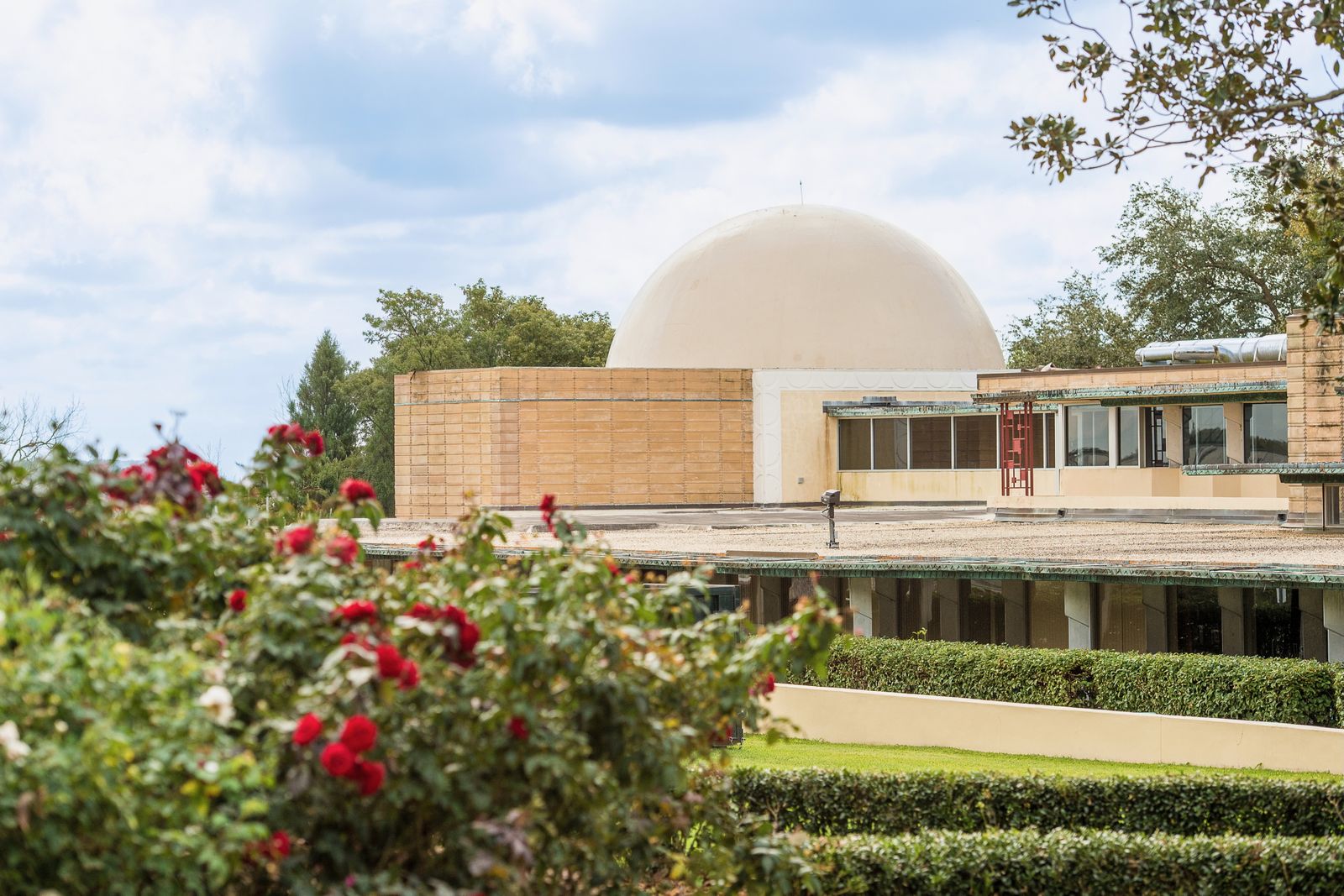
Immerse Yourself in the Cosmos at Frank Lloyd Wright's Only Planetarium, Recently Restored to Its Former Glory in Florida
Completed in 1958, the domed building is located on the campus of Florida Southern College, home to 13 Wright-designed buildings, the world's largest single-site collection of the architect's work

Play Tractor online with friends — free
Real-time Sheng Ji / Tractor for 3–5 players, with complete bidding and trump rules across web, iOS and Android.
Play bidfive →
A Team of Astronomers Thinks They Have Identified the Exact Night Sky That Inspired Vincent van Gogh's 'Starry Night.' Not Everyone Is Convinced
Very few night skies seen from the south of France during the summer of 1889 would match the scene on van Gogh's canvas. A new study argues that it could have been July 22

'Pretty Boy' Floyd, One of the Most Notorious Outlaws of the Great Depression, Was Shot and Killed in an FBI Raid 92 Years Ago
Some Americans lauded the 30-year-old bank robber as a Robin Hood-esque folk hero. Others castigated him as a violent criminal whose misdeeds were emblematic of the troubled era

GTA 6 guides, updates and practical reference
Explore a Chinese GTA 6 guide library covering the release, map, characters, missions, vehicles and weapons.
Browse guides →
Create AI images with your own API key
aixipi runs on desktop/web, uses your own model API balance, and avoids subscription lock-in.
Try aixipi →