
Scientists Took a Cheek Swab From the World's Oldest Tortoise. His DNA Could Reveal Hints to Longevity
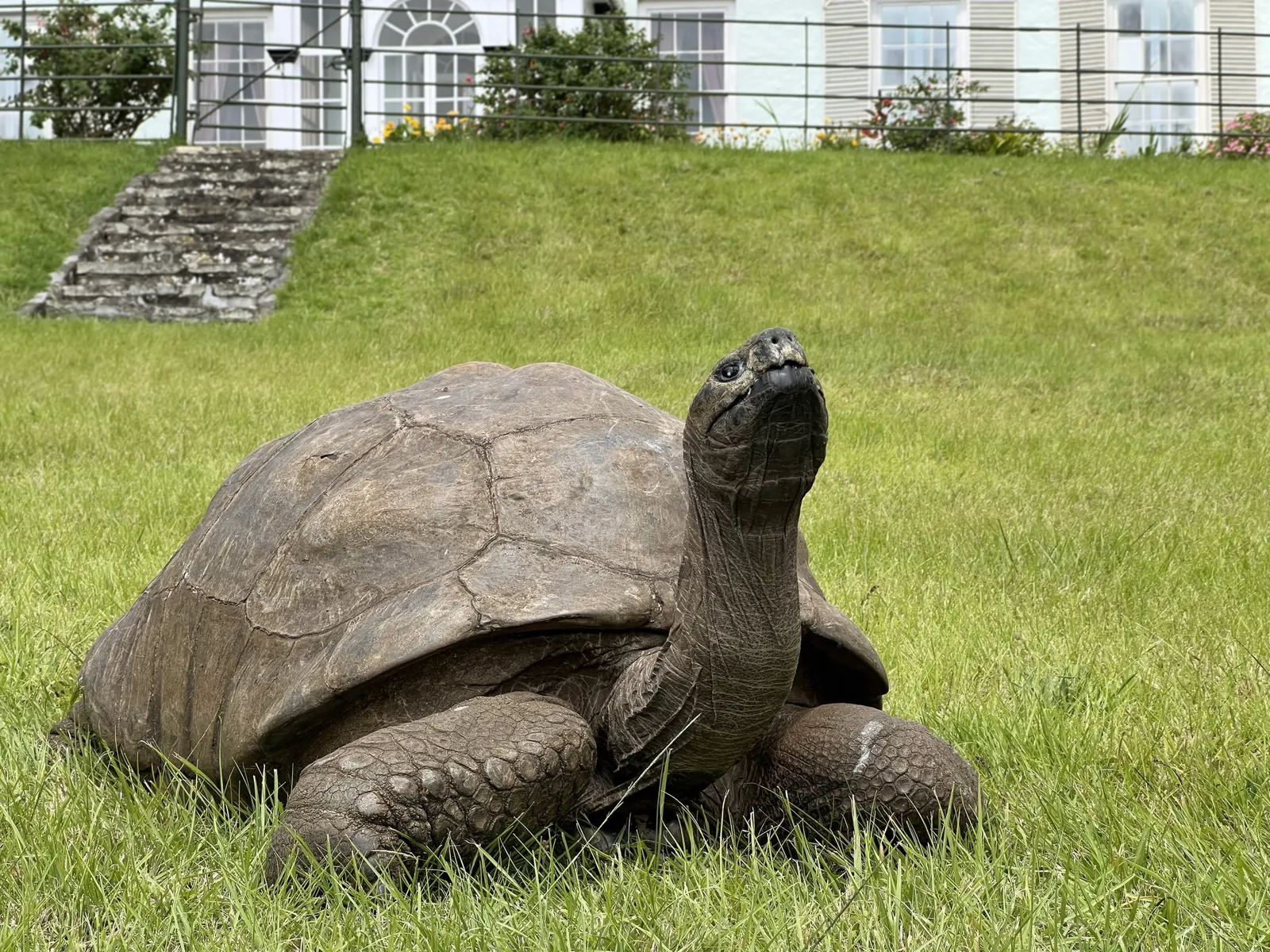
Scientists have collected a cheek swab from Jonathan, an Aldabra giant tortoise whose extraordinary lifespan has made him a living scientific puzzle. The sample is expected to give researchers genetic material to study as they look for possible explanations for an animal that has outlasted the usual limits of its species by more than a century. Jonathan is generally estimated to be about 194 years old, placing him among the most remarkable known survivors in the animal world.
His distinction is unusually broad. Jonathan is regarded as the oldest turtle documented in historical records and the oldest land-dwelling animal known to be alive. Yet the number attached to his age is an informed estimate rather than a birthday established by records. That uncertainty is central to the story: even with a famous animal under long-term care, the beginning of its life can remain beyond recovery.
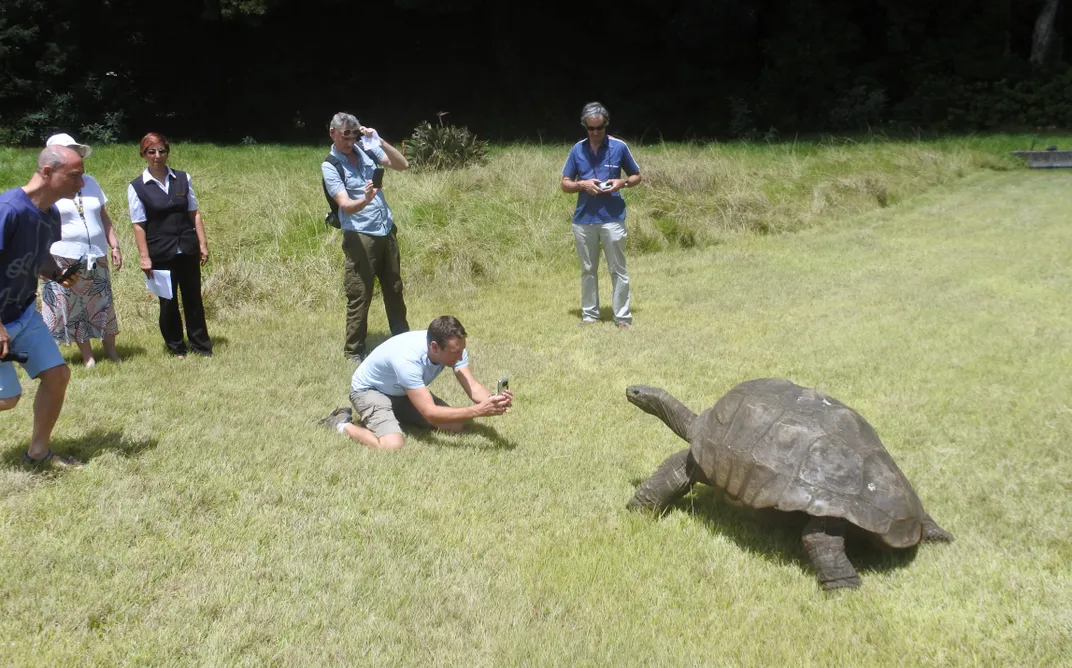
The estimate rests on an image made in 1882. In that photograph, Jonathan already appears to have reached adulthood. Aldabra giant tortoises are believed to need at least five decades to become fully grown, so the image sets a minimum age and supports the estimate used today. It does not, however, show when he hatched, leaving open the possibility that he had been an adult for some time before the photograph was taken.
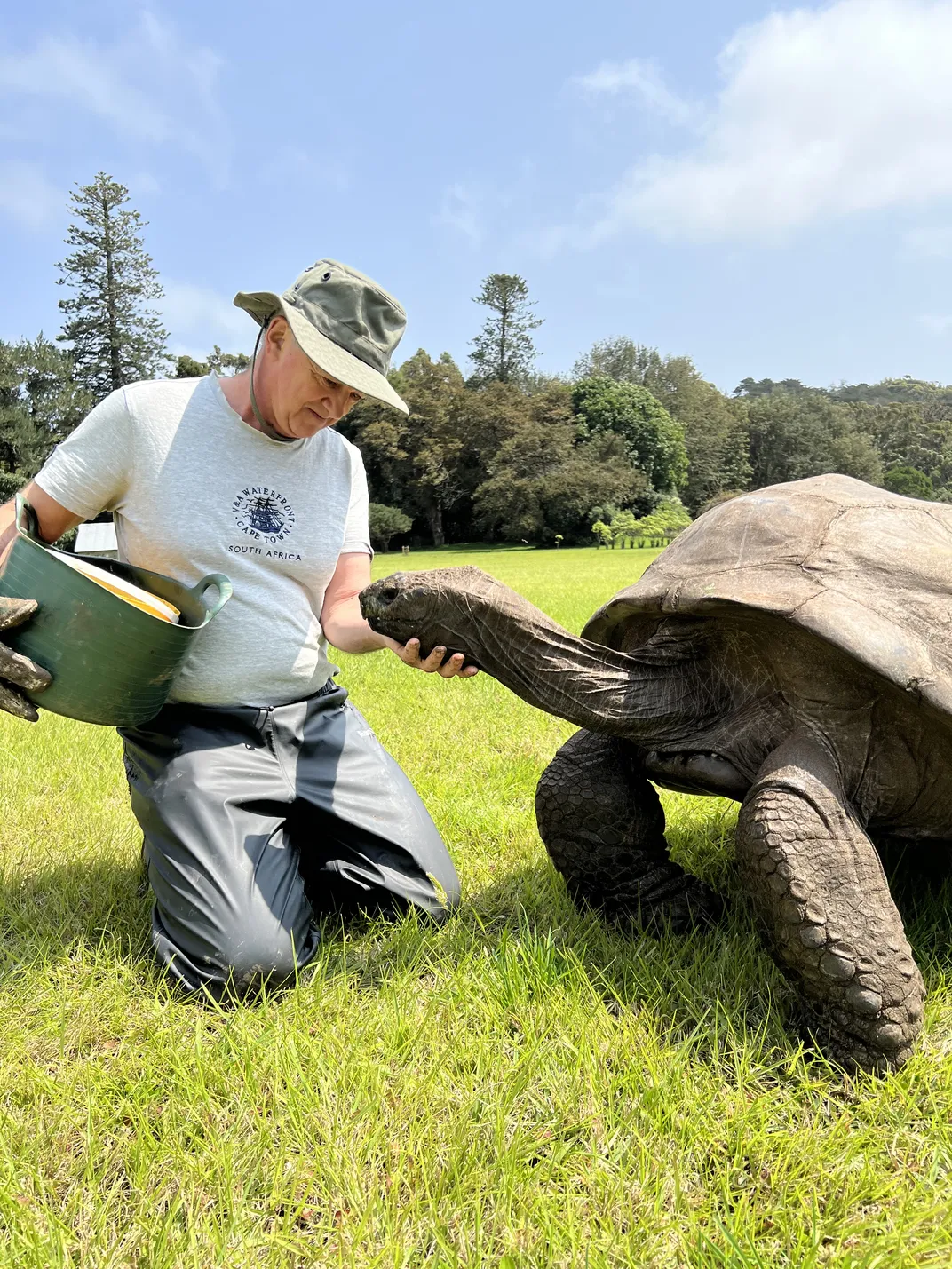
Joe Hollins, the veterinarian responsible for Jonathan’s care, has previously said he believes the tortoise may be older than the conventional estimate. But he has also acknowledged that certainty is out of reach. That balance offers an important warning for any account of Jonathan’s longevity: the evidence establishes an exceptional life, but it cannot produce a completely final number.
Whatever the exact total, Jonathan has gone far beyond the roughly 80-year lifespan associated with his species. Reaching nearly two centuries makes ordinary comparisons difficult. His case raises a larger question that a cheek swab cannot answer on its own: whether an unusual combination of inherited traits, a protected setting and regular care has enabled one tortoise to live for so long.
The genetic material could help researchers investigate that question in greater detail. DNA is not a straightforward recipe for a longer life, and obtaining a sample is an opening step rather than a scientific conclusion. Still, Jonathan’s genome may reveal characteristics worth examining in an animal that has demonstrated extraordinary endurance. The wider interest is whether those findings can improve research into biological factors connected with long life, including questions relevant to humans.
Jonathan’s surroundings are part of the explanation under consideration. He has had a safe home, managed food and veterinary treatment, factors that can protect an animal from dangers that cut lives short. Those conditions may have been essential to his survival. Even so, living more than a century beyond the typical expectation for his species suggests that care by itself may not explain everything scientists want to understand.
That distinction matters because one exceptional animal can inform a scientific investigation without delivering a universal answer. A genetic pattern found in Jonathan would not automatically account for human aging or ensure similar longevity in other animals. Researchers would need to distinguish between what makes this individual unusual and what may be tested more broadly, while considering the effects of his environment and lifelong treatment.
For now, the cheek swab gives scientists a chance to examine Jonathan with methods that did not exist when he was photographed in the nineteenth century. The next question is not whether the sample will immediately unlock a secret to a longer human life, but what the analysis finds and how those results fit with Jonathan’s history of care. His precise age may remain uncertain, but his status as an extraordinary survivor is already firmly established.
Source: Smithsonian Magazine
Related articles
Immerse Yourself in the Cosmos at Frank Lloyd Wright's Only Planetarium, Recently Restored to Its Former Glory in Florida
Completed in 1958, the domed building is located on the campus of Florida Southern College, home to 13 Wright-designed buildings, the world's largest single-site collection of the architect's work

Play Tractor online with friends — free
Real-time Sheng Ji / Tractor for 3–5 players, with complete bidding and trump rules across web, iOS and Android.
Play bidfive →
A Team of Astronomers Thinks They Have Identified the Exact Night Sky That Inspired Vincent van Gogh's 'Starry Night.' Not Everyone Is Convinced
Very few night skies seen from the south of France during the summer of 1889 would match the scene on van Gogh's canvas. A new study argues that it could have been July 22

'Pretty Boy' Floyd, One of the Most Notorious Outlaws of the Great Depression, Was Shot and Killed in an FBI Raid 92 Years Ago
Some Americans lauded the 30-year-old bank robber as a Robin Hood-esque folk hero. Others castigated him as a violent criminal whose misdeeds were emblematic of the troubled era

GTA 6 guides, updates and practical reference
Explore a Chinese GTA 6 guide library covering the release, map, characters, missions, vehicles and weapons.
Browse guides →
Create AI images with your own API key
aixipi runs on desktop/web, uses your own model API balance, and avoids subscription lock-in.
Try aixipi →