
Shanghai's 'Audacious' New Opera House Just Opened Its Doors—and a Gravity-Defying Staircase—to the Public
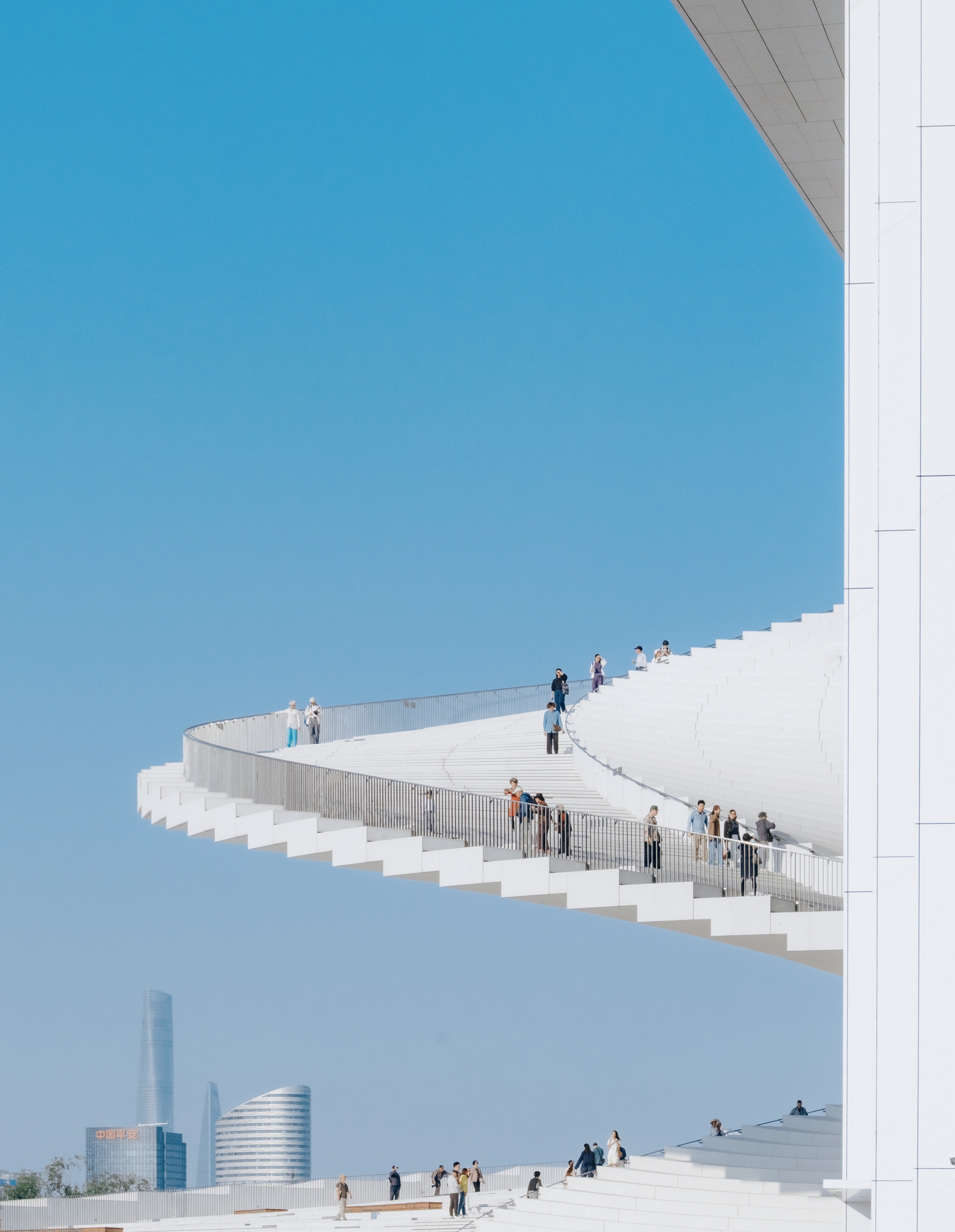
Shanghai has opened a new landmark for the performing arts on the Huangpu River: the Shanghai Grand Opera House, a vast waterfront complex conceived as more than a destination for people with tickets. Its debut brings three venues, a rooftop performance area and public viewing space to one of the city’s most prominent river corridors. The building’s most conspicuous feature is an immense, curling outdoor stair that rises from the surrounding public realm to the roof, turning circulation through the site into part of its architectural spectacle.
The staircase is intended to do more than guide audiences toward an entrance. It creates a continuous route between the riverside, street level and an elevated terrace, where visitors can look across Shanghai and where performances can be staged. That choice places an unusually public element at the center of an institution often associated with formal evenings, reserved seating and a clear divide between patron and passerby. People need not be attending a show to encounter the building’s exterior route or its rooftop outlook.
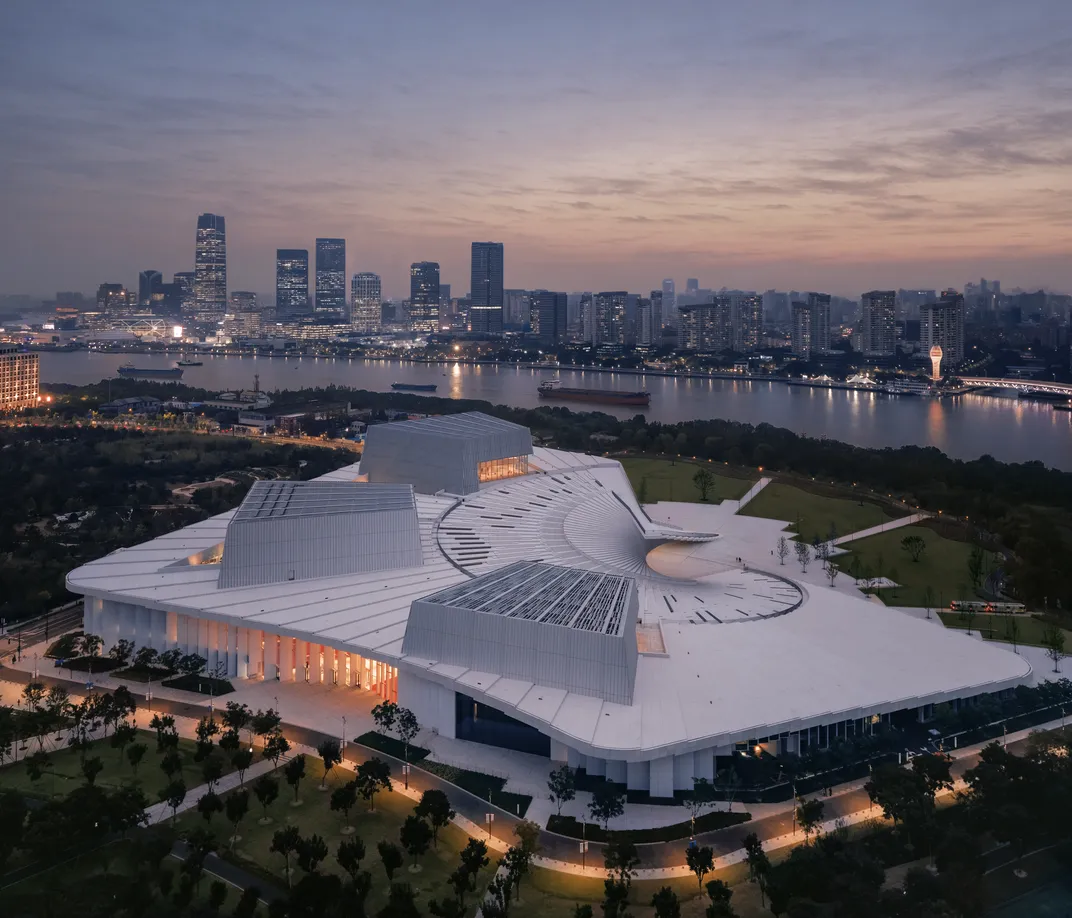
Completed roughly ten years after the design commission was awarded, the opera house is the realization of a long-running plan for the riverbank. Norwegian architecture practice Snøhetta won the international competition for the project, and the finished building now anchors the Huangpu waterfront. Its arrival is also a statement about the scale at which Shanghai is continuing to build cultural infrastructure: the complex occupies nearly 1.6 million square feet, making it a major addition rather than a single-purpose theater.
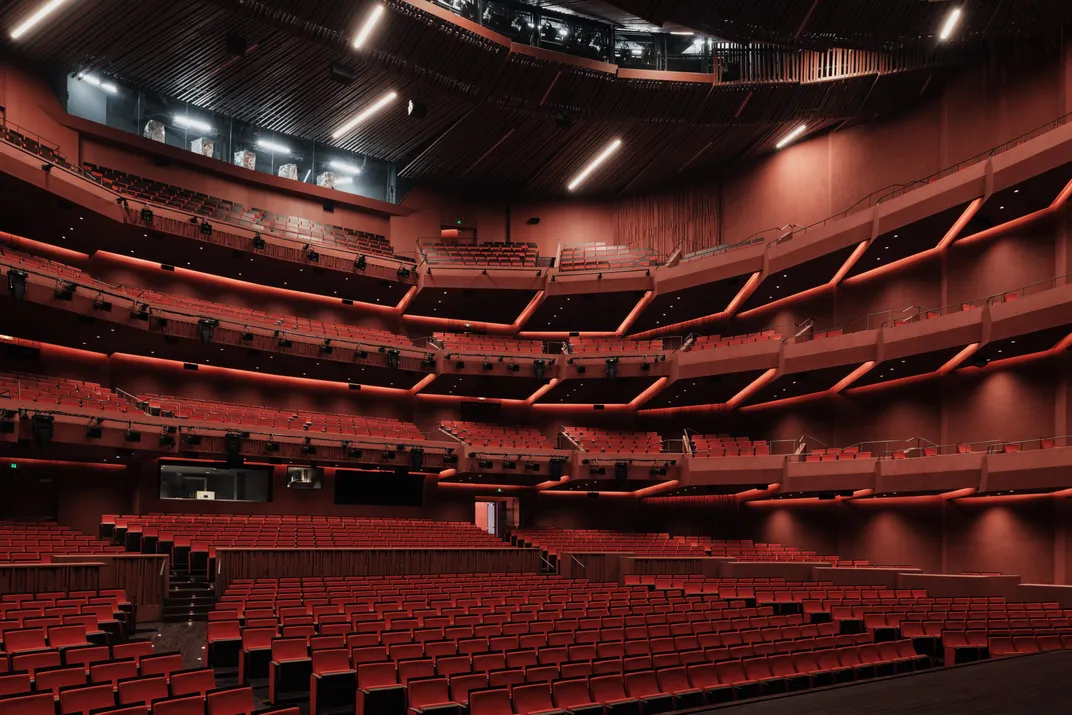
Inside, the project contains three separate auditoriums that together provide 4,200 seats. The multiple-hall arrangement gives the institution room to host productions of different sizes and formats at the same time. Its facilities were planned for both public presentations and rehearsal work, allowing the house to support traditional opera alongside orchestral programs and less conventional productions. In practical terms, that flexibility may matter as much as the dramatic exterior, because it gives the venue a wider potential calendar than a hall designed for one repertoire alone.
The building’s design treats the roof as an extension of the public ground rather than a secluded technical surface. By leading visitors upward, the spiral structure makes the top of the complex part of the visit and provides a setting for open-air events. The gesture is especially visible from the riverfront, where the rising path gives the opera house a recognizable profile. It also connects the project’s cultural purpose to the daily movement of people along the waterfront, instead of confining the experience entirely behind theater doors.
That openness is central to the project’s civic ambition. Cultural buildings can become symbols of a city while remaining mostly accessible to those who buy admission; this one has been designed to offer a public encounter beyond the auditoriums. The riverside route and rooftop destination are meant to broaden who can use the site, whether visitors arrive for a performance, a rehearsal-related event or simply the view. The distinction is significant because the most visible portions of the complex are part of the building’s public face, not merely its arrival sequence.
At the same time, the opening is only the start of the larger test for a venue of this size. Its architectural accessibility does not by itself determine how fully the complex will function as an everyday gathering place, or how its programming will balance familiar works with experimental ones. The three halls and their supporting stages provide the capacity for variety, but the character of the institution will emerge through the productions, rehearsals and public use that follow its launch. For now, the design makes that question unusually visible.
For Shanghai, the completed opera house adds a new cultural marker to a river corridor already important to the city’s public life. For Snøhetta, it brings a competition-winning proposal into use after a decade of development. The project’s early identity will likely be shaped by two linked features: the range of performances it can accommodate and the invitation embedded in its staircase. One serves the practical needs of a major arts institution; the other encourages the broader city to climb, pause and look out from its roof.
The coming months will show how those two roles coexist. A building with 4,200 seats across three auditoriums must operate as a serious home for performance, yet its riverfront path offers a deliberately less formal point of entry. If the rooftop and public connections draw people beyond ticketed audiences, the opera house could become not only a new place to see productions, but also a regular destination on the Huangpu. Its first week has established the structure; its next chapters will be written in use.
Source: Smithsonian Magazine
Related articles
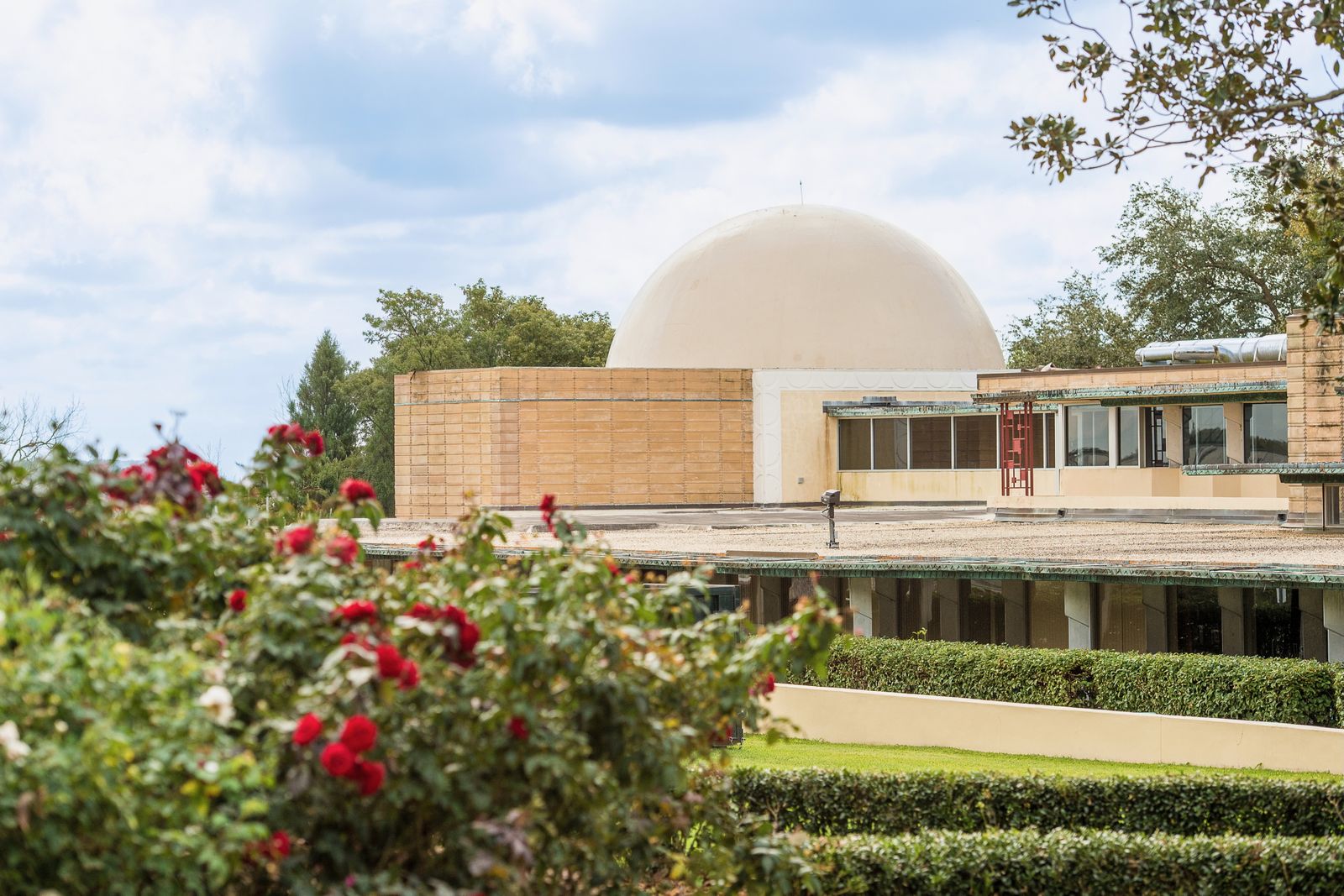
Immerse Yourself in the Cosmos at Frank Lloyd Wright's Only Planetarium, Recently Restored to Its Former Glory in Florida
Completed in 1958, the domed building is located on the campus of Florida Southern College, home to 13 Wright-designed buildings, the world's largest single-site collection of the architect's work

Play Tractor online with friends — free
Real-time Sheng Ji / Tractor for 3–5 players, with complete bidding and trump rules across web, iOS and Android.
Play bidfive →
A Team of Astronomers Thinks They Have Identified the Exact Night Sky That Inspired Vincent van Gogh's 'Starry Night.' Not Everyone Is Convinced
Very few night skies seen from the south of France during the summer of 1889 would match the scene on van Gogh's canvas. A new study argues that it could have been July 22

'Pretty Boy' Floyd, One of the Most Notorious Outlaws of the Great Depression, Was Shot and Killed in an FBI Raid 92 Years Ago
Some Americans lauded the 30-year-old bank robber as a Robin Hood-esque folk hero. Others castigated him as a violent criminal whose misdeeds were emblematic of the troubled era

GTA 6 guides, updates and practical reference
Explore a Chinese GTA 6 guide library covering the release, map, characters, missions, vehicles and weapons.
Browse guides →
Create AI images with your own API key
aixipi runs on desktop/web, uses your own model API balance, and avoids subscription lock-in.
Try aixipi →