
She Painted the First Known Self-Portrait of an Artist at Work—and Signed It—Nearly 500 Years Ago. Who Was Catharina van Hemessen?
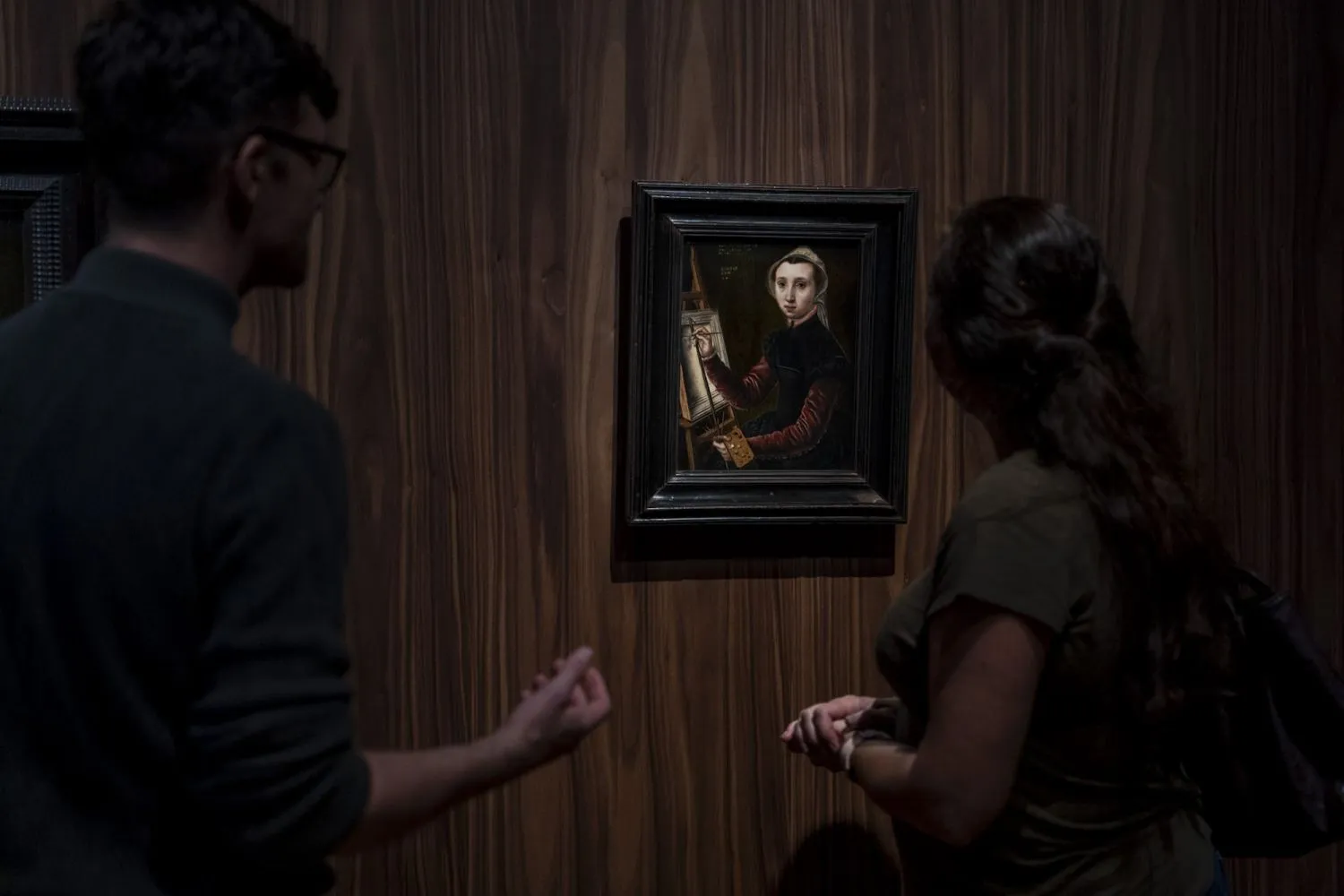
A painting completed in 1548 is placing Catharina van Hemessen back before a public audience in Antwerp, where a new exhibition examines the Flemish artist’s significance. Her self-portrait, kept by the Kunstmuseum Basel in Switzerland, is broadly considered the earliest surviving work to show an artist portraying herself while she paints. In an era when professional careers in art were rarely open to women, the panel offers an unusually clear assertion of female artistic identity.
Van Hemessen was 20 when she produced the image. Rather than presenting herself only as the subject of a portrait, she placed herself at an easel beside a painting still in progress. The result joins portraiture with artistic labor: the viewer sees both the young woman and the work she is undertaking. The exhibition at Antwerp’s Snijders & Rockoxhuis uses that distinctive image to revisit an artist whose name has remained less prominent than those of many later painters.
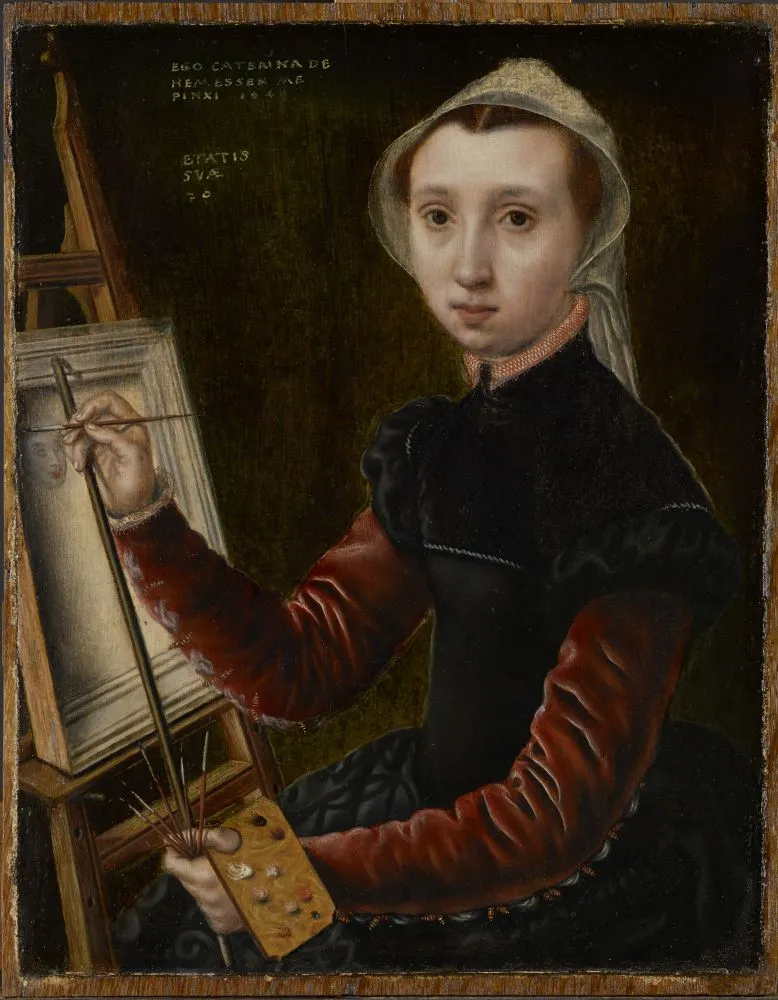
The scene is composed with restraint. Van Hemessen appears in a dark gown with sleeves of red velvet and a plain covering over her hair. Her attention is not directed straight toward the audience. Instead, she seems to look beyond the picture plane, as if her concentration has shifted briefly from the unfinished canvas near her. The easel is central to the image because it identifies her as the maker, not simply the person being depicted.
A Latin inscription near the upper-left portion of the panel makes the claim of authorship explicit. It identifies Catharina van Hemessen as the person who painted her own likeness. That detail gives the work an additional force: her name, her image and her profession are brought together in one visual statement. The inscription does more than label the painting; it emphasizes that the woman represented is also responsible for creating it.
The portrait’s standing rests partly on the way it joins self-representation with the physical act of painting. It is often described as the first known example of an artist showing herself at work, though that description depends on surviving evidence and scholarly definitions. It does not establish that no earlier artist ever made a comparable image. Instead, it recognizes the 1548 panel as the earliest currently identified work of this kind.
For present-day viewers, the painting also offers a counterpoint to histories of Renaissance art that have often foregrounded male artists. The limited number of women able to pursue art professionally in the 16th century makes Van Hemessen’ choice especially revealing. She is shown occupying a working environment and handling the task of painting, rather than appearing as a patron, a model or a decorative figure within someone else’s composition.
The work can also be placed within a longer tradition of artists using their own likenesses to explore authorship. Later painters including Artemisia Gentileschi, Vincent van Gogh and David Hockney made self-referential works in very different periods and circumstances. Their careers should not be treated as direct extensions of Van Hemessen’ own. Yet her panel provides an early example of an enduring artistic problem: how to show the painter, the act of painting and a constructed public identity in a single image.
Ariane Mensger, a curator at the Kunstmuseum Basel, has described the painting as an important document for understanding women artists’ self-image as well as the practice of painting itself. Her assessment points to two connected questions: who could claim recognition as a professional artist, and what a studio scene can reveal about that claim. Van Hemessen’ inscription, easel and diverted gaze continue to support both readings while allowing room for further interpretation.
The Antwerp exhibition provides a new setting in which to consider why this work has retained such importance. Whether renewed attention will give Van Hemessen a more secure place in wider accounts of Flemish art remains to be seen. For now, the panel’s direct declaration of authorship and its rare portrayal of a woman engaged in artistic work make it a focal point for reconsidering which creative voices were preserved in the historical record.

Source: Smithsonian Magazine
Related articles

Immerse Yourself in the Cosmos at Frank Lloyd Wright's Only Planetarium, Recently Restored to Its Former Glory in Florida
Completed in 1958, the domed building is located on the campus of Florida Southern College, home to 13 Wright-designed buildings, the world's largest single-site collection of the architect's work

Play Tractor online with friends — free
Real-time Sheng Ji / Tractor for 3–5 players, with complete bidding and trump rules across web, iOS and Android.
Play bidfive →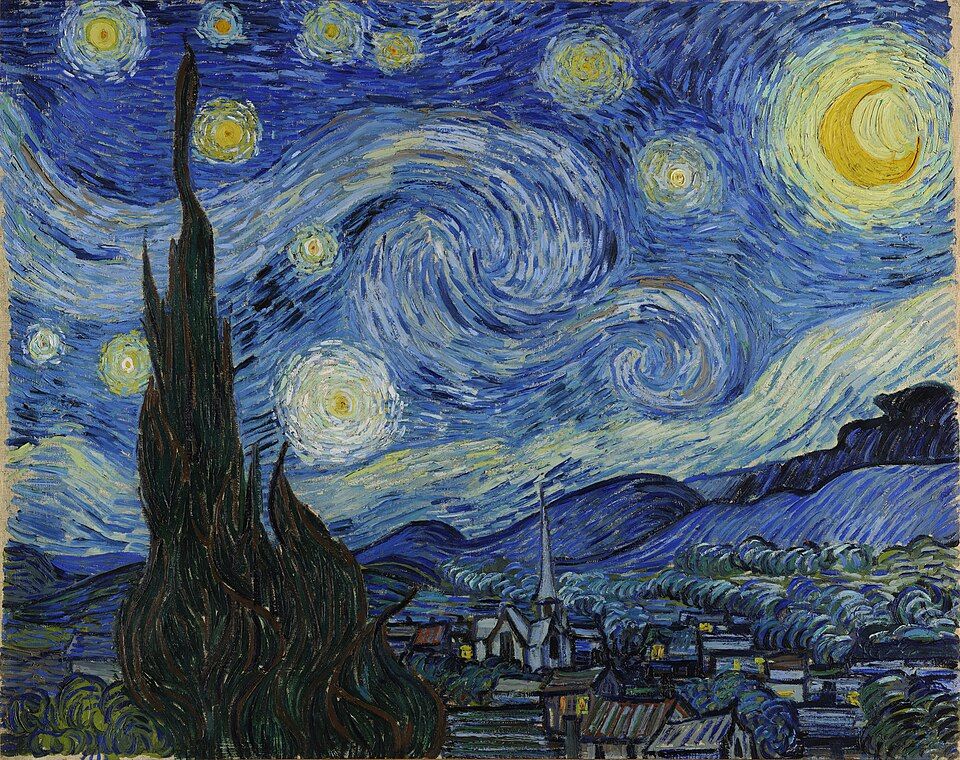
A Team of Astronomers Thinks They Have Identified the Exact Night Sky That Inspired Vincent van Gogh's 'Starry Night.' Not Everyone Is Convinced
Very few night skies seen from the south of France during the summer of 1889 would match the scene on van Gogh's canvas. A new study argues that it could have been July 22

'Pretty Boy' Floyd, One of the Most Notorious Outlaws of the Great Depression, Was Shot and Killed in an FBI Raid 92 Years Ago
Some Americans lauded the 30-year-old bank robber as a Robin Hood-esque folk hero. Others castigated him as a violent criminal whose misdeeds were emblematic of the troubled era

GTA 6 guides, updates and practical reference
Explore a Chinese GTA 6 guide library covering the release, map, characters, missions, vehicles and weapons.
Browse guides →
Create AI images with your own API key
aixipi runs on desktop/web, uses your own model API balance, and avoids subscription lock-in.
Try aixipi →