
Sick Corals Can Heal With the Help of a 'Magic Touch' From Healthy Ones, Offering Hope for Heat-Damaged Marine Ecosystems
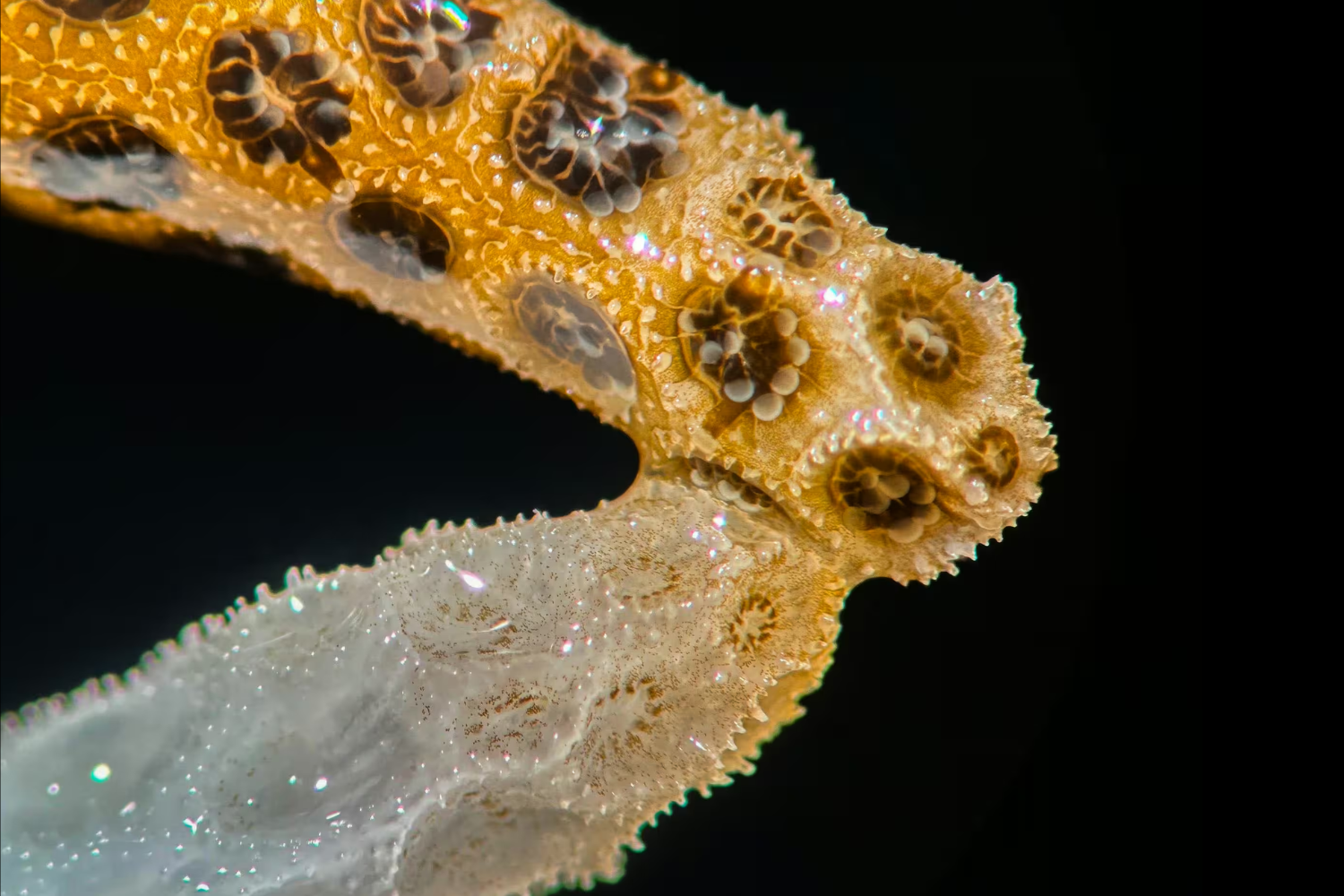
A damaged coral may regain its lost color far faster when it is placed against a healthy counterpart from the same genetic line, according to laboratory research published October 14 in Science Advances. In some tests, pale fragments that made direct contact with vigorous, colorful clones returned to full recovery in as little as four weeks. The finding points to a potential new tool for responding to bleaching, a major threat to marine ecosystems under heat stress.
The work centers on a basic feature of many corals: what appears to be a single organism can be a group of very small, genetically matching animals. That relationship gave the researchers a distinctive comparison to test. Rather than leaving bleached pieces separate, they brought them into physical contact with healthy fragments that were genetically identical to them.
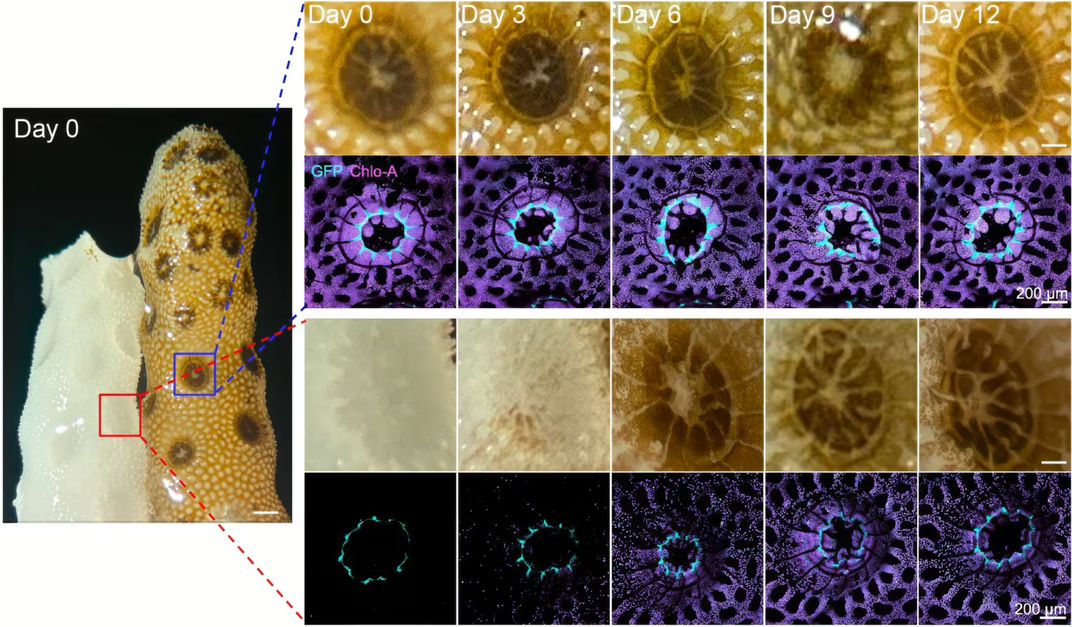
The response was strikingly rapid in the experiments. A fragment that had turned pale did not merely remain stable beside its healthy match; it recovered its color over a period of weeks. The shortest complete recoveries occurred at about the four-week mark, suggesting that direct contact can be associated with a powerful revival process under laboratory conditions.
Lead researcher Danny Collins, a marine biologist at Stanford University, said the team did not anticipate the scale or speed of what they observed. Collins told KQED that the healthy fragment seemed to restore color to the bleached coral “right before our eyes.” The result, he said, was quicker and more pronounced than the researchers had expected.
Bleaching is visible as a loss of color, making that change especially important to the study’s central observation. The experiments suggest that a thriving clone can do more than provide a nearby example of resilience: direct touch between the two pieces may help a damaged relative recover. That simple condition distinguishes the approach from broader efforts that seek to aid reefs without pairing closely related fragments.
The result arrives as marine ecosystems face repeated heat damage, and it offers a possible direction for recovery work after bleaching events. A method that helps a weakened piece rebound in weeks could be useful in designing new interventions, particularly where healthy material from the same genetic line is available. It may also prompt researchers to examine whether physical links among coral fragments can be used deliberately in restoration settings.
Still, the study is not a universal cure for declining reefs. The experiments were conducted in a lab, and the finding does not mean every bleached coral can be restored through contact with a healthy clone. It also depends on having a suitable, genetically identical healthy piece available, a condition that may limit how widely the technique can be applied.
That caveat matters because the work is best understood as a promising mechanism rather than a stand-alone answer to worldwide coral illness. Further research will need to clarify where and when the effect can be reproduced, how it performs beyond controlled experiments, and how it could fit alongside other responses to heat-related damage. The immediate result, however, gives scientists a vivid observation to pursue: one healthy coral fragment may help a matching damaged fragment regain its color.
For now, the research reframes the role healthy coral fragments might play after bleaching. Instead of serving only as survivors of a damaging event, genetically matched pieces could become active partners in recovery. The next question is whether that laboratory “magic touch” can be translated into practical strategies for marine ecosystems facing increasingly severe heat stress.
Source: Smithsonian Magazine
Related articles

Immerse Yourself in the Cosmos at Frank Lloyd Wright's Only Planetarium, Recently Restored to Its Former Glory in Florida
Completed in 1958, the domed building is located on the campus of Florida Southern College, home to 13 Wright-designed buildings, the world's largest single-site collection of the architect's work

Play Tractor online with friends — free
Real-time Sheng Ji / Tractor for 3–5 players, with complete bidding and trump rules across web, iOS and Android.
Play bidfive →
A Team of Astronomers Thinks They Have Identified the Exact Night Sky That Inspired Vincent van Gogh's 'Starry Night.' Not Everyone Is Convinced
Very few night skies seen from the south of France during the summer of 1889 would match the scene on van Gogh's canvas. A new study argues that it could have been July 22

'Pretty Boy' Floyd, One of the Most Notorious Outlaws of the Great Depression, Was Shot and Killed in an FBI Raid 92 Years Ago
Some Americans lauded the 30-year-old bank robber as a Robin Hood-esque folk hero. Others castigated him as a violent criminal whose misdeeds were emblematic of the troubled era

GTA 6 guides, updates and practical reference
Explore a Chinese GTA 6 guide library covering the release, map, characters, missions, vehicles and weapons.
Browse guides →
Create AI images with your own API key
aixipi runs on desktop/web, uses your own model API balance, and avoids subscription lock-in.
Try aixipi →