
Spain deploys military to Morocco border after migrant crossings, 9 deaths
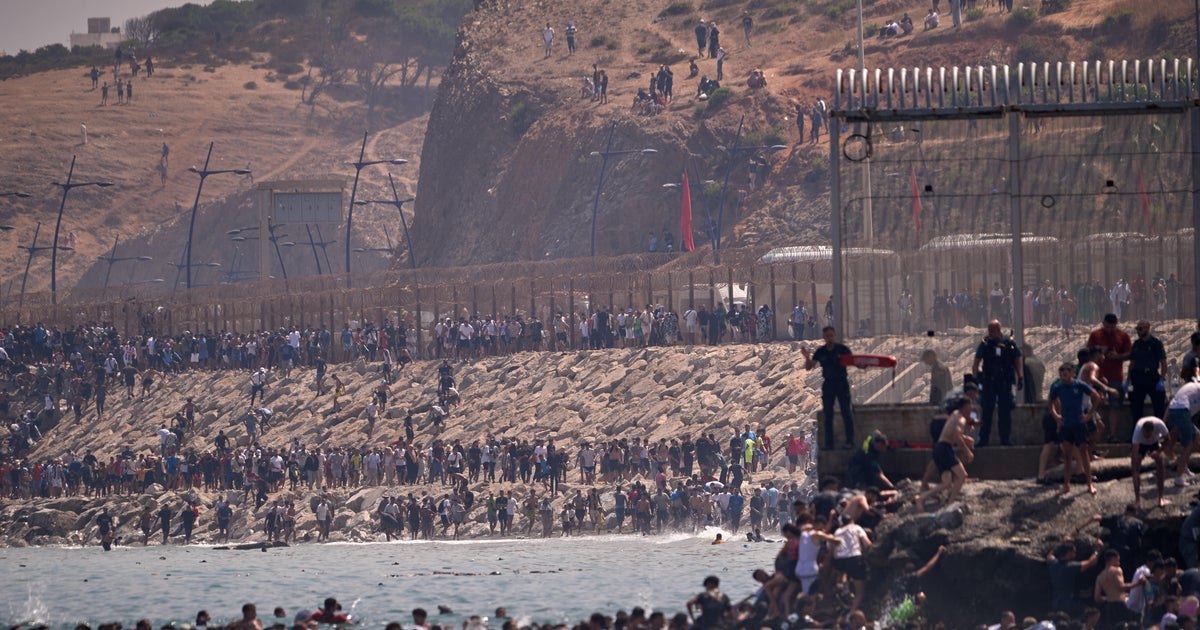
Spain is preparing to send members of its Armed Forces to Ceuta after a sudden surge in migrant crossings overwhelmed the Spanish territory’s frontier with Morocco and left at least nine people dead. The deployment was announced after local officials asked Madrid for additional help as authorities worked to regain control following the breach. It places the national government at the center of a fast-moving emergency in one of its most strategically exposed territories.
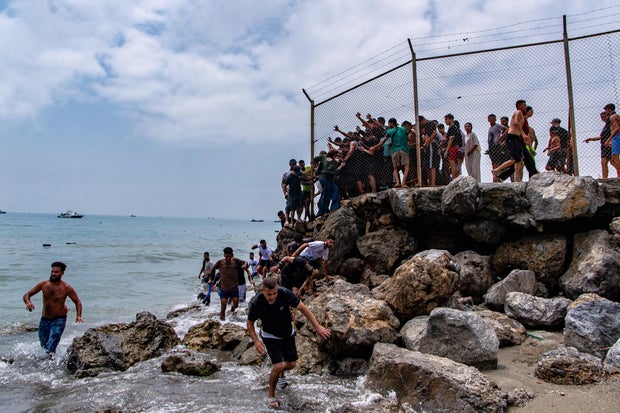
The pressure on the border built over time before reaching a critical point on Thursday, when large groups forced their way through the perimeter fence. Thousands of migrants entered the small Spanish-held city during the episode, according to the account of the crisis. The reported death toll underscores the human cost of an attempt to cross a heavily controlled boundary that separates a European-administered enclave from Morocco. It also means the official response will face scrutiny not just over security, but over the circumstances surrounding the fatalities and the needs of those who survived the crossing.
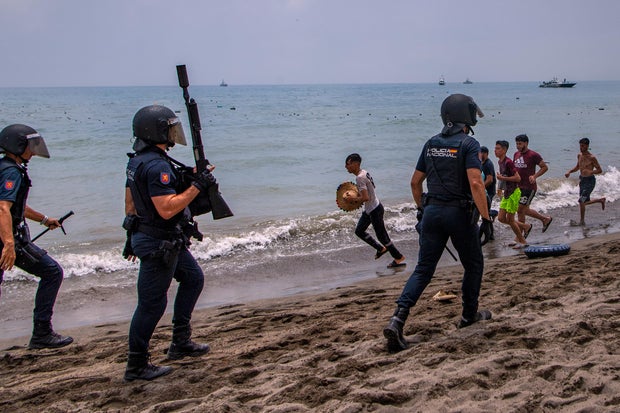
On Thursday evening, the national government said the military would assist the Civil Guard, Spain’s law-enforcement force with border-security responsibilities. Its stated aim was to preserve security in Ceuta, where the arrival of so many people in a short period placed exceptional demands on local services and policing. The announcement turned a municipal request for support into a direct central-government response. Officials did not describe the decision as a permanent change to border policy; it was presented as reinforcement during the immediate disruption.
Ceuta’s position makes it a particularly sensitive point in Spain’s migration policy. Although it is governed by Spain, the territory sits on the North African coast and shares its land border with Morocco. That geography means events at the fence can quickly become both a local public-order issue and a matter involving national authorities, border management and relations across the frontier. In this case, the abrupt scale of the crossings transformed a border-control challenge into a broader test of whether a small city can absorb a major influx while maintaining day-to-day security.
The move to involve the Armed Forces is intended to reinforce, rather than replace, the Civil Guard’s work. Spanish authorities framed the mission around helping keep order in the city after the mass crossings. The available information does not set out how long troops will remain, how many personnel will be sent or what operational tasks they will carry out, leaving the immediate scale of the intervention unclear. Those unanswered questions will be important in measuring whether the deployment is a brief stabilizing measure or the beginning of a longer response.
For Ceuta’s local administration, the request for reinforcements reflected a crisis that had exceeded the capacity of ordinary border arrangements. The sequence described by officials points to mounting strain followed by a much larger confrontation at the fence. The military decision signals that Madrid considers the situation serious enough to require resources beyond those normally stationed in the territory. Yet an increased security presence cannot by itself resolve every consequence of a mass arrival, including the humanitarian and administrative pressures created after people have entered the city.
Spain’s leaders are also due to make the crisis visible at the highest political level. Prime Minister Pedro Sánchez is scheduled to travel to Ceuta on Friday alongside Interior Minister Fernando Grande-Marlaska. Their visit is expected to place attention on the territory’s security needs and the response already being organized, while also giving the government an opportunity to assess conditions directly. It will provide an early indication of the messages Madrid wants to send to residents, security personnel and Morocco as the situation develops.
What happens after the initial deployment will depend on whether authorities can stabilize the border and manage the consequences of the crossings. The deaths, the large number of arrivals and the breach of the fence ensure that the episode will be judged not only by the restoration of order but also by how the human toll is addressed. The security-focused announcement gives only part of that picture, since the notes provide no detail on arrangements for those who crossed or on any discussions with Morocco. For now, Spain has outlined an emergency response, while the practical terms of the operation and the longer-term outlook remain unsettled.
Source: CBS World
Related articles

European soccer leaders to boycott the World Cup in an unprecedented step
In an unprecedented step, European soccer associations said they would boycott the World Cup unless FIFA reverses a controversial deal to sell minority stakes to the marquee soccer tournament.

Create AI images with your own API key
aixipi runs on desktop/web, uses your own model API balance, and avoids subscription lock-in.
Try aixipi →
2 firefighters die in Greece as others fight massive blaze in France
Two firefighters died in a blaze on the Greek island of Crete Wednesday while crews in France confronted a wildfire four times the size of Paris, officials said.

Hope dwindles for rescue in southwestern Japan quake as death toll climbs to 23
Time was running out to find survivors, as rescuers continued to work in the Kumamoto area on Japan 's southern main island of Kyushu, where the magnitude 7.1 earthquake hit Tuesday.