
"Supersized" El Niño's harshest weather ahead includes heat, drought, floods
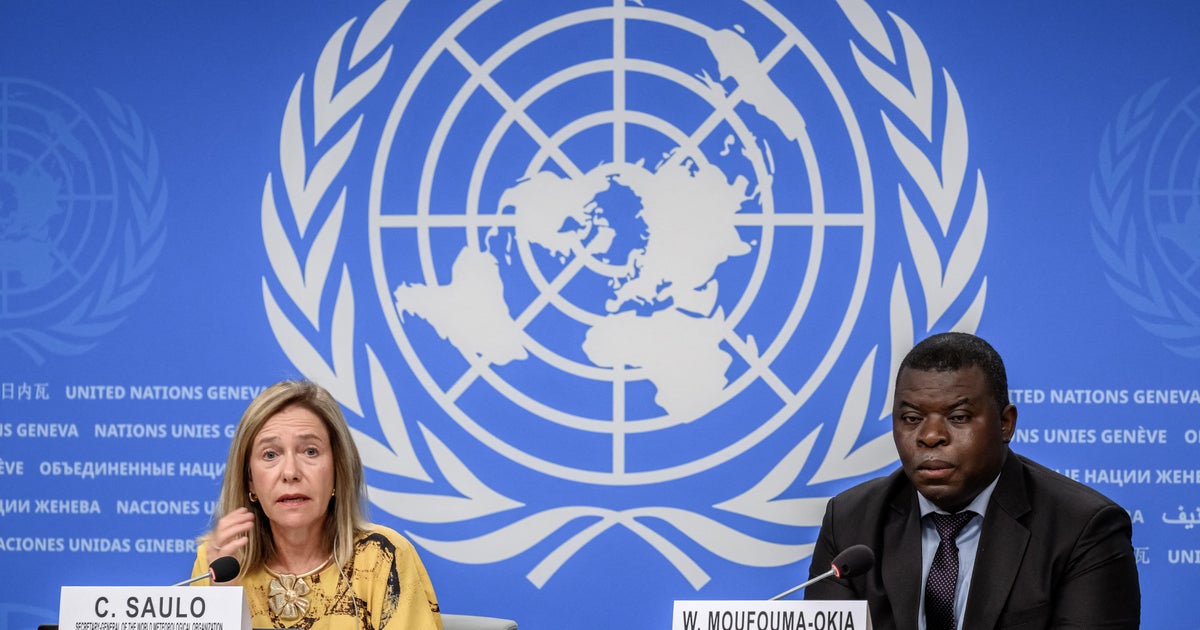
A developing El Niño is expected to persist into the opening months of 2027 and grow stronger before reaching its high point late this year, according to a new United Nations-backed outlook. The projection has raised concern that the Pacific climate pattern could intensify damaging weather in many regions, including punishing heat, prolonged dryness and episodes of flooding. Forecasters describe the likely evolution as an unusually consequential phase of a phenomenon already capable of reshaping weather far beyond the tropical Pacific.
The warning followed an updated assessment released Thursday by the World Meteorological Organization, the U.N. body that tracks weather, climate and water. Its latest forecast says the current El Niño should continue to build over the coming months. By the latter part of the year, it is expected to attain a very strong level, a classification that underscores the scale of the anticipated ocean-atmosphere disturbance rather than providing a precise forecast for conditions in any one country.
The WMO’s outlook puts the odds of El Niño remaining established through early 2027 at close to certainty. Its expected late-year maximum means the period of greatest concern has not yet arrived. That timetable gives governments, emergency agencies and communities a clearer reason to prepare, while also leaving substantial uncertainty over exactly where individual hazards will be most severe and when local effects will emerge.
El Niño begins with changes in the tropical Pacific that alter the exchange between the ocean and atmosphere. Those changes can redirect rainfall and temperature patterns over large distances. The result is not a single uniform weather event: one area may face rain and rising rivers while another sees shrinking water supplies and hotter conditions. The U.N. warning points to this global reach as the central risk of an event projected to strengthen so sharply.
Heat can add pressure to health systems, electricity networks and agriculture, especially where hot spells coincide with dry ground or limited water. Drought can reduce supplies for households and farms and increase stress on landscapes. Heavy rain, by contrast, can overwhelm drainage and rivers, leading to floods. The U.N. said the expanding El Niño is likely to amplify these forms of extreme weather, alongside other disruptions, as its influence grows in the months ahead.
U.N. Secretary-General António Guterres characterized the development as El Niño being “supersized before our eyes.” He said the scientific evidence was unequivocal and warned that the world was moving into unfamiliar conditions as waters warm. His comments tied the forecast to a broader concern: severe weather risks are not isolated from changing ocean conditions, and a stronger El Niño may compound pressures already felt across vulnerable regions.
That framing does not mean every forecasted effect will occur everywhere, or that El Niño alone explains each heatwave, dry spell or flood. Climate patterns influence the odds and character of weather over time, while local geography, seasonal conditions and shorter-term weather systems shape what people experience. The WMO assessment is therefore a global signal for planning, not a map of inevitable outcomes for every community.
The next key marker will be whether observations match the WMO’s expectation of continued strengthening through the end of the year. Monitoring of Pacific conditions and evolving seasonal forecasts will be important as agencies assess threats to water, food production, infrastructure and public health. With the event expected to endure well beyond this year, the planning challenge is likely to extend across multiple seasons rather than end after a single period of extreme weather.
The forecast also highlights why long-range climate assessments matter even when local predictions retain limits. A near-certain expectation that El Niño will last into 2027 allows time for risk managers to review preparedness for heat, drought and flooding before its projected peak. The severity of impacts will vary from place to place, but the U.N. message is that an event of this expected strength warrants close attention now, not only after emergencies begin.
Source: CBS World
Related articles
Zelenskyy accuses Russia of using cluster warheads in deadly strikes
Russia launched the strikes on Ukraine less than a day after negotiations to end the war, which also involved the United States, ended in St. Petersburg.

Create AI images with your own API key
aixipi runs on desktop/web, uses your own model API balance, and avoids subscription lock-in.
Try aixipi →
At least 16 dead when powerful 7.0 magnitude earthquake strikes Tibet
It was the biggest earthquake in the region in the last five years, China

See how Big Tech is transforming Spain's landscape
A drought-stricken region of northeast Spain has become a focus for American companies searching for locations to place their data centers.