
Sweden faces political uncertainty as election deals far-right a blow
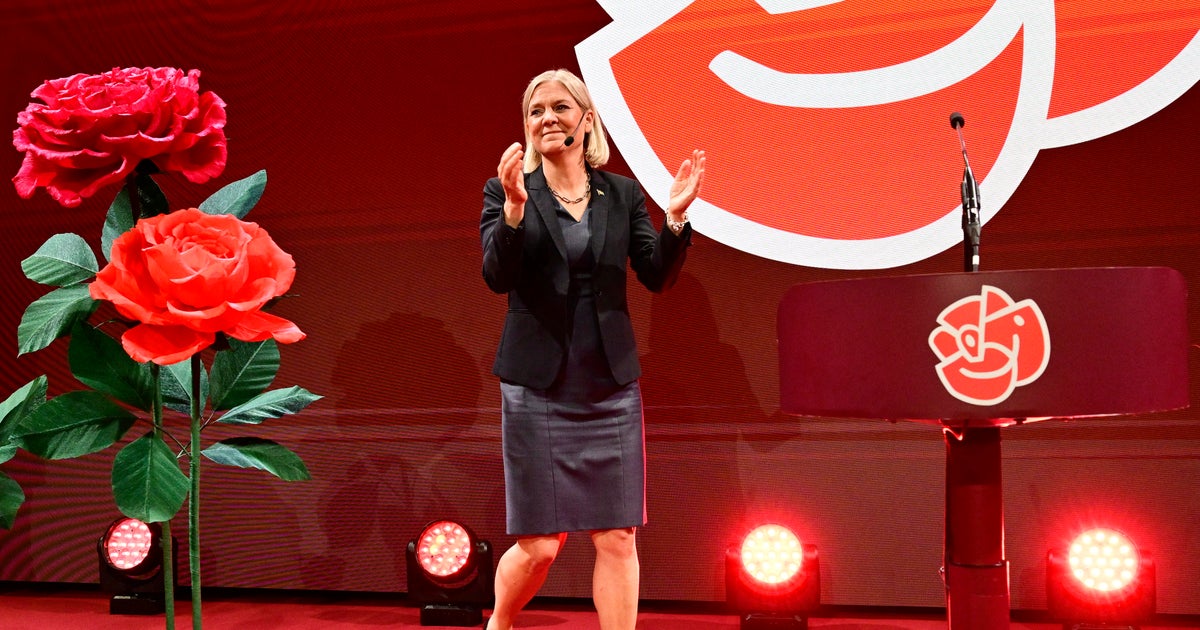
Sweden entered a period of political uncertainty on Monday after a closely fought national election left the opposition’s left-leaning parties narrowly ahead while ballots were still being processed. The result also brought an unexpected reversal for the Sweden Democrats, the anti-immigration party that had increased its support in every parliamentary election since first winning seats 16 years ago. Its decline altered the balance within the right and complicated the task of building a durable governing majority.
With roughly 95% of ballots counted, the four parties opposing the outgoing government were three seats ahead in Sweden’s 349-member Riksdag. That margin, however, was not a final verdict. Some votes were not scheduled to be tallied until Wednesday, meaning the parliamentary arithmetic could yet shift. The exceptionally close count has left neither side able to claim a straightforward route to power.
Social Democratic leader Magdalena Andersson, who leads the opposition, said she would look for partners to assemble a government if the advantage holds. Outgoing Prime Minister Ulf Kristersson, whose conservative-led alliance includes the Sweden Democrats, also said he would investigate possible combinations. For either leader, a majority would require compromises that go beyond the alliances presented to voters during the campaign.
The immediate contest is therefore not only over which bloc finishes first, but over whether its parties can agree on terms for governing. Sweden’s proportional parliamentary system often requires parties to cooperate across differences, and this election has highlighted the limits of the existing blocs. A lead in seats is valuable, but it does not by itself ensure that a prime minister can survive a vote in parliament or that a cabinet can secure support for its agenda.
If the opposition’s edge is confirmed, Andersson would seek an arrangement involving the Greens, the Left Party and the Center Party. Those prospective partners do not hold identical positions. The Center Party has said it will not back a government that includes the Left Party, while the Left Party has said it will not support a government from which it is excluded. Those conditions point to difficult bargaining over the shape of any administration and the policies it could pursue.
Kristersson faces a separate, but equally demanding, calculation. He is expected to look to the Center Party, which belonged to the right-leaning bloc until 2019, as a potential route to a parliamentary majority. Yet the party has opposed entering an alliance with the far right, limiting the scope for a deal involving the Sweden Democrats. The result leaves the outgoing prime minister seeking support from a party whose position is at odds with a central feature of his existing coalition.
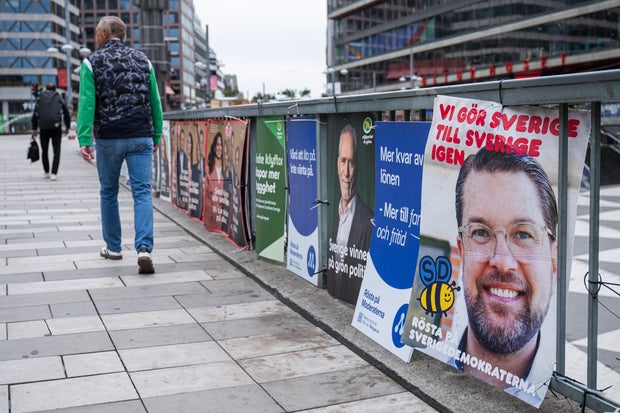
The Sweden Democrats’ result is significant even though the party remains a major force. It received 17.6% of the vote, down from more than one-fifth four years earlier, placing it third behind the Social Democrats and Kristersson’s Moderates. The setback was its first loss of support since it entered the Riksdag. For the right, that weaker showing reduces the weight of a party that had been essential to the outgoing governing arrangement; for its opponents, it does not remove the need to negotiate across sharp divisions.
There is no expectation of an immediate settlement. A parliamentary vote to choose a new prime minister cannot take place before Sept. 29, and negotiations could extend for weeks. Sweden has experienced prolonged government formation before: the process lasted 37 days after the 2022 election and 134 days following the 2018 vote. Analysts have raised the possibility that entrenched conditions could produce a deadlock, although parties also have strong incentives to avoid forcing voters back to the polls.
The next days will determine whether the preliminary opposition lead withstands the remaining count. After that, attention will turn to whether party leaders can soften their stated limits without alienating supporters or destabilizing a future government. Sweden’s election has delivered a clear warning against assuming that a narrow seat advantage settles the question of power. The final outcome will depend on negotiations, parliamentary confidence and the willingness of parties on both sides to find an arrangement they can defend.
Source: CBS World
Related articles
Zelenskyy accuses Russia of using cluster warheads in deadly strikes
Russia launched the strikes on Ukraine less than a day after negotiations to end the war, which also involved the United States, ended in St. Petersburg.

Create AI images with your own API key
aixipi runs on desktop/web, uses your own model API balance, and avoids subscription lock-in.
Try aixipi →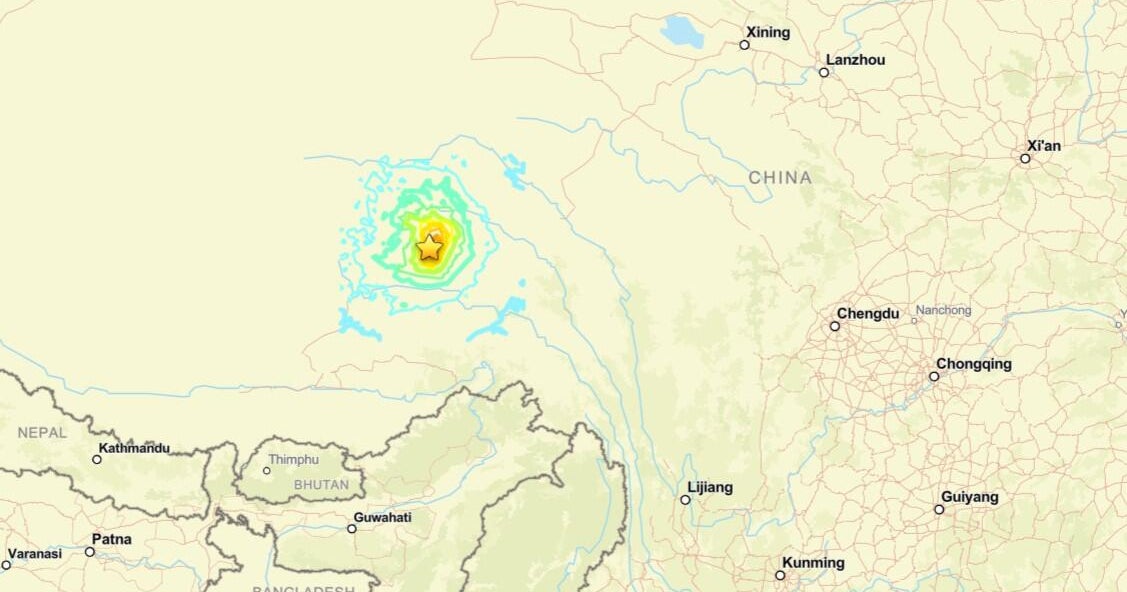
At least 16 dead when powerful 7.0 magnitude earthquake strikes Tibet
It was the biggest earthquake in the region in the last five years, China

See how Big Tech is transforming Spain's landscape
A drought-stricken region of northeast Spain has become a focus for American companies searching for locations to place their data centers.