
The Burning of This French City Hall Was a 'Catastrophe for Heritage,' Tragically Reminiscent of the Notre-Dame Fire
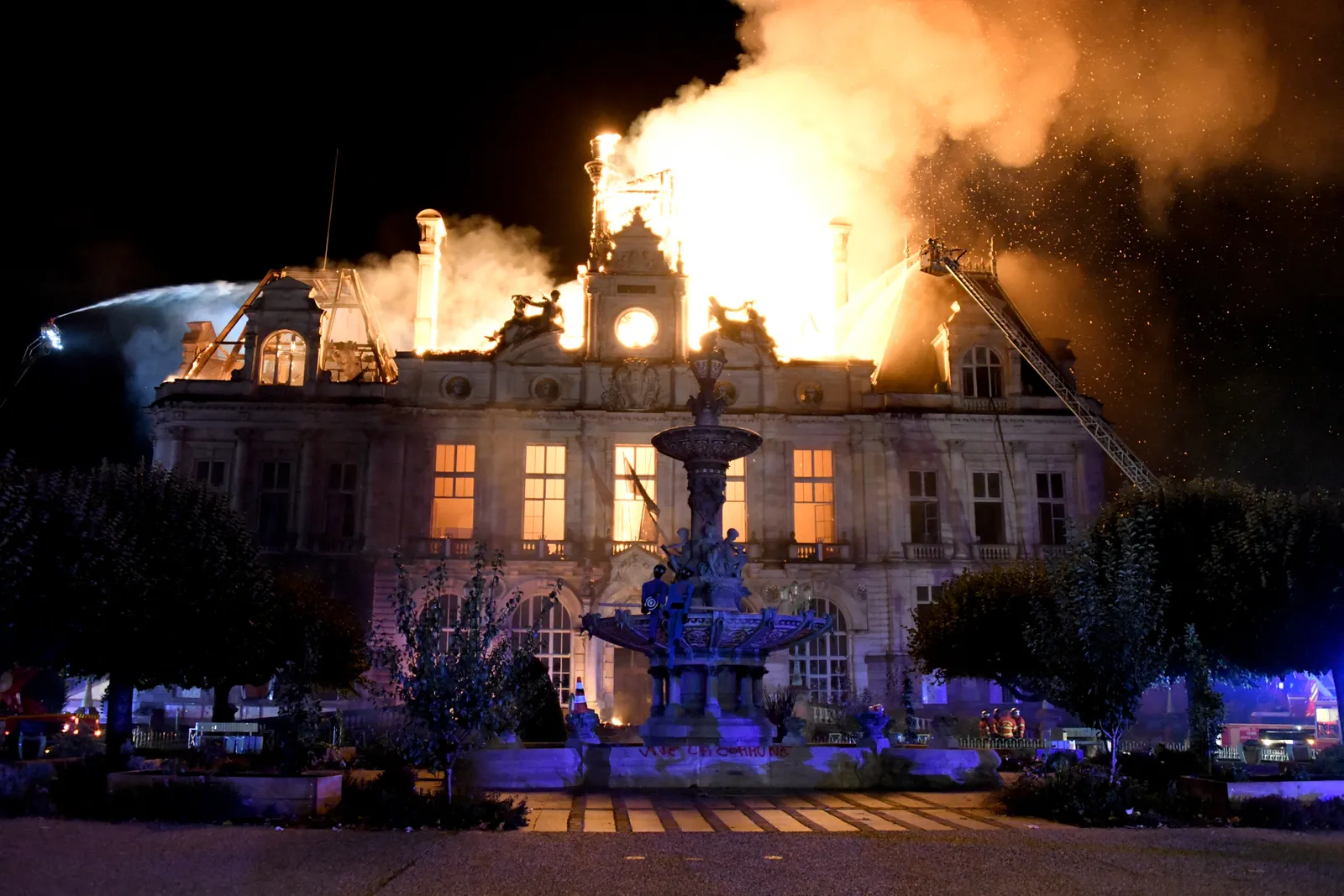
French authorities say a fire that tore through Limoges City Hall over the weekend was deliberately set, striking one of the French city’s most recognizable historic buildings during a period of nationwide anti-government demonstrations. The blaze caused heavy destruction at the municipal landmark, drawing attention not only to the criminal investigation but also to the loss facing a building long valued for its civic and architectural significance.
The attack unfolded on Saturday evening, according to accounts cited by Agence France-Presse. Officials said masked people entered the building by force and started fires inside. Those fires spread through the structure, leaving extensive damage. Authorities quickly treated the incident as arson rather than an accident, while the broader protest climate provided a fraught backdrop to the event.
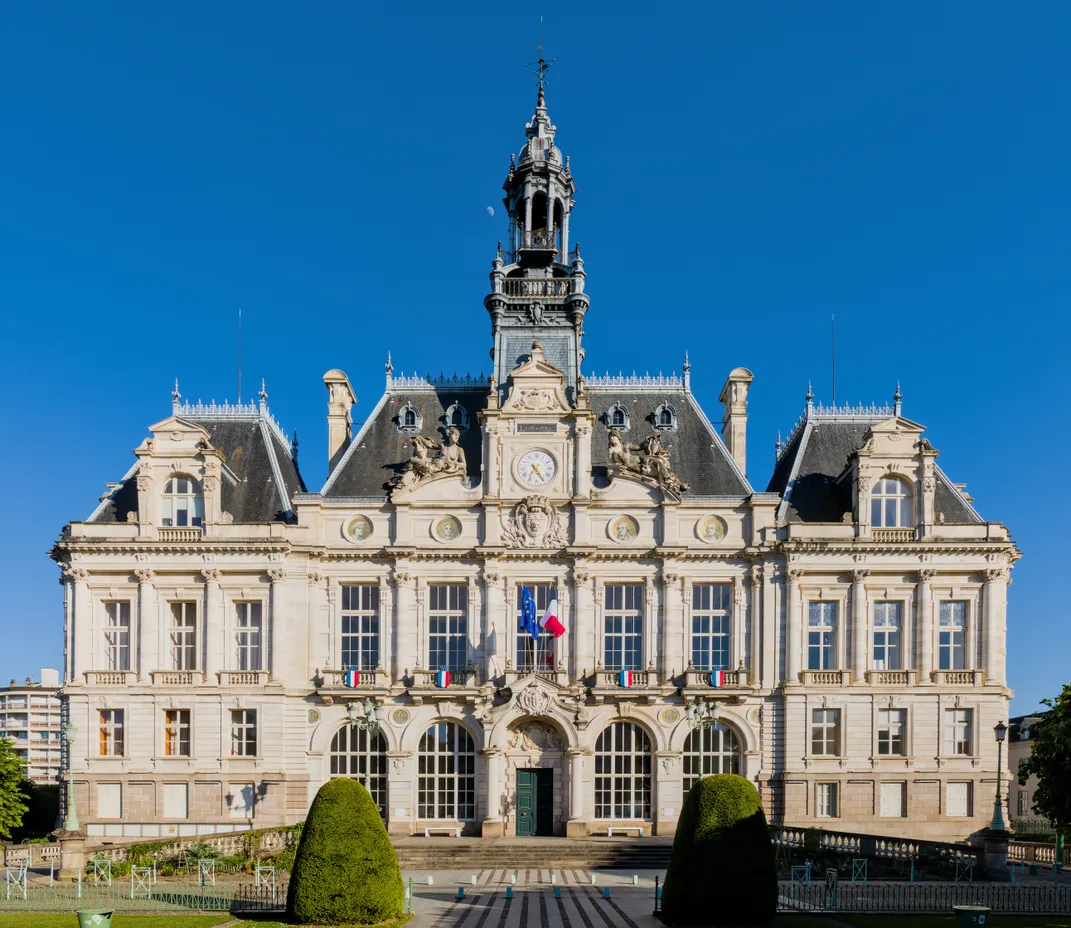
Limoges City Hall had stood for well over a century before the fire. It welcomed the public on Bastille Day in 1883, and its completion gave the city a prominent expression of the ambitious civic architecture associated with late-19th-century France. The building was 143 years old at the time of the blaze, making the loss especially consequential for a site woven into the city’s identity.
Its exterior was designed to announce its importance. A tall spire rose above the roofline, while an elaborate metal bell structure added distinction to the skyline. Together with the building’s decorative treatment, those features helped establish the city hall as a noted example of its era rather than merely an administrative workplace. The building received historic-monument status in 1975.
The ornament carried a specifically local story as well. On the parapet, Limoges’ coat of arms appeared alongside mosaic likenesses of four people associated with the city across several centuries. The selection turned the façade into a compact account of Limoges’ cultural and political past, connecting its municipal institution to artists, legal figures, revolutionaries and military leaders with roots in the area.
One figure was Leonard Limosin, known for enamel painting. Another was Henri François d’Aguesseau, the jurist who held the office of chancellor of France. The mosaics also commemorated Pierre Victurnien Vergniaud, an acclaimed speaker who played a role in the French Revolution, and Jean-Baptiste, Count Jourdan, a commander who later became one of Napoleon’s marshals. Their inclusion gave the building meaning beyond its public function.
That history helps explain why the fire has been viewed as a heritage emergency as much as a security incident. In Limoges, the city hall preserved a visual statement about local memory and national history. The available account describes widespread destruction, but does not identify the condition of every protected architectural or decorative element, leaving the scale of the cultural loss to be assessed more fully.
The political setting adds another layer of uncertainty. The fire came amid demonstrations against the government that had spread across France in recent days. The reported involvement of masked intruders and the immediate arson assessment describe how the fire began, but they do not by themselves establish a complete public account of who organized it or why this particular building was selected.
For Limoges, the next stage will concern both accountability and the condition of the damaged monument. Its protected status means that the response will carry consequences for a landmark that had endured since the 1880s. The destruction has also prompted comparisons with the Notre-Dame fire, reflecting the shock of seeing a major French historic structure endangered by flames.
Source: Smithsonian Magazine
Related articles
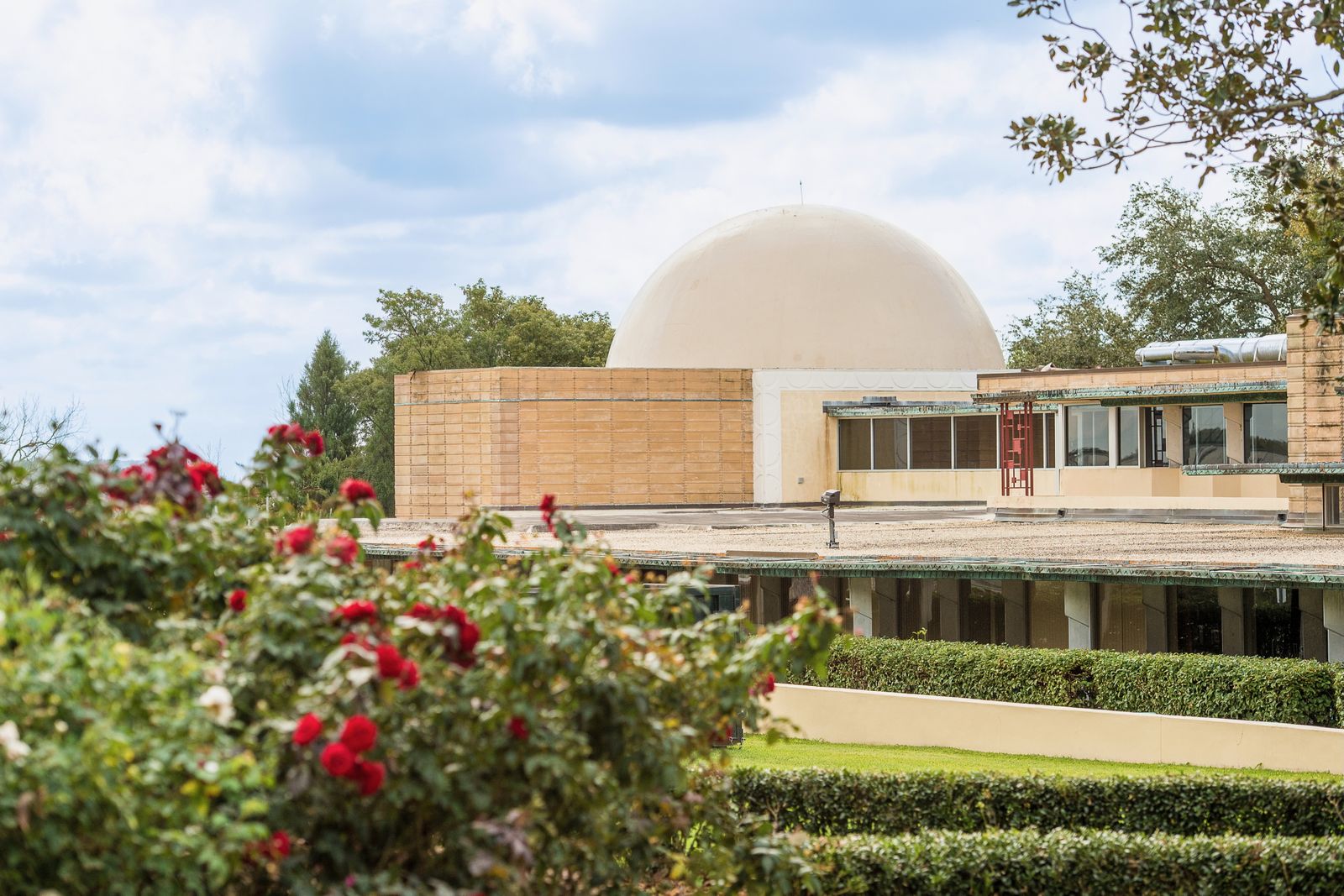
Immerse Yourself in the Cosmos at Frank Lloyd Wright's Only Planetarium, Recently Restored to Its Former Glory in Florida
Completed in 1958, the domed building is located on the campus of Florida Southern College, home to 13 Wright-designed buildings, the world's largest single-site collection of the architect's work

Play Tractor online with friends — free
Real-time Sheng Ji / Tractor for 3–5 players, with complete bidding and trump rules across web, iOS and Android.
Play bidfive →
A Team of Astronomers Thinks They Have Identified the Exact Night Sky That Inspired Vincent van Gogh's 'Starry Night.' Not Everyone Is Convinced
Very few night skies seen from the south of France during the summer of 1889 would match the scene on van Gogh's canvas. A new study argues that it could have been July 22

'Pretty Boy' Floyd, One of the Most Notorious Outlaws of the Great Depression, Was Shot and Killed in an FBI Raid 92 Years Ago
Some Americans lauded the 30-year-old bank robber as a Robin Hood-esque folk hero. Others castigated him as a violent criminal whose misdeeds were emblematic of the troubled era

GTA 6 guides, updates and practical reference
Explore a Chinese GTA 6 guide library covering the release, map, characters, missions, vehicles and weapons.
Browse guides →
Create AI images with your own API key
aixipi runs on desktop/web, uses your own model API balance, and avoids subscription lock-in.
Try aixipi →