
The Humble History of the Bedpan
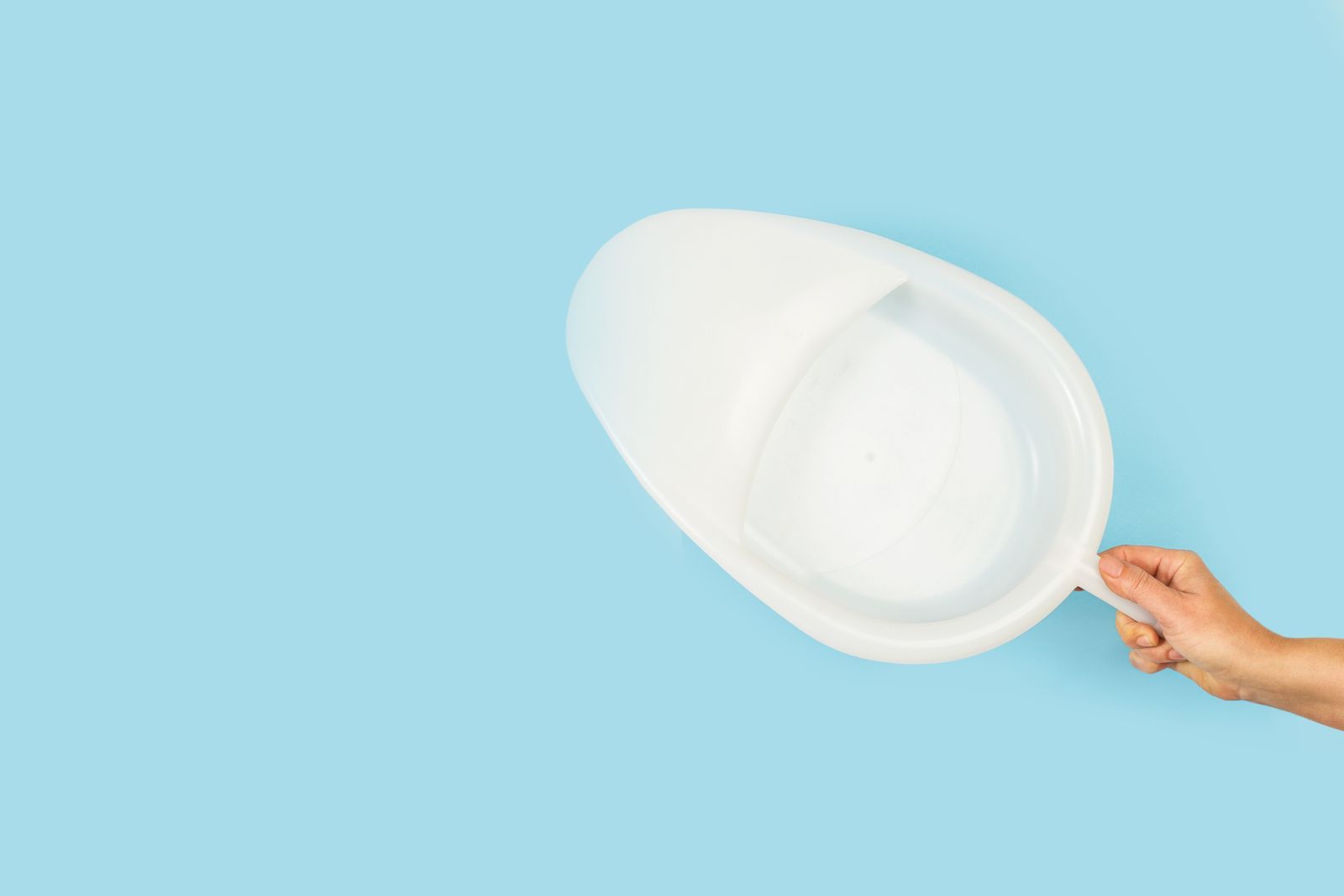
Bedpans are among the least celebrated objects in medical care, yet their long survival says much about the practical demands of illness, mobility and privacy. Over several hundred years, designers and manufacturers have altered their shape and details, but the basic task has remained strikingly constant: providing a portable vessel for people unable to leave a bed to use a toilet. That durable purpose has kept an uncomfortable subject in view, connecting ordinary household necessity with questions of dignity, infection and embarrassment.
The object’s history is not simply a catalogue of hardware. It sits where affection and revulsion can meet, where care during sickness must address bodily waste, and where the wish to preserve a patient’s self-respect can collide with the realities of dependence. Urine and feces are unavoidable parts of the story. So are the anxieties that illness and germs have brought into hospitals, homes and caregiving relationships. A bedpan may be basic, but it carries a social meaning far beyond its simple form.
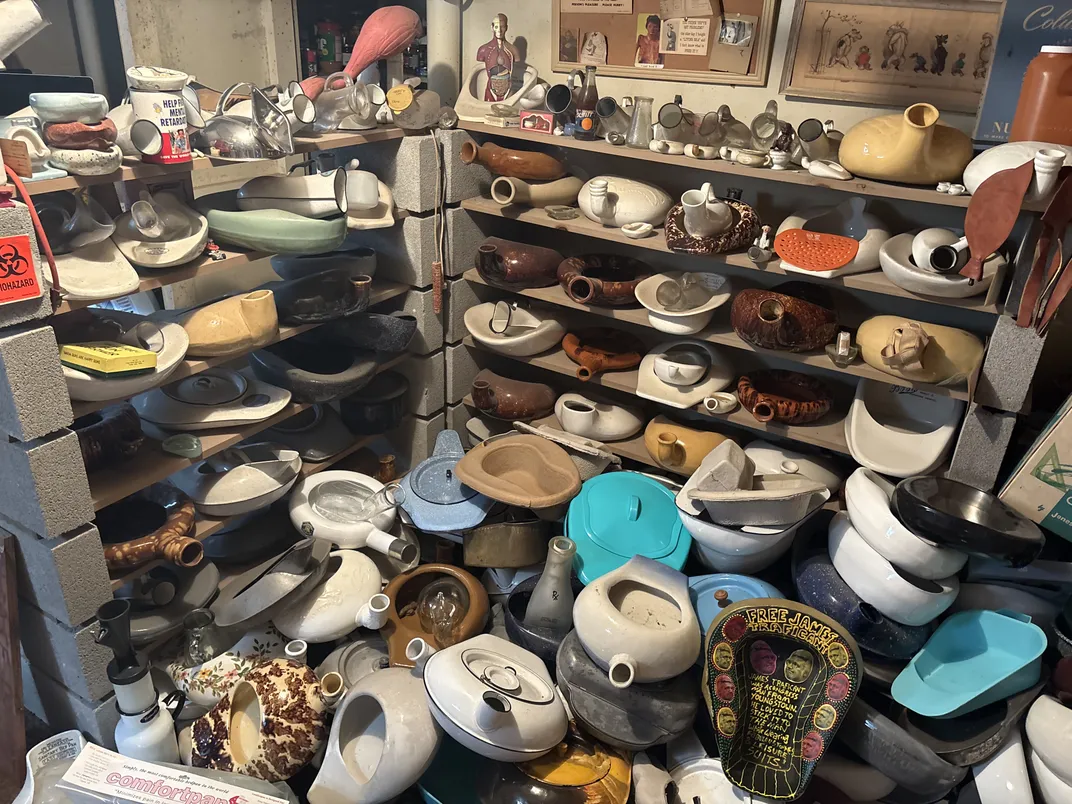
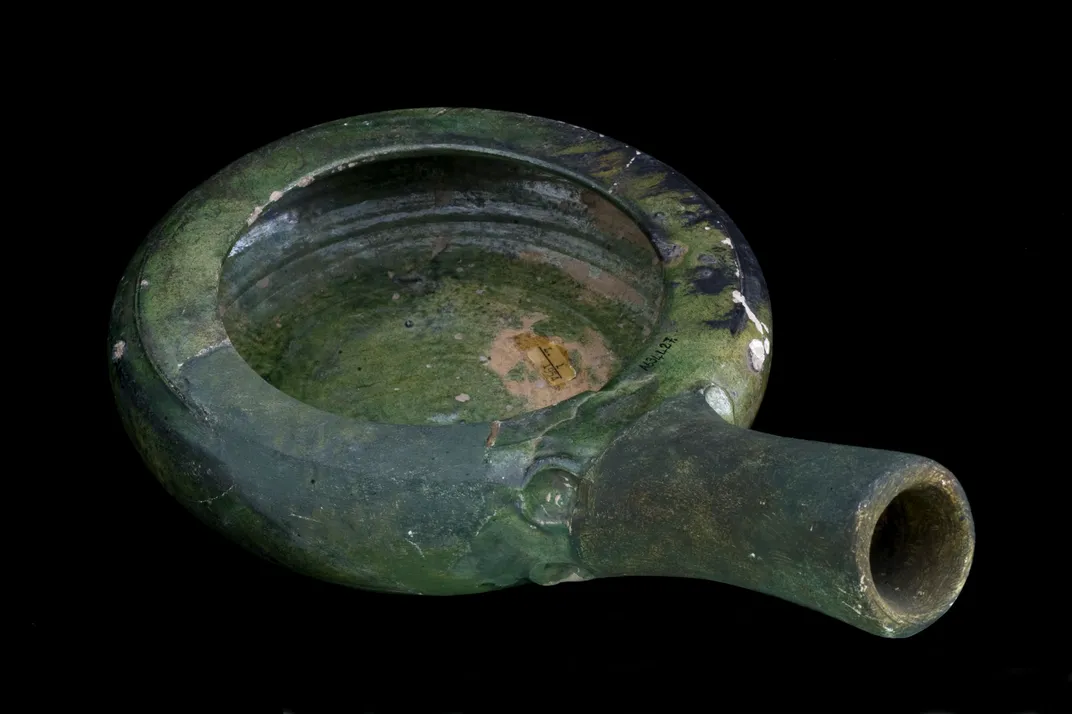
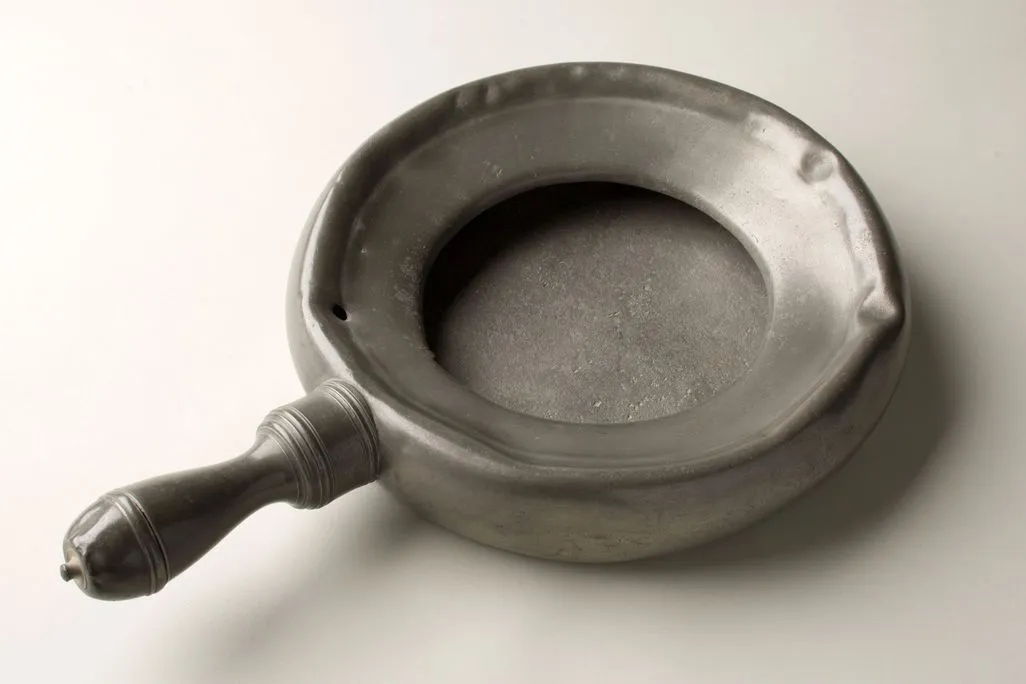
That tension helps explain why changes to the item have been incremental rather than revolutionary. Inventors have repeatedly adjusted a familiar medical supply, seeking refinements while retaining a design that can be placed beneath someone confined to bed and then removed. The continuity is notable in an era accustomed to rapid technical change. For this category of care, reliability and immediate usefulness appear to have outweighed the appeal of a dramatic redesign.
In Bay Village, Ohio, collector Eric Eakin has turned that overlooked history into an unusually large private archive. The basement of his family home holds more than 250 bedpans, a number that is thought to make it the biggest collection of its kind worldwide. The containers are not displayed in a conventional museum arrangement. They are stacked together, set on the floor and placed along improvised shelving built from concrete blocks and wooden boards.
The collection makes plain that even an object with a narrow function can acquire visual variety. One white bedpan contains a small likeness of Richard Nixon. Another combines earthy colors with feathers. A third has been made to resemble a ukulele, including a neck, headstock and three strings of steel wire. These examples shift attention from the object’s clinical association toward the choices people have made in styling, adapting and collecting it.
Eakin’s home has three bedrooms, but his bedpan holdings have effectively given it more than 250 bathrooms. The comparison is playful, while also underscoring the scale of an assemblage devoted to something usually kept out of sight. His collection has reached a wider audience through appearances on MTV and Ripley’s Believe It or Not!, placing a private accumulation of medical artifacts in popular entertainment as well as in discussions of design and care.
For Eakin, the collection is also an investment he says should not be dismissed as money wasted. He has argued that it has substantial value, joking that he entered the field “at the bottom.” The remark reflects the double meaning attached to bedpans: they invite humor because of their function, even as they record the serious conditions of people who depended on them. His view contrasts with an instinct to treat such items as disposable or inherently unworthy of attention.
The larger lesson is that medical objects can persist precisely because their problems persist. A bedpan is linked to restricted movement, illness and the logistics of providing intimate care, rather than to a passing fashion. Its history therefore raises a caveat for anyone expecting innovation to erase every old-fashioned tool: improvements may change materials, decoration or handling without eliminating the underlying need. The relationship between patient comfort, hygiene and privacy remains central to the object’s relevance.
What comes next for the bedpan is less a question of replacing its basic role than of how societies choose to regard it. Collections such as Eakin’s preserve evidence that a utilitarian receptacle has inspired distinctive designs and lasting interest. They also invite a broader consideration of the ordinary equipment that supports people during their most vulnerable periods. Behind a familiar medical supply is a continuing story of care, discomfort, humor and human dignity.
Source: Smithsonian Magazine
Related articles

Immerse Yourself in the Cosmos at Frank Lloyd Wright's Only Planetarium, Recently Restored to Its Former Glory in Florida
Completed in 1958, the domed building is located on the campus of Florida Southern College, home to 13 Wright-designed buildings, the world's largest single-site collection of the architect's work

Play Tractor online with friends — free
Real-time Sheng Ji / Tractor for 3–5 players, with complete bidding and trump rules across web, iOS and Android.
Play bidfive →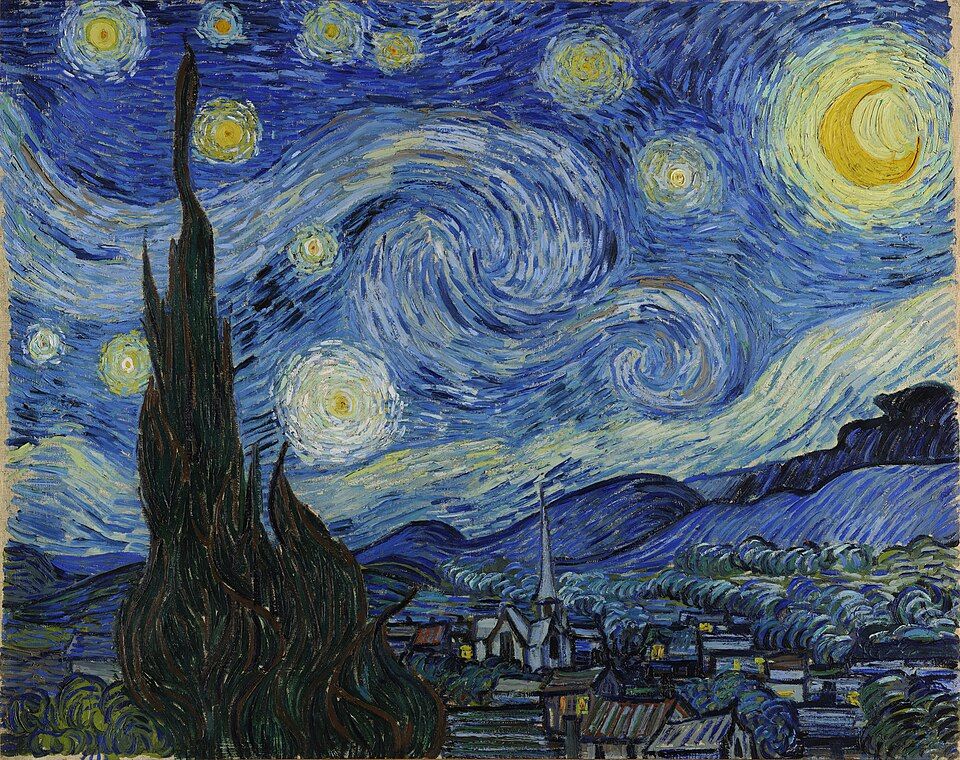
A Team of Astronomers Thinks They Have Identified the Exact Night Sky That Inspired Vincent van Gogh's 'Starry Night.' Not Everyone Is Convinced
Very few night skies seen from the south of France during the summer of 1889 would match the scene on van Gogh's canvas. A new study argues that it could have been July 22

'Pretty Boy' Floyd, One of the Most Notorious Outlaws of the Great Depression, Was Shot and Killed in an FBI Raid 92 Years Ago
Some Americans lauded the 30-year-old bank robber as a Robin Hood-esque folk hero. Others castigated him as a violent criminal whose misdeeds were emblematic of the troubled era

GTA 6 guides, updates and practical reference
Explore a Chinese GTA 6 guide library covering the release, map, characters, missions, vehicles and weapons.
Browse guides →
Create AI images with your own API key
aixipi runs on desktop/web, uses your own model API balance, and avoids subscription lock-in.
Try aixipi →