
The Moon Just Got a Massive New Crater That's Wider Than Two End-to-End Football Fields. It's a 'Once-in-a-Lifetime Observation'

A newly identified lunar impact crater is giving scientists an unusually clear record of a recent collision on the Moon. The feature was created in 2024, when an incoming body roughly comparable in scale to a multi-storey building struck the lunar surface. Its dimensions are striking: the hollow spans about 728 feet from side to side and drops roughly 141 feet below the surrounding ground.
The discovery is notable not simply for its size, but for its recency. Researchers say it is the biggest newly formed impact crater yet identified anywhere in the solar system. That distinction makes the site an exceptional opportunity to examine a major impact whose arrival can be placed within a relatively narrow recent period, rather than inferred only from a much older landscape. Its importance lies in the unusual scale of a newly recognized mark.
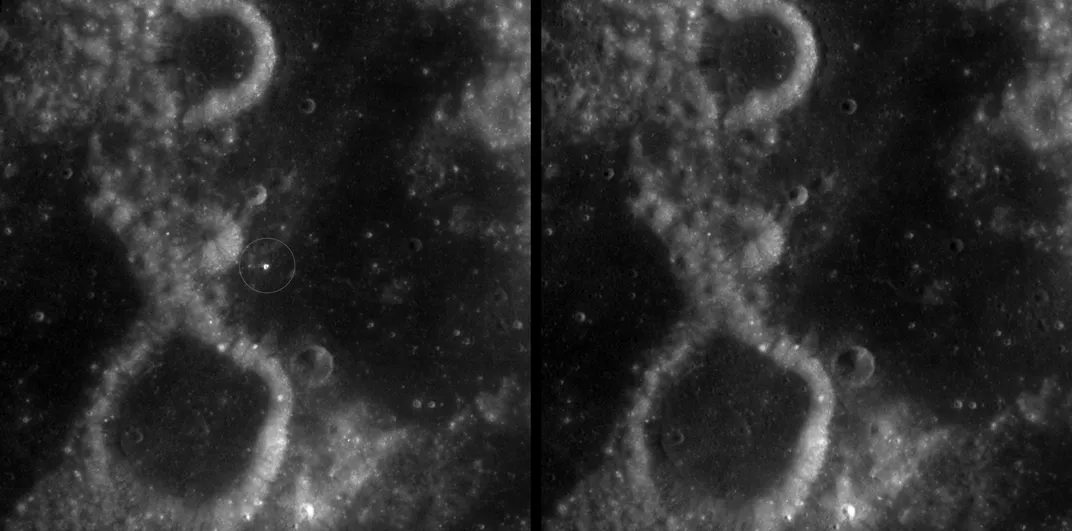
NASA's Lunar Reconnaissance Orbiter has supplied a close view of the scar. An image taken by the spacecraft on March 3, 2026 shows the new crater and gives the public a look at the scale of the disruption. The orbiting mission's images also made it possible to recognize that a fresh change had occurred at the site. The date of that image also places the record well after the impact and after the initial identification, providing a later visual reference for the feature.
The crater first drew attention in October 2025, more than a year after the impact. Robert Wagner, an image-processing specialist at aerospace company Intuitive Machines, was reviewing imagery from the Lunar Reconnaissance Orbiter camera system when he spotted an unusually large bright area ringed by a darker halo. That visual pattern pointed to a surface that had been disturbed rather than one that had remained unchanged.
A bright central mark and darker material around it are not merely dramatic visual details in an orbital photograph. Together, they offered investigators a clue that the collision had redistributed or otherwise altered lunar material. The subsequent work considers both the crater itself and the modifications visible in nearby terrain, treating the event as more than a single hole in the ground. That distinction matters because an impact can be read through the broader area it affects as well as through the cavity left at its centre.
Those findings were set out in two papers published September 16 in Science Advances. The studies document the fresh feature and the changes around it, placing the image-based discovery into a scientific account of the impact's effects. Their publication gives researchers a common record for comparing the crater with future observations of the same location. The paired studies also make clear that the attention is directed at the surrounding lunar surface as well as the unusually large new depression.
The episode also underscores why recent lunar craters matter beyond a single striking image. Reading impact marks can help scientists build a clearer understanding of the Moon, its surface and the processes that reshape it. A newly recognized crater can be especially valuable because investigators can focus on differences associated with a comparatively recent event rather than trying to separate them from long-established features. In this case, the scale of the scar adds an additional reason to examine how the event changed its immediate setting.
That research has practical relevance as well. Information drawn from lunar impacts can contribute to preparations for sending people and equipment to the Moon. The studies do not turn this crater into a forecast of any particular mission, but they show why tracking changes to the surface is part of the knowledge base for future exploration and technology operations. The practical value is therefore indirect: observations of such events can help inform the questions planners and researchers bring to lunar activity.
There is still a useful distinction between the certainty of the observation and the broader questions it may raise. The imagery establishes a conspicuous new formation and the published studies examine its surrounding effects; continued attention can test how well those observations illuminate the aftermath of a large strike. The immediate evidence is a crater measured in hundreds of feet, a bright-and-dark signature in orbital images and a defined recent event. What comes next is further comparison of the site with later observations and with researchers' understanding of lunar impacts. For now, the 2024 collision stands out as a rare recent case in which orbital records, a later detection and detailed scientific analysis can be considered together.
Source: Smithsonian Magazine
Related articles

Immerse Yourself in the Cosmos at Frank Lloyd Wright's Only Planetarium, Recently Restored to Its Former Glory in Florida
Completed in 1958, the domed building is located on the campus of Florida Southern College, home to 13 Wright-designed buildings, the world's largest single-site collection of the architect's work

Play Tractor online with friends — free
Real-time Sheng Ji / Tractor for 3–5 players, with complete bidding and trump rules across web, iOS and Android.
Play bidfive →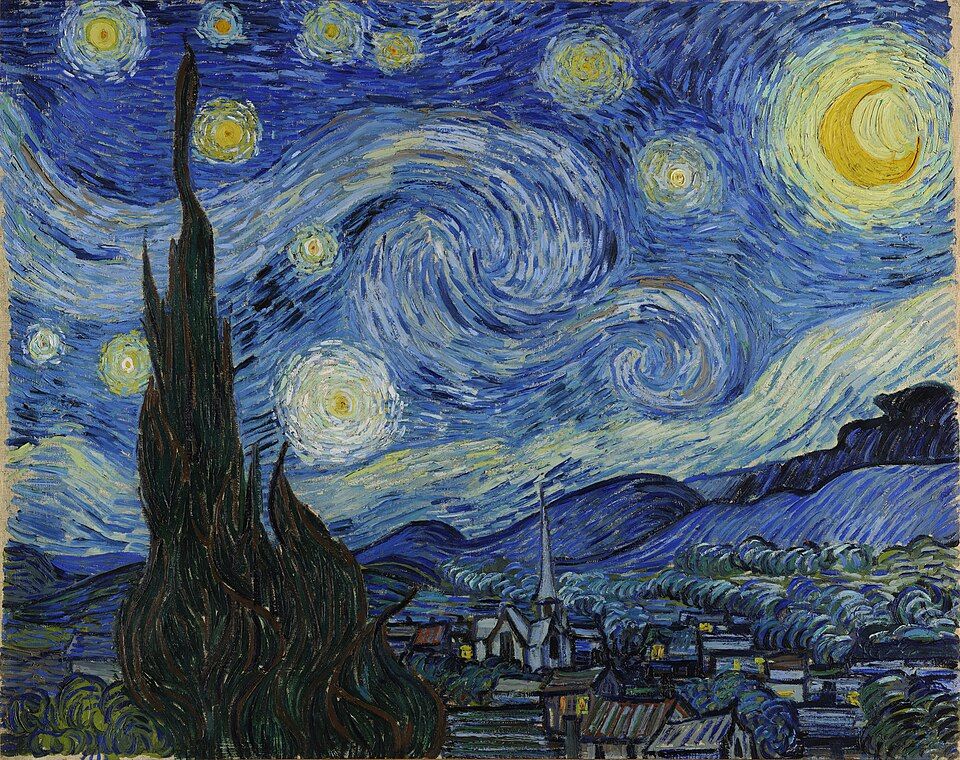
A Team of Astronomers Thinks They Have Identified the Exact Night Sky That Inspired Vincent van Gogh's 'Starry Night.' Not Everyone Is Convinced
Very few night skies seen from the south of France during the summer of 1889 would match the scene on van Gogh's canvas. A new study argues that it could have been July 22

'Pretty Boy' Floyd, One of the Most Notorious Outlaws of the Great Depression, Was Shot and Killed in an FBI Raid 92 Years Ago
Some Americans lauded the 30-year-old bank robber as a Robin Hood-esque folk hero. Others castigated him as a violent criminal whose misdeeds were emblematic of the troubled era

GTA 6 guides, updates and practical reference
Explore a Chinese GTA 6 guide library covering the release, map, characters, missions, vehicles and weapons.
Browse guides →
Create AI images with your own API key
aixipi runs on desktop/web, uses your own model API balance, and avoids subscription lock-in.
Try aixipi →